Walk-In Cooler Repair in New Bedford, Fall River & South Coast
Your walk-in cooler stopped cooling at 6 AM and the dinner rush is at 5. We’ve been there. One call to 508-521-9477 and we’ll have a tech rolling toward your kitchen within the hour — usually faster.
Why Walk-In Coolers Go Down (And What It Means for Your Business)
For more on refrigerant handling regulations, see EPA Section 608 certification.
Look, I’ve seen it all over Southeastern MA. The beautiful stuff—the fresh seafood places down in New Bedford, the busy diners on Route 6 heading toward Fall River, the markets near Dartmouth. And every single one of them knows what it feels like when that walk-in cooler goes quiet.
It’s not just an inconvenience; it’s inventory loss happening by the minute. When you can’t keep your product cold—whether it’s steaks, produce, or dairy—you’re losing money fast. We don’t deal in estimates of lost revenue; we deal in immediate fixes.
When a unit fails, it could be anything from a simple circuit breaker trip to a major compressor failure. That’s why you need someone who can diagnose it on the spot, not just guess based on what they read off a manual at an office somewhere else. We’re hands-on guys. I’ve been wrestling with these things in kitchens across this region for over fifteen years.
The Walk-In Cooler Repair Process: What to Expect from Our Techs
For more on AIM Act phase-down, see EPA SNAP-listed refrigerants.
When you call us, we treat it like an emergency response. First thing is getting a tech on the road fast. Second thing is knowing what parts are needed before they even open the door.
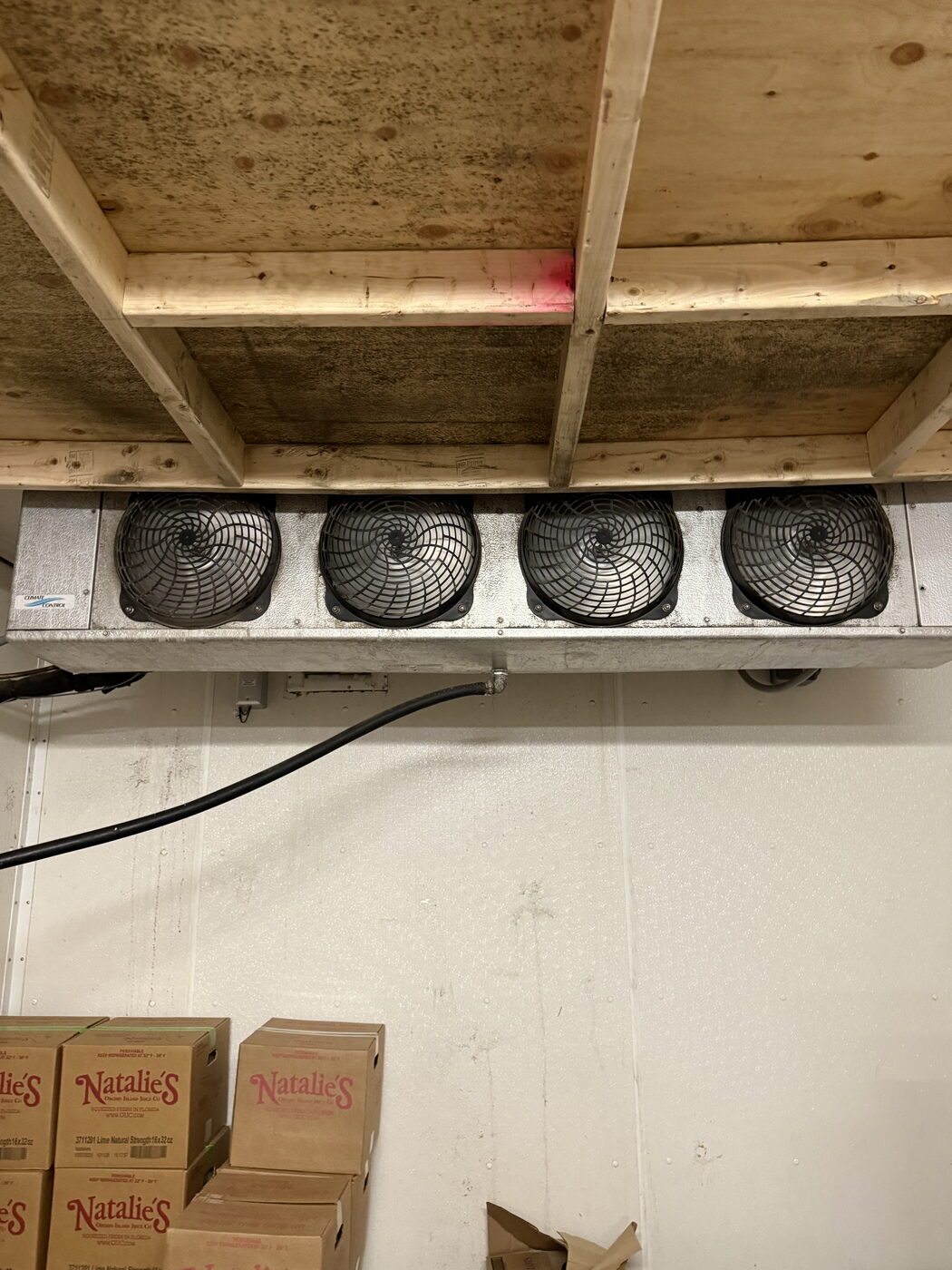
A walk-in cooler system is complex. You’ve got the evaporator coil inside—that’s where the cooling happens—the compressor unit sitting outside, and all the refrigerant lines connecting them. A failure in any one of those areas takes the whole thing down. We check the refrigerant pressure first; that tells us a lot about whether we’re fighting a leak or if something else is off.
If the issue is electrical—like bad contactors or a faulty thermostat—that’s usually quick money, and we get you back up fast. But if it’s the compressor itself? That requires a proper diagnosis to make sure we aren’t wasting time swapping out a part that’s fine.
Compressor Failures vs. Defrost System Issues
For more on Massachusetts compliance, see MassDEP refrigerant management.
This is where guys who just read manuals fall apart. A walk-in can fail for twenty different reasons, but two of the most common things I see around Cape Cod and down to Providence are compressor failure and issues with the defrost cycle.
If the unit isn’t cooling properly, we look at the condenser first—that’s where the heat gets dumped out. If that can’t shed heat because something is clogged or failing, the whole system backs up. Then we check the compressor draw amps against specs. A reading way off means it’s struggling, and often, that struggle leads to failure.
Then there’s defrost. Ice buildup on the evaporator coil? That stops airflow, and suddenly your temperature jumps ten degrees overnight. We know how to troubleshoot those thermal controls so we don’t just blast a new set of parts in there that won’t fix the root problem.
Beyond the Repair: When Replacement Makes More Sense
Listen to me closely on this one, because I don’t want you wasting money. Some folks call us when their unit is twenty years old, and they expect a miracle repair bill for $3,000 that only buys them six months of shaky cooling.
We are honest about limits. We’ve fixed this exact issue dozens of times—and sometimes the data points to a machine that’s reached the end of its useful life cycle. When we look at the motor hours, the age of the main components, and the current cost of reliable replacements versus the repair estimate, I’m going to tell you straight up if replacing the whole walk-in cooler makes more sense than chasing another patch job.
We want your kitchen running reliably for years, not just surviving until next month. That’s why an honest assessment is always part of the service call.
What We Service: More Than Just Coolers
If you’re calling us because the walk-in cooler is down, great. But if your glass-door merchandiser in a market downtown can’t keep its beer cold, or your prep table unit is acting up—we handle that too. It’s all commercial refrigeration.
We work with brands you know: True, Beverage-Air, Hoshizaki, Manitowoc, Continental. We understand the build specs on a Traulsen cooler versus a dedicated seafood cooler from someone else. The mechanics are different enough that “any tech” won’t cut it.
We’re licensed and insured for these calls because we know what happens if one of our techs gets something wrong in your facility, especially when you’ve got perishable goods sitting out.
Local Proof: Where We Get Our Hands Dirty
You won’t find us on the interstate; we’re down here doing the work. Last month at a restaurant in Fall River, near the docks, they had an ice machine that was dumping water everywhere because the drain line backing up clogged the primary solenoid valve. It sounded minor, but it kept tripping the main breaker for the whole prep area. Took us an hour to trace that plumbing issue back through three different grease traps before we got the chiller running again.
Another time, I was pulling up near a spot in Dartmouth—it was raining sideways off Buzzards Bay. The walk-in freezer at this place had failed completely, and they were prepping for a huge weekend event. We diagnosed it as an expansion valve issue; it was just partially clogged with debris from the line work somewhere upstream. Fixed that specific component, got the proper refrigerant flow back through, and we were done before the rain let up.
If you’re anywhere from New Bedford up toward the Cape, or over towards Plymouth—we know these routes. We live here. When your food business is on the line, you need local guys who aren’t wasting gas driving across town just to answer a call.
Spotting the Problem: What to Look For
You don’t need an engineering degree to know when your walk-in cooler is acting up. You just need to notice a few things. If you open it up and the air feels… warm, that’s your first sign. But sometimes it’s subtler. Maybe the temperature gauge reads 38 degrees, but last week it was holding rock solid at 34. That small jump can cost you thousands in spoiled product before you even realize it.
We get calls from places downtown Providence where the walk-in is humming along fine until the owner walks away for an hour. When they come back, a whole case of produce has browned up. Often, the issue isn’t the compressor failing outright; it’s something smaller—a dirty condenser coil, or perhaps the defrost cycle kicking out too soon and not cleaning properly. We diagnose based on what we see, not just what you tell us.
Tell me what’s happening when you call. Is the light blinking? Can you hear any strange noises coming from the unit—is it rattling like loose change in a drawer, or is it making that high-pitched squeal? Knowing these details helps my tech narrow it down before they even pull up to your spot on Benefit Street. When we get there, though, don’t worry about diagnosing it yourself; just let us know you need emergency walk-in cooler repair and we’ll take it from there.
Keeping It Running: Preventive Service
Look, I ain’t trying to sell you a service plan. But I will tell you this: paying an extra couple hundred bucks every year for a solid preventative checkup is cheaper than losing a full day of walk-in time during the summer heat in Newport. Seriously.
What does that service involve? It’s not just plugging it in and walking away. We’re checking refrigerant pressures across the whole system—looking at the suction line, the capillary tube settings. We blow down the condenser coils until they shine, making sure nothing from years of grime is choking the heat exchange. We test the defrost cycle controls to make sure that unit isn’t just running on fumes when it should be cleaning itself.
If you run a high-volume spot—say, an oyster bar near the waterfront in Narragansett or a busy prep table setup down by Federal Hill—you need proactive care. We recommend having us come out every 12 to 18 months for a deep dive. It keeps the whole system running smooth, means fewer emergency calls for me when I’m already slammed handling issues up near Mattapoisett, and keeps your inventory safe.
Brands We See Every Day: True, Manitowoc, Beverage-Air
When you call us, you might not know the difference between a condenser coil and an evaporator drain pan. I get it. You just need cold food coming out when you open the door. But what I *do* know is that we work on almost everything in this region, and we’ve put our hands on True coolers, Manitowoc units, Beverage-Air glass-door merchandisers, Hoshizaki prep tables, and Continental walk-in freezer systems since before some of these restaurants even opened their first doors.
If you’re running a mix—say, an older Traulsen unit next to a newer True reach-in cooler in your restaurant off Route 1A, we’ve seen the interface issues. It’s not just about replacing the compressor; sometimes it’s how these different pieces of equipment talk to each other when managing defrost cycles or maintaining correct refrigerant levels across the whole bank. We know those nuances.
Don’t sweat the brand names on your stickers. Just call us at 508-521-9477. Tell me what unit is down—whether it’s a glass-door merchandiser in downtown Fall River or a walk-in freezer handling seafood supplies near Cape Cod—and let my tech figure out the right diagnosis fast. We handle the brands; you keep serving your customers.
What a walk in cooler repair service call actually covers
When we arrive on a service call, we work through the system in a fixed order so nothing gets skipped. Refrigerant pressures on both the suction and discharge sides. Amp draw on the compressor at start and during steady-state run. Superheat at the evaporator and sub-cooling at the condenser. Evaporator and condenser coil condition, fan motor amp draw and bearing condition, defrost cycle timing and termination, drain line clearance, door gasket seal and door alignment, controls and contactors. The diagnostic is usually 30 to 60 minutes; the repair time depends on what we find.
For commercial walk-ins above 50 pounds of refrigerant charge in Massachusetts, we also document the visit for the operator’s MassDEP Refrigerant Management Program file. RI commercial food establishments need their temperature logs intact and corrective action documented for RIDOH inspections, and our service tickets fit that record set.
Service area and response times for Southeastern Ma And Ri
Southeastern Ma And Ri is inside our core dispatch zone. From our base we are usually 20 to 45 minutes out depending on time of day and traffic on Route 6, Route 24, I-195, and I-95. New Bedford, Fall River, Dartmouth, Fairhaven, and the South Coast generally get same-day response on weekday calls placed before noon. Up the Cape and out to Provincetown adds an hour or so. Into Rhode Island — Providence, Warwick, Cranston, Pawtucket, Newport — we are commonly there inside two hours.
Overnight and weekend emergencies are triaged by what is losing inventory fastest. If you have a walk-in full of seafood climbing past 45°F at midnight, you move to the front of the queue. We will tell you straight on the phone what realistic arrival looks like before you commit.
Brand-specific failure patterns we see in the field
The True T-49 family — the two-door reach-in freezer that’s in roughly every restaurant kitchen in New England — has a few classic failure modes that show up at predictable ages.
Compressor short-cycling at 7-9 years. The original Embraco compressor on the 2014-2018 build runs hard in commercial duty. By year seven or eight you start hearing it cycle on and off every few minutes. That’s not the compressor giving up yet — usually it’s the start relay or the overload protector wearing out. We swap the relay first ($35-60 in parts), and if the cycling stops, you bought another two or three years out of the unit. If it doesn’t fix it, the next stop is the compressor itself, which is a 4-6 hour job and the part runs $400-800 depending on which Embraco variant.
Door gaskets at year 4. True’s factory gaskets on the T-49 series start cracking around the bottom corners of the door at the four-year mark — usually because the door drags slightly on the cabinet when it closes, putting unequal pressure on the seal. Swap the gasket, take a minute to readjust the door hinges so it sits square, and the next gasket will last twice as long. We see kitchens that have replaced the gasket three times in two years because nobody fixed the door alignment.
Ready to get walk in cooler repair in New Bedford, Fall River & South Coast?
Southeastern Ma And Ri is inside our core dispatch zone. From our base we are usually 20 to 45 minutes out depending on time of day and traffic on Route 6, Route 24, I-195, and I-95. New Bedford, Fall River, Dartmouth, Fairhaven, and the South Coast generally get same-day response on weekday calls placed before noon. Up the Cape and out to Provincetown adds an hour or so. Into Rhode Island — Providence, Warwick, Cranston, Pawtucket, Newport — we are commonly there inside two hours. See our full commercial refrigeration repair across Rhode Island for town-by-town coverage.
Service and repair overlap more than the words suggest. A walk-in refrigerator service visit covers the checks that keep a healthy box healthy: condenser coil cleaning, evaporator and drain inspection, door gasket and alignment, defrost timing, refrigerant pressures, and amp draws, with the readings in writing. A repair call starts with the same measurements and then fixes what they point to. Kitchens that keep up with the service visits call us for repairs far less, which is the whole argument for a maintenance schedule.
We are the ones who show up for New Bedford, Fall River, Providence, Brockton, Warwick and Newport. If your box is holding 45 instead of 38, icing over, running constantly or pooling water on the floor, call 508-521-9477 and describe what it is doing — a real tech picks up, not a call centre.
Same trucks, same hours. Frost on the product, a fan that will not turn, or a box that will not pull below zero is a walk-in freezer repair call, and defrost faults are the most common cause we find.
- walk-in cooler repair in Mansfield
- South Shore Walk-In Cooler and Freezer Repair
- pre season tune ups for walk in coolers freezers stop emergencies before they start
- Reach-In Cooler Repair
- walk in cooler service
- walk in cooler holding temperature health code massachusetts
- walk-in cooler repair on the North Shore
- walk in freezer cost
- walk in freezer failure product loss insurance claim
- wine cooler repair