Commercial Refrigeration Repair in Fall River, MA
The walk-in cooler stopped cooling at 6 AM and the lunch rush is hitting hard. When your commercial refrigeration goes down in Fall River, every hour costs you money—we know that.
Emergency Response: When Your Cooler Goes Down
For more on refrigerant handling regulations, see EPA Section 608 certification.
Look, I don’t run a marketing firm; I run Armus Refrigeration. For over 15 years, my crew and I have been elbow-deep in the grease traps and walk-ins of restaurants, markets, and kitchens across Southeastern Massachusetts and Rhode Island. We’re not interested in selling you paperwork; we’re here because your business needs cooling, period.
When you call us—and you should call 508-521-9477 right now—you’re talking to someone who understands the panic when that freezer starts warming up. That warm air doesn’t just sit there; it ruins inventory fast. We treat every call like it’s the last one of the day for a local spot in Fall River.
We guarantee emergency response because frankly, we can afford to wait for no one. Whether you’re on Route 6 or down near the waterfront, we mobilize fast. We’re licensed and insured for this work, and our techs are EPA 608 certified. That means we know the refrigerant, we know the electrical side, and we know how to get your system back online without wasting time.
Diagnosing the Real Problem: More Than Just a “Broken Unit”
For more on AIM Act phase-down, see EPA SNAP-listed refrigerants.
A lot of folks call us when the lights flicker or the temperature gauge looks weird. They assume it’s one thing, but commercial refrigeration is complex. It’s not just turning on and off; it involves compressors cycling under specific loads, managing defrost cycles, and maintaining precise refrigerant pressures.
If a unit isn’t pulling down cold air, it could be anything: the condenser coil is choked with debris from years of grease buildup near your prep table. Maybe the expansion valve is partially clogged. Or maybe—and this happens all the time—it’s just an old compressor that finally gave up its prime.
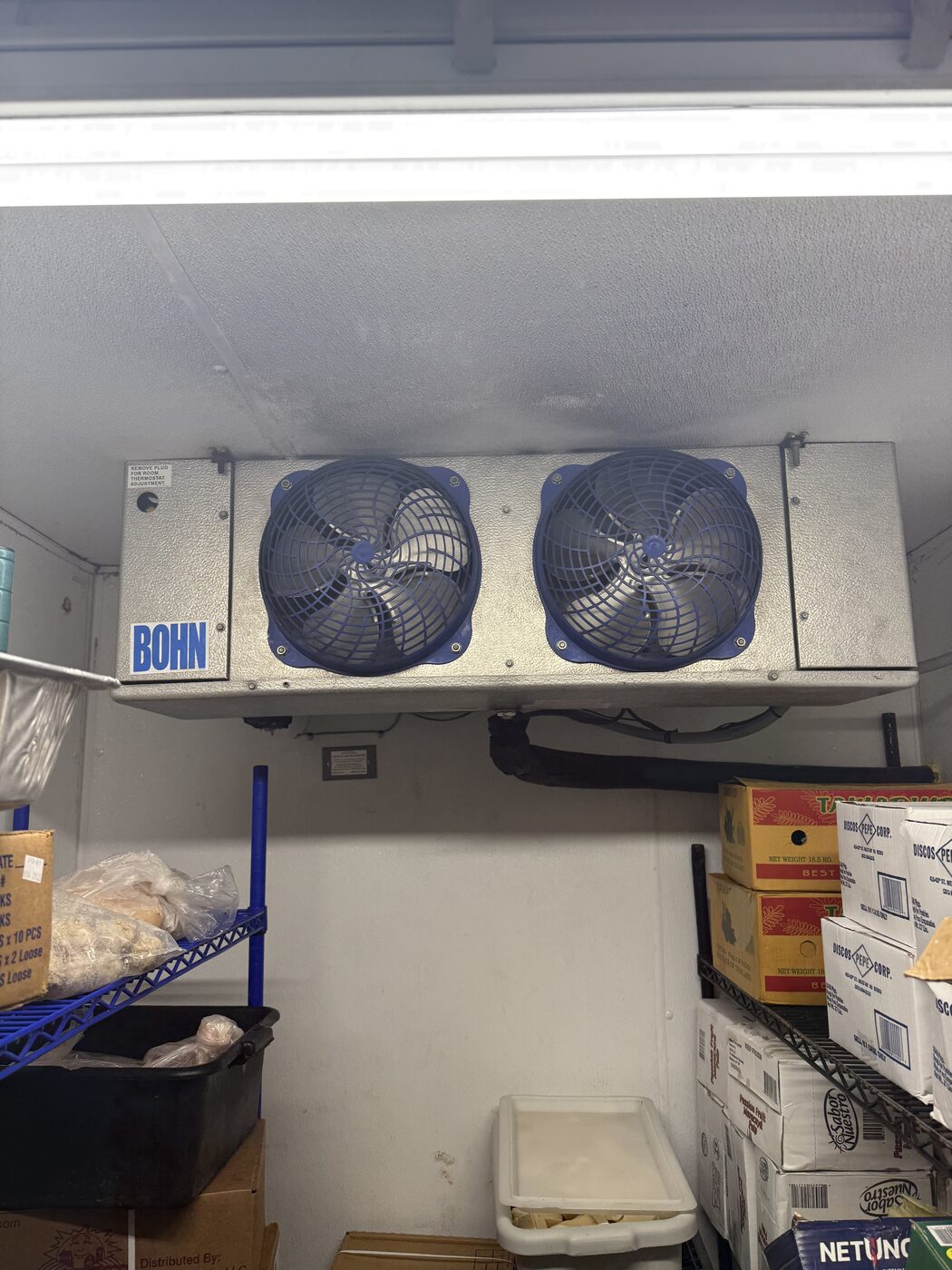
We don’t just guess. We open it up, we check the gauges, and we tell you exactly what failed. For instance, last month at a seafood spot down in Fall River, the main issue wasn’t the evaporator; it was scale buildup on the blower motor housing that was restricting airflow across the entire system. It needed deep cleaning before any repair would stick.
The Components We Wrestle Into Shape
For more on Massachusetts compliance, see EPA Section 608 refrigerant rules.
When you’re dealing with high-volume equipment—be it a large walk-in freezer for wholesale goods or several reach-in units stocked with grab-and-go items—you need reliability on the main parts. I want you to know what we look at when we pull up.
We’re talking compressors, naturally. These are the heart of it. We can diagnose if a compressor is failing due to electrical overload or actual mechanical fatigue. Then there’s the condenser—that big radiator unit that has to dump all the heat outside. If it’s dirty, your whole system strains.
Then we get into the smaller stuff: capillary tubes, the refrigerant lines, and the controls. Whether you run True units, Beverage-Air coolers, or Manitowoc ice machines, the principles are the same. My techs know their way around those specific brands because we work with them every day across Plymouth, Duxbury, and right here in Fall River.
Repair vs. Replacement: The Honest Talk
This is the part I wish everyone understood upfront. We’re not going to push a repair just because we can fix it for $500 next week, only for it to fail again in six months because the unit itself is past its prime lifespan.
If your walk-in cooler has been running on borrowed time—say, 18 years old or more—we’re going to give you the straight facts. We’ll run diagnostics and show you what we can save by replacing just the compressor versus telling you that the whole electrical control board is suspect, which means a bigger chunk of change. We make those calls for you.
We know the cost of downtime in this region; it’s brutal. But patching up something fundamentally tired? That’s just kicking the can down the road until it costs way more to fix than it would have to replace in the first place. We keep it straight: what works, and when.
Our Coverage Area: From Fall River South to Cape Cod
When people think of commercial service, they think “everywhere.” That’s not how we operate. We are *here*. We live and work in this region. See commercial refrigeration repair near Somerset.
If you’re running a restaurant near the downtown area of Fall River, or maybe up toward Dartmouth, we know the back alleys and the best access points. If we pull up to a diner on Route 6 last week—you name it, we got there. We’ve done this work through New Bedford, across into Providence if we need to, and we know what the South Coast weather does to these units.
Up towards Cape Cod? It’s a drive, but we handle it. Give us a heads-up on your location—whether you’re near Acushnet or further out—and we’ll set expectations for arrival time. We cover the commercial needs of Fall River and everything surrounding it.
Business Refrigeration Services We Provide in Fall River, MA
Restaurants, markets, and commercial kitchens across Fall River count on refrigeration that doesn’t quit mid-shift. Our business refrigeration services cover the walk-in coolers, reach-in units, and display cases that keep inventory safe — diagnostics, repair, and the preventative maintenance that keeps a small problem from becoming a lost-inventory emergency.
We work with the equipment already on your floor rather than pushing a replacement first. If a compressor, condenser coil, or defrost cycle is the actual problem, we tell you plainly and fix that part. Every technician is EPA 608 certified and we’re licensed and insured for commercial work, so permits and code sign-off aren’t a separate headache for your business.
Call 508-521-9477 for 24/7 emergency service, or schedule routine maintenance before your next inspection or busy season. We serve Fall River businesses and the surrounding Southeastern Massachusetts and Rhode Island area from the same crew that answers the phone.
Preventative Maintenance: Keeping You Running Year-Round
The best repair is the one you never have to make. That’s why we do maintenance calls. Most owners wait until the unit throws an error code before calling us, and that’s when it’s already too late.
A good preventative service check includes cleaning those condenser coils—the gunk buildup really chokes out the heat transfer process. We check refrigerant levels against the required PSI readings for your specific system type, we test all defrost cycles on units like glass-door merchandisers, and we inspect the seals on your walk-in cooler doors to make sure you aren’t losing cold air through a bad gasket.
We don’t just “look” at it; we perform actual service checks. Getting ahead of that failing capacitor or tightening up those electrical connections now saves you from being shut down completely during the busy season rush next spring.
Diagnosing It Fast: What’s Actually Going Wrong
When you call us because your walk-in cooler isn’t holding temp—especially down near the docks in Fall River where things get hot quick—you might just know something is wrong. You won’t know *what*. Don’t worry about guessing with brand names or refrigerant types; that’s what we’re paid for.
We’ve run into every failure mode on these machines over 15 years out here in SE Mass. Is it the compressor cycling too hard? Did the condenser coil get choked up from debris kicked up by a nearby dumpster deposit? Or is it something simpler, like a faulty defrost timer that’s just letting us down?
Knowing what to look for upfront helps you when we get there. If your reach-in unit has warm spots around the edges and the evaporator fan sounds strained, we’re probably looking at airflow restriction or maybe a failing blower motor. Give us a call at 508-521-9477. We’ll diagnose it right on site so you know exactly what to expect.
What Happens When You Call Us Out
You call, we get the job done. It ain’t complicated. First, we ask where you are—are you near the downtown core, maybe close to the restaurants off Washington Street? Knowing that helps us prep for traffic coming through Fall River.
When a tech arrives, we don’t just start swapping parts hoping it works. We check the basics first: refrigerant pressure readings on the gauges, verifying the temperature differential across the evaporator coil, and checking the electrical draw on the compressor unit. It’s methodical. A quick visual inspection of the condenser fins for any obvious dirt buildup is step one.
We’ll give you a straight rundown while we work. We won’t put you through technical jargon just to sound smart; we’ll tell you, “The capacitor is shot,” or “This line has a restriction in the capillary tube.” And then, we quote you what it’ll take to get that unit back to dropping temps reliably so your inventory stays cold.
Keeping Things Running: Preventative Maintenance
Being reactive—calling us only when things break—is expensive for you and time-sucking for us. A good preventative service keeps the whole system running smooth, which is especially important with high-volume spots near the South Coast.
A proper check involves more than just cleaning coils. We’ll cycle through the entire unit: checking the refrigerant charge levels, testing the defrost control sequence to make sure it’s cycling correctly and not burning out components, and looking at the seals on all your walk-in freezer doors for any leaks or warping. A small door seal issue can cause massive energy loss over a month.
If you want us to swing by before the busy season hits—say, when things get crazy around the New Year’s rush—call ahead. We’ll build a plan around your schedule so we don’t disrupt your peak service hours. Call 508-521-9477. Let’s keep this refrigeration running right before you need it most.
What a commercial refrigeration repair fall river ma service call actually covers
When we arrive on a service call, we work through the system in a fixed order so nothing gets skipped. Refrigerant pressures on both the suction and discharge sides. Amp draw on the compressor at start and during steady-state run. Superheat at the evaporator and sub-cooling at the condenser. Evaporator and condenser coil condition, fan motor amp draw and bearing condition, defrost cycle timing and termination, drain line clearance, door gasket seal and door alignment, controls and contactors. The diagnostic is usually 30 to 60 minutes; the repair time depends on what we find.
For commercial walk-ins above 50 pounds of refrigerant charge in Massachusetts, we also document the visit for the operator’s MassDEP Refrigerant Management Program file. RI commercial food establishments need their temperature logs intact and corrective action documented for RIDOH inspections, and our service tickets fit that record set.
Ready to get commercial refrigeration repair in Fall River, MA?
Call 508-521-9477 Schedule NowFrequently Asked Questions
Who inspects commercial refrigeration in Fall River, and what do they check?
Fall River follows the Massachusetts food code, 105 CMR 590, with inspections by Fall River Health and Human Services. They probe product for cold holding at 41°F or below and frozen product held frozen, and they look at thermometers, door seals and whether product is stored off the floor and away from the evaporator drip. A unit that reads fine on its display but holds warm product near the door still fails.
Seafood processors and distributors in Fall River run large walk-in freezers. What fails on them?
Large freezers fail on defrost and doors more than on compressors. A heavy-duty freezer cycles its defrost heaters many times a day; when a heater, timer or termination thermostat quits, the evaporator turns into a block of ice and the box climbs while the compressor runs flat out. High-traffic doors lose gaskets, heater wire and closers, and the warm, wet air they let in frosts the coil faster. We check the defrost circuit and door hardware first on any freezer that is icing.
Our restaurant is in an old mill building. Does the wiring matter for a refrigeration repair?
It does. Many of Fall River’s mill buildings and older storefronts have dated electrical: undersized circuits, worn contactors and disconnects, and voltage drop on long runs. Low voltage makes compressors run hot, trip on overload and fail early, and a refrigeration repair that ignores it will not last. We check supply voltage and amp draw at the unit as part of every diagnosis and tell you when an electrician needs to correct the circuit before the new part goes in.
Why does salt air off Mount Hope Bay matter for a Fall River cooler?
The condenser is the part that rejects heat, and salt air corrodes its aluminum fins and copper tubing. A corroded coil moves less heat every season, so a system that held fine in spring runs constantly and stalls in the mid-40s by July. Outdoor and rooftop units near the waterfront take the worst of it. Annual coil cleaning and a fin inspection, plus a coil coating on new units, slow it down.
Do you repair the refrigeration in Portuguese bakeries and markets as well as restaurants?
Yes. Bakeries run retarders, proof-and-hold cabinets and display cases; markets run open multi-deck cases, walk-ins and reach-ins; restaurants run walk-ins, prep tables and ice machines. The same technician and truck cover all of it, and the parts that fail most often are common across equipment types: fan motors, defrost components, controls, contactors, gaskets and door hardware.