If your walk-in cooler isn’t holding food at the right temperature, you’re not just risking spoilage—you’re breaking the walk in cooler holding temperature health code Massachusetts requires. TCS food must stay at 41°F or below, per the FDA Food Code and Massachusetts Merged Food Code, which adopts the 2013 edition. That means your kitchen’s cooler should run in the high 30s, not just under 41°F.
A single lapse can lead to a violation, fines, or even permit suspension by your local board of health. In New Bedford, Fall River, and surrounding areas, we see it every season—equipment fails, temps drift, and food gets tossed. Don’t wait for a health inspector to tell you. Check your cooler’s temperature today.
Walk-In Cooler Holding Temperature Health Code Massachusetts: What You Must Know
What the Law Says About Cooler Temperatures in Massachusetts
Any TCS food stored in a walk-in cooler must stay at 41°F or below—no exceptions. This rule comes from both the federal FDA Food Code and Massachusetts’ Merged Food Code § 3-501.16(A)(2). It’s a Priority (P) item, meaning inspectors will flag it immediately if a single product is out of temperature. Even a single item above 41°F can trigger a violation.
Your cooler must be equipped with a working, permanently mounted thermometer you can see easily. That’s required by the FDA Food Code 2022 § 4-204.112(B), unless you’re using something like a cold plate or insulated transport container. If the reading is off, the equipment fails inspection.
Cooling is just as strict: TCS food must drop from 135°F to 70°F within 2 hours and reach 41°F or lower within 6 hours total. This applies to all products, from cooked meats to dairy and cut produce. If your cooler isn’t holding steady in the mid to high 30s, it’s not safe—even if it’s under 41°F.
Violations are enforced locally by your board of health. They can suspend or revoke your permit. If you’re unsure, call Armus Refrigeration at 88 Mill St, New Bedford, MA — we’ve been serving this region for over fifteen years.
Setting the Right Temperature: Coolers vs. Freezers Under Mass Health Code
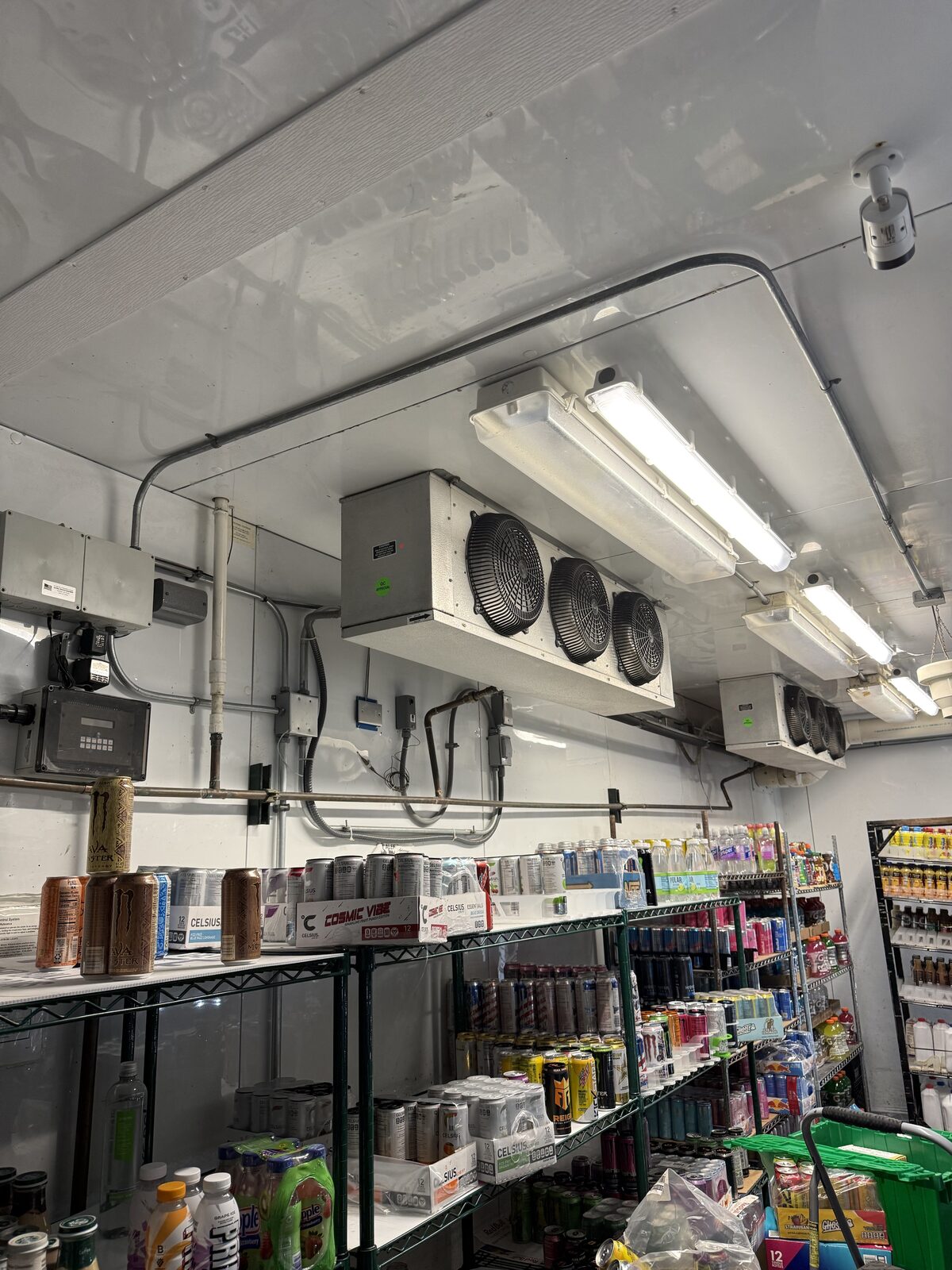
Your walk-in cooler must hold TCS food at 41°F or below—per the FDA Food Code and Massachusetts Merged Food Code § 3-501.16(A)(2). That means setting the unit in the high 30s, not just under 41°F. Why? Because real-world conditions like door openings and product load can push temps up. A stable mid-30s range gives you room to stay compliant.
For freezers, the rule is clear: keep everything at or below 32°F. But don’t just set it and forget it. The FDA Food Code 2022 § 4-204.112(A) says the sensor must measure air temperature in the warmest spot—usually near the door. That’s where you’ll find the first sign of failure.
Freezer performance drops fast as suction temps fall. Heatcraft recommends a maximum temperature difference (TD) of 10°F for reliable cooling. Exceed that, and your unit struggles, especially with high humidity or dense storage.
Walk-in coolers and freezers must meet federal insulation standards: R-25 for coolers, R-32 for freezers, and R-28 for freezer floors. Poor insulation means the unit runs longer, wastes energy, and fails to hold temp.
If your unit’s off, it’s not just a cost issue—it’s a health code violation. Call Armus Refrigeration at 88 Mill St, New Bedford, MA — we’ve been serving this region for over fifteen years.
Compliance Starts with Design: Insulation, Energy, and Anti-Sweat Heaters
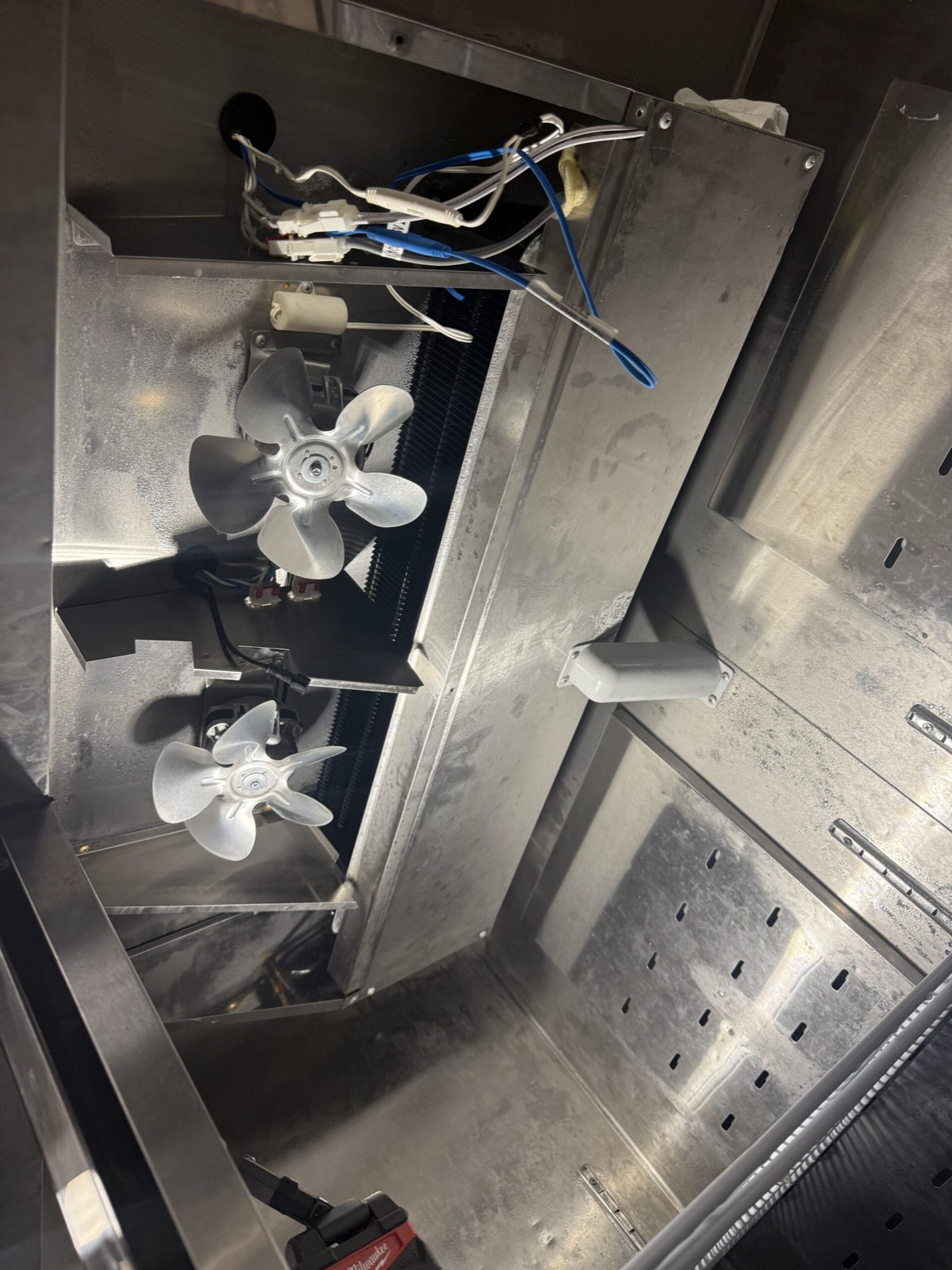
A walk-in cooler isn’t just a box with cold air—it’s a system built to last, stay efficient, and meet Massachusetts health code standards. Start with insulation. Federal energy rules require R-25 for coolers and R-32 for freezers, plus R-28 floor insulation for freezers. That’s not optional. If your walls or floor fall short, you’re not just wasting energy—you’re risking temperature swings that break code.
Energy efficiency isn’t just about saving on bills. The law sets minimum Annual Walk-in Energy Factor standards: 9.00 Btu/W-h for medium-temp units and 4.15 Btu/W-h for low-temp units. Units with dedicated condensing systems must meet 5.61 Btu/W-h indoors and 7.60 Btu/W-h outdoors. If your system falls below these, it’s not compliant—no matter how cold it feels.
Now, consider the door. Moisture is a silent violator. Frost or condensation around the jamb? That’s a heater failure. Kolpak walk-ins, for example, have anti-condensate heaters around the entire door perimeter, including under metal thresholds. If those heaters fail, moisture builds, and food risks contamination. Transparent doors require adjustable heater power to counter outside humidity or glass condensation—per 10 CFR 431.306.
Defrost cycles matter too. Fast defrost with high air velocity and wide fins keeps coils efficient. But even the best system fails if heat leaks in or moisture forms. Keep the door sealed, the insulation intact, and the heaters working. If your unit’s off, it’s not just a cost issue—it’s a health code violation. Call Armus Refrigeration at 88 Mill St, New Bedford, MA — we’ve been serving this region for over fifteen years.
Why Proper Installation and Maintenance Are Non-Negotiable
You can’t skip the basics. A walk-in cooler isn’t just a box with cold air—it’s a critical part of your food safety system. If the unit isn’t installed right, even a tiny gap in the seal or a sensor in the wrong spot can let temps drift above 41°F. That’s a direct violation of the FDA Food Code, which says TCS foods must be held at 41°F or below.
The code also says the temperature sensor must be placed in the warmest part of the cooler—usually near the door or in the center of the back wall—so it’s measuring real air temp, not just a cold spot.
If you don’t maintain your refrigeration units, you’re gambling with health code compliance. Sensors drift. Fans clog. Door seals wear out. And when your cooler runs warm, even for a few hours, you’re out of compliance—inspectors mark it as a Priority item and can suspend your permit under 105 CMR 590.014.
We’ve seen it too many times: a restaurant loses a full day’s sales because a sensor was installed in the coldest corner, not the warmest. Or a unit was retrofitted with an old refrigerant that’s now banned under EPA’s phasedown rules. That’s not just a repair—it’s a legal risk.
Proper install and ongoing checks aren’t optional. They’re how you stay legal, safe, and open. Armus Refrigeration, 88 Mill St, New Bedford, MA — we’ve been serving this region for over fifteen years.
What Our Techs Check First (From the Field)
When we show up on a call, we don’t start with the thermostat. We start at the door. A warm spot on the jamb? Frost forming on the inside glass? That’s a heater failure. Kolpak walk-ins have perimeter heaters under the threshold—when those fail, moisture gets in and freezes. That’s not just a comfort issue; it’s a code violation.
We check for condensation or frost around the door frame first. If it’s there, the anti-condensate heater is dead or the door seal is compromised. Next, we look at the unit’s air flow. If the cooler is near the door, or in another unit’s airstream, it’ll ice up fast—Heatcraft warns against that.
We also test the energy draw on transparent doors. If it’s over 3.0 watts per sq ft in coolers, the anti-sweat controls must adjust with humidity. If they don’t, it’s wasting energy and risking fogged glass. A walk-in freezer should never exceed 10°F temperature difference (TD)—more than that, and product dries out. We verify the insulation meets R-32 standards. If it doesn’t, the whole system is fighting a losing battle. We don’t guess. We test. Armus Refrigeration, 88 Mill St, New Bedford, MA — 508-521-9477.
Frequently Asked Questions
What’s the correct temperature for a walk-in cooler holding TCS food in Massachusetts?
Massachusetts follows the FDA Food Code, which requires time/temperature control for safety (TCS) foods to be held at 41°F or below. We set walk-in coolers in the mid-to-high 30s°F for safety margins, especially in busy kitchens where product load varies.
Why do walk-in freezers need anti-condensate heaters, and what happens if they fail?
Kolpak walk-in freezers have perimeter anti-condensate heaters to prevent frost or condensation on doors. If you see moisture around the jamb or vent, the heater is likely inoperable. Left unchecked, this causes ice buildup, reduces door seal effectiveness, and compromises product integrity.
How does insulation affect walk-in cooler and freezer performance in Massachusetts?
Per federal energy standards, walk-in coolers need R-25 insulation, freezers R-32, and freezer floors R-28. Proper insulation reduces heat gain, keeps temperatures stable, and prevents excessive compressor cycling—critical in high-usage kitchen environments across Southeastern MA.
Related Services
- Walk-In Cooler Repair in Sandwich, MA
- Walk-In Cooler Repair in New Bedford, MA
- Walk-In Cooler Repair in MA & RI
Sources We Work From
The standards and manufacturer service requirements behind this page:
- FDA Food Code, section 3-501.16
- Massachusetts Merged Food Code, Chapter 9 (105 CMR 590.009)
- Rhode Island Food Code, 216-RICR-50-10-1 § 1.5.3
- Cornell LII — 105 CMR 590.001 (Massachusetts)
- Massachusetts Merged Food Code (2013 Food Code merged with 105 CMR 590)
- FDA Food Code 2022, Chapter 3 (full document PDF)
For the rules and standards behind this work, see the FDA Food Code and ENERGY STAR commercial food service guidelines from the federal agencies that govern commercial refrigeration.
How we write these: every procedure, temperature and interval on this page is taken from manufacturer service literature or federal food and refrigerant code, listed in Sources above, and reviewed by our own technicians against what we see in the field. We revise the page when a standard or a manufacturer procedure changes.