Your walk-in freezer/cooler is the heartbeat of your kitchen. A small issue can become a costly outage fast. Here’s how to spot problems early, what you can safely check, and when to call a commercial refrigeration service pro.
Early Warning Signs You Should Never Ignore
- Temps creeping up (cooler above 41°F or freezer above 0°F)
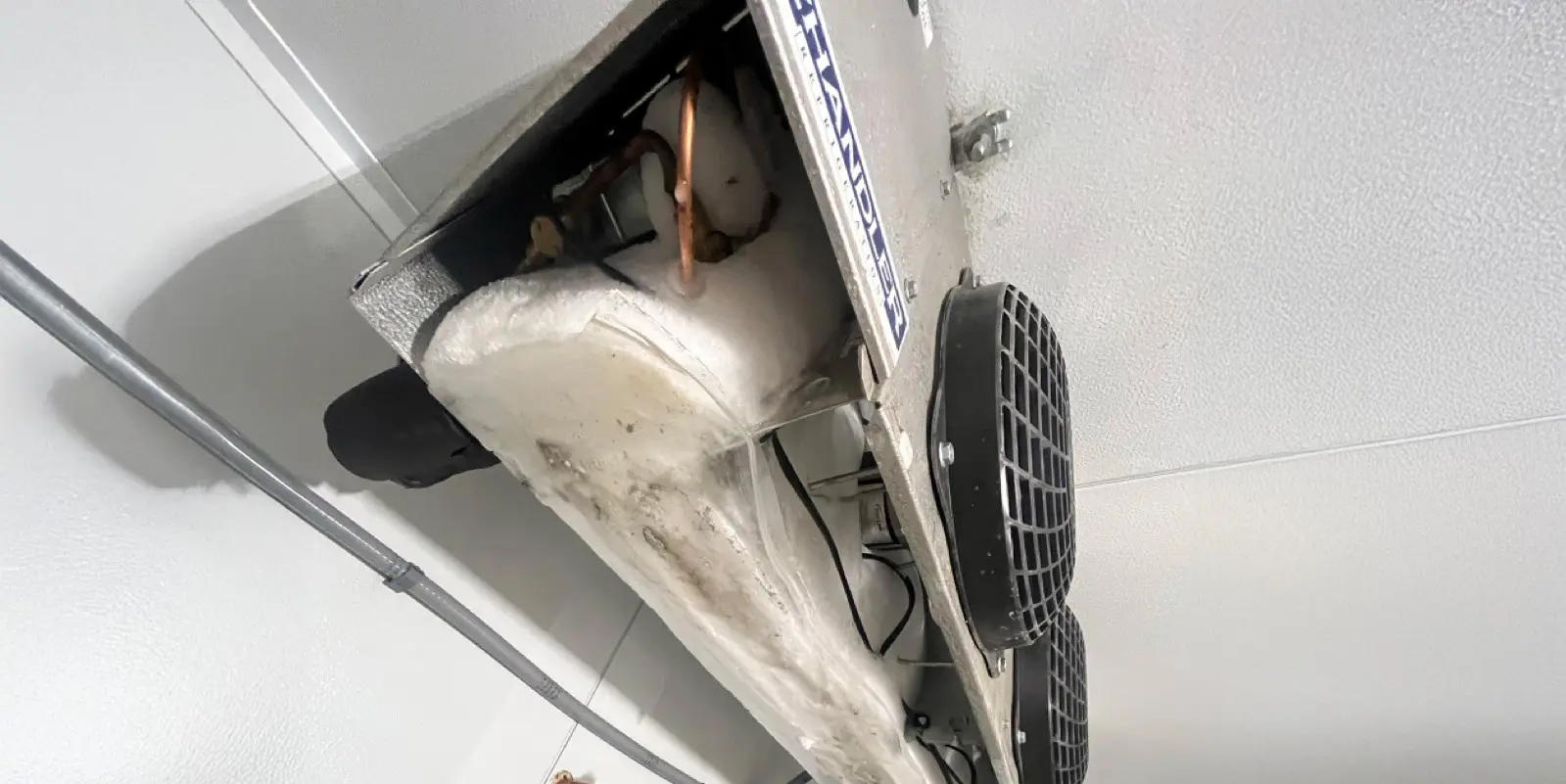
- Ice on the evaporator coil or heavy frost around door frames
- Door not closing flush, torn gaskets, or condensation around the threshold
- Condenser roaring or short cycling
- Food thawing/refreezing or wet boxes on racks
Quick Checks You Can Do (No Tools)
- Clear 6–8″ around coils and walls; don’t block evaporator airflow
- Inspect door gaskets, sweeps, and closers; replace torn or brittle seals
- Make sure product isn’t stacked against the evaporator fan guards
- Verify door heaters and strip curtains (freezers) are working
When to Call for Service (Don’t Wait)
- Temp alarms or steady temp rise despite door discipline
- Ice build-up on the coil/floor = defrost or infiltration issues
- Breaker trips, burnt smells, or fans not running
- Your team is “manual defrosting” with hot water—stop and call a tech
Pro Tips That Cut Costs
- Add strip curtains and replace worn gaskets—cheap ROI
- Quarterly condenser cleanings keep systems efficient
- Log temperatures at opening/mid-shift/closing to catch trends early
When to Call a Pro
Need walk-in freezer repair or walk-in cooler repair today? Call 508-521-9477. We service restaurants and coffee shops across Southeastern MA & RI (Fall River, New Bedford, Dartmouth, Taunton, Attleboro, Providence).
FAQ
Why is my walk-in icing up? Likely a defrost, door heater, or infiltration problem.
How often should gaskets be replaced? Every 1–2 years or when torn/hard.
Can I run with a bad door closer? You’ll waste energy and risk unsafe temps—fix it.
Daily Habits That Extend the Life of a Walk-In
The cheapest maintenance program in the industry is a thirty-second walk-through your closing crew already has time for. Before lock-up: glance at the box thermometer and write the number on the whiteboard — a two-degree drift over a week is a service call at your convenience, while the same drift discovered during a Saturday rush is an emergency at emergency rates. Check that the door has actually latched, because a walk-in door left cracked overnight can cost more in one electric bill than a year of gasket replacements. Listen for ten seconds: a compressor that has started clicking, buzzing, or short-cycling announces itself days before it quits.
Loading discipline is the other free habit. Keep product off the floor and away from the evaporator so the air path stays open — a walk-in cools by circulation, not by contact, and a wall of boxes against the coil forces the unit to run longer for a warmer box. Never load hot food straight into a walk-in cooler; it drives the box out of temperature for hours and ices the coil. And keep a six-inch gap between the top shelf and the ceiling: blocked return air is the most common self-inflicted ‘failure’ we diagnose, and it costs nothing to fix except a conversation with whoever stocks the shelves.
Finally, know your box’s baseline numbers and write them where the crew can see them: normal operating temperature, normal pull-down time after a delivery, and the service number to call when either one goes wrong. A crew that knows 37°F is normal and 41°F is not will catch nearly every failure in the cheap stage — which is the entire difference between a maintenance line item and a five-figure product loss.
The Numbers Worth Posting by the Office Door
Every walk-in has four numbers that tell its whole story, and they belong on one laminated card where the closing manager can see them. Box temperature: 35–38°F for a cooler, minus 10 to 0°F for a freezer — written as a range, because a crew that only knows ’37’ will not react at 40. Pull-down time: how long the box takes to recover after a delivery is loaded; if a 30-minute recovery becomes a 2-hour recovery, the unit is telling you something weeks before it fails. Defrost schedule: what times the freezer is supposed to frost-clear itself, so a coil still iced at noon gets noticed. And the service number, because the fastest repair is the one that gets called in by whoever saw the symptom first.
The card earns its keep during the two moments a walk-in is most likely to be killed: a rushed delivery day, when eighty cases get stacked against the evaporator by a driver who has never heard of airflow, and a holiday weekend, when the one person who knows what normal looks like is off. Institutional knowledge on a card survives staff turnover; institutional knowledge in one veteran’s head does not. Many of the five-figure product losses we see started as a symptom somebody junior noticed and did not know was worth reporting.