
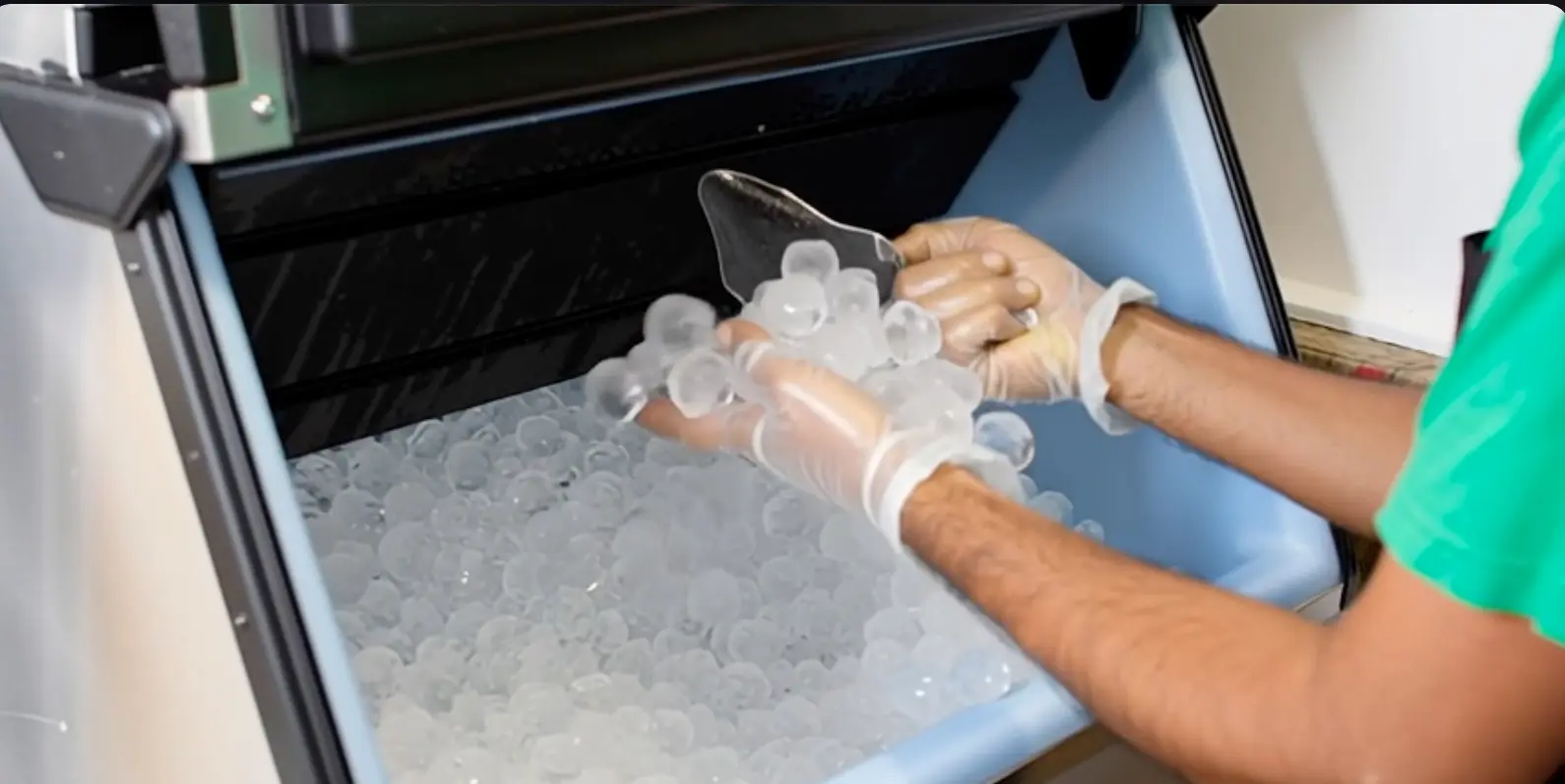
Why Cleanings Matter
Ice is food. In shops like Dunkin’, Honey Dew, and independent cafés, neglected ice machines grow biofilm, mold, and scale—hurting drink quality and inviting violations.
Cleaning Frequency (What Inspectors Expect)
- Deep clean & sanitize: At least every 3 months; heavy-use locations every 6–8 weeks
- Filter changes: 6 months (or per spec)
- Between deep cleans: Wipe door gaskets, ice bin, and splash zones weekly
Signs You Need Service Now
- Musty or chemical taste/odor in drinks
- Slime or discoloration on the drop zone or in the bin
- Slow ice production or misshapen cubes
- Visible scale on the evaporator or water distribution parts
What Our Professional Ice Machine Cleaning Includes
- Food-safe descale + sanitize of the evaporator, distribution tubes, bin, and sensors
- Water filter replacement (if due) and pressure/flow check
- Inspect float valves, pumps, harvest sensors, and bin thermostats
- Production test & temperature verification
Brand Experience
We clean and service Hoshizaki, Manitowoc, Scotsman, Ice-O-Matic and more—single machines to multi-store routes.
CTA
Book your ice machine cleaning today: 508-521-9477. Ask about multi-location plans for chains and franchises.
FAQ
Can staff clean it? Light wipe-downs are fine. Deep cleaning needs pro chemicals and disassembly.
Will cleaning improve output? Yes—scale and biofilm reduce harvest efficiency.
A Cleaning Cadence That Actually Fits a Coffee Shop
The manufacturers’ twice-a-year cleaning schedule was written for restaurants, not for a shop pulling espresso shots next to the ice bin. Coffee and donut environments are harder on ice machines than almost any other food business: airborne flour and sugar dust feed slime growth inside the machine, and the constant scoop traffic at the bin introduces contamination the sanitizer cycle never touches. For a busy shop, the realistic cadence is a full clean-and-sanitize every quarter, a bin-and-scoop sanitize weekly, and an air filter check monthly if the machine shares a wall with the kitchen.
The taste test is your early warning system, and it is free. Ice made in a machine that needs cleaning carries a faint stale or musty note that shows up in iced coffee before it shows up on any inspection — cold brew over old ice tastes flat a full month before a health inspector would flag the machine. If a regular mentions the iced coffee tastes off and the beans have not changed, check the machine before you check the roaster.
Health-code wise, Massachusetts and Rhode Island inspectors treat the interior of an ice machine as a food-contact surface, which means visible slime or scale is a citable violation, not a suggestion. The pattern we see in coffee shops is always the same: the machine passes every inspection for two years, then one busy summer the cleaning slips a quarter and the next inspection writes it up. A standing quarterly service — ours or any competent tech’s — costs less per month than a single day of lost iced-drink sales.
What a Professional Ice Machine Cleaning Actually Includes
A professional clean is a teardown, not a wipe-down. The machine comes apart to the evaporator plate: water distribution tubes out and descaled, water trough and float assembly scrubbed, the evaporator itself treated with nickel-safe descaler and rinsed until the harvest sheet releases clean, and every removable plastic part sanitized in solution rather than sprayed in place. On air-cooled machines the condenser gets cleaned in the same visit — a scaled evaporator and a dusty condenser usually arrive together, and cleaning one without the other leaves half the problem installed.
The parts a quick wipe-down never reaches are exactly where the trouble lives: the underside of the water curtain, the inside of the distribution tube where slime colonies seed every batch of ice, and the bin’s door track and gasket where scoop traffic leaves its residue. A proper service ends with a sanitizing cycle run with the machine reassembled, the first two harvests discarded, and a quick water-quality check — because in towns with harder water, the right fix is sometimes a phosphate filter that triples the interval between cleanings.
For a busy coffee or donut shop the whole service is roughly a ninety-minute visit, scheduled before open or after close so the bin is never empty during business hours. Against the alternatives — a citable health-code violation, a week of off-tasting iced coffee during a heat wave, or a harvest valve destroyed by scale — the standing quarterly appointment is the cheapest insurance in the building.