Commercial Refrigeration Repair New Bedford, MA: The Whole Port’s Cold Chain, One Call
Commercial refrigeration is the engine that keeps a fishing port running, and in New Bedford, MA that engine never gets a day off. From a low-temp cold-storage house on the working waterfront to a busy Portuguese kitchen on Acushnet Avenue, when the temperature climbs, the loss starts. Armus Refrigeration is based right here at 88 Mill Street, and we cover the full breadth of commercial refrigeration repair across the port — every equipment type, every neighborhood, 24 hours a day.
One Number for Every Cold Asset You Run
For more on refrigerant handling regulations, see EPA Section 608 certification.
Most refrigeration outfits make you sort out who fixes what before you even call. A separate guy for the ice machine, another for the rack, somebody else when the reach-in dies — and on a fishing port where a single building might run a dozen different cold systems, that fragmentation costs you time you do not have. Armus is built the other way. Commercial refrigeration repair is our broad pillar in New Bedford, MA, which means one call at 508-521-9477 covers your walk-in, your freezer, your prep tables, your rack and condensing systems, and the ice machine in the back — all of it.
That matters most at a fishing port, where the cold chain is the product. New Bedford lands more seafood by dollar value than any other port on the East Coast, and every pound of it depends on refrigeration that simply does not fail at the wrong moment. We have spent more than twenty years running Armus Refrigeration and Armus Refrigeration out of this city, and we understand that a warm display case at a North End market and a drifting blast freezer at a MacArthur Drive processor are the same emergency wearing different clothes: product is at risk, and the clock is already running.
So we keep it simple. Whatever is losing temperature — wherever it sits between the State Pier and the South End — you get one team, one phone number, and one tech who can actually work the whole system. No finger-pointing, no “that’s not our department,” no waiting on a second contractor to show up tomorrow.
Why a Fishing Port Cannot Afford a Slow Refrigeration Call
For more on Massachusetts compliance, see EPA Section 608 refrigerant rules.
The stakes of refrigeration failure scale with what is inside the box, and in New Bedford the boxes are full of some of the most valuable perishable inventory in the country. When a cold-storage room holding pallets of frozen scallops or groundfish starts climbing past spec, you are not looking at a spoiled case of milk — you are looking at a potential six-figure loss and a food-safety problem the New Bedford Health Department takes seriously under 105 CMR 590, the Massachusetts food code. That is the math that makes a fishing port different from any inland market town.
It is also why our emergency line runs genuinely 24/7, not “we’ll call you back Monday.” When a processor near the working waterfront loses a condensing unit at 2 a.m., the difference between a fast diagnosis and a slow one is measured in thawing product. We triage every call by what is losing temperature fastest, dispatch a tech who understands low-temp refrigeration rather than someone who skimmed a manual, and get hands on the system before the loss compounds.
Speed here is not a slogan — it is a function of being local. Our shop sits minutes from the harbor, downtown, and the North End. When your gauge is climbing anywhere from the Hicks-Logan industrial blocks off Coggeshall Street to a Union Street restaurant downtown, do not waste an hour calling around to out-of-town outfits. Dial 508-521-9477 and get a New Bedford-based crew that is already close.
Every Equipment Type the Port Throws at Us
For more on the refrigerant phase-down, see EPA SNAP-listed refrigerants.
Because commercial refrigeration repair is our broad service, we work the entire equipment spectrum — and New Bedford runs more of it than almost any city its size. On the heavy end, the seafood processors and cold-storage houses along the working waterfront run industrial walk-in freezers, blast freezers, multi-evaporator cold rooms, and the parallel rack systems and glycol loops that feed them. These are punishing duty cycles where a missed defrost or a failing compressor threatens product worth more than the building, and they demand a tech who understands pump-down sequencing, hot-gas defrost timing, and what a properly staged low-temp system should read on both the suction and discharge sides.
From there the equipment fans out across the whole city. Downtown restaurants and North End markets run walk-in coolers, reach-in refrigerators and freezers, undercounter and prep-table units, refrigerated display and deli cases, beverage merchandisers, and ice machines — often a half-dozen different systems crammed into one tight kitchen. Bakeries in the South End and West End add their own retarder and proofer cooling. Convenience stores run open-front merchandiser cases. We meet all of it, and we do not flinch when the badge on the unit is unfamiliar, because we are diagnosing the system, not the sticker.
The unifying skill is refrigeration cycle fundamentals applied across hardware. A compressor that will not stage, a condenser that cannot reject heat, an evaporator glazed with ice, a metering device that has lost its charge — those failure modes show up the same whether the box is a 40-foot cold-storage room or a single-door reach-in. That is the advantage of a broad commercial refrigeration team: the diagnostic logic carries from the biggest freezer on the waterfront to the smallest deli case downtown.
Salt-Air Corrosion: The New Bedford Tax on Every Outdoor Unit
There is one failure pattern that defines refrigeration work in this city and rarely touches inland towns at the same rate: salt-air corrosion. New Bedford sits on an exposed harbor, and the briny air off Buzzards Bay attacks condenser coils, fan motor housings, electrical contacts, and fasteners on every rooftop and outdoor unit in the port. A condensing unit that might run a decade inland can be furred over, pitted, and leaking within a few years near the waterfront. It is, in a real sense, a tax every operator on the harbor pays.
So when we get a vague “it’s just not holding temperature” call near the water, corroded condensers are at the top of our list before we open a single panel. Once the aluminum fins and copper tubing start pitting, heat rejection collapses, head pressure climbs, and the compressor runs hot and hard until it fails. We measure rather than guess — checking subcooling at the condenser and superheat at the evaporator to separate a corrosion-driven airflow problem from a slow refrigerant leak at a pinholed coil or a genuine charge issue. The same salt eats contactor points and disconnects, so we check the electrical side as hard as the mechanical one.
And we treat the root cause, not just the symptom. That means cleaning and chemically treating coils, specifying corrosion-resistant or coated condensers where it makes sense, and swapping seized salt-pitted fan motors before they drag the compressor down with them. For any operation within sight of the New Bedford harbor, getting ahead of corrosion across the whole refrigeration fleet is the single highest-leverage move available — and it is the kind of port-specific knowledge an out-of-town contractor simply does not carry.
Repair or Replace? Honest Math for New Bedford Operators
Here is the straight version, because I will not burn your money. We are very good at fixing refrigeration — but on the harbor, salt air ages equipment faster, so the “is it worth saving?” conversation comes up more often in New Bedford than nearly anywhere we work. When we open a fifteen-year-old waterfront condensing unit and find a struggling compressor, a corroded coil, a tired control board, and pitted line sets all at once, you deserve a plain answer, not a sales pitch.
Sometimes a targeted repair buys you years and is clearly the right call. Sometimes the cumulative cost of repairs plus the downtime risk to your inventory says it is time for new equipment — ideally specced with corrosion resistance for this climate. Because we cover your whole refrigeration fleet, we can look at it as a portfolio: which units are worth keeping, which are due, and how to sequence replacements so you are never exposing your cold chain all at once. We lay the numbers side by side — repair quote, expected remaining life, and the efficiency you would gain on a replacement — and let the math decide.
One factor an out-of-town outfit will not weigh: how hard this specific harbor environment will be on whatever you keep or buy. If we patch a coil but the rest of the unit is salt-eaten, you will see us again before long, and we would rather tell you that now than after you have paid twice. When replacement is the honest call, we steer you toward equipment and coil coatings that actually survive on the New Bedford waterfront, so the next decision is years out instead of months.
From the First Call to a Cold Box: How a New Bedford Job Runs
When you ring 508-521-9477, we do not waste your time. First we triage on the phone: what system is down, what is it doing, and how much product is at risk right now? At a port, that last question drives everything — a waterfront freezer full of seafood climbing past spec goes to the front of the line ahead of a beverage cooler that can coast. The answers tell us which tech and which parts to send so we are not making two trips across the city.
When our tech reaches your New Bedford location — a North End market, a waterfront processor, a downtown restaurant, a South End bakery — we work the system in a fixed order so nothing gets skipped. We check the electrical and contactors, verify refrigerant line connections, read the operating pressures on both sides, and inspect the coils, metering device, and defrost circuit. Then we explain in plain English exactly what is wrong — at the evaporator, the condenser, the compressor, or the controls — and give you a clear path: repair now, plan a replacement, or set up a maintenance schedule.
We are fully licensed and insured, and our techs are EPA 608 certified, so refrigerant is recovered and handled by the book every time. On the harbor, with the New Bedford Health Department holding food establishments to 105 CMR 590, doing it correctly is not optional — and it is simply how we already work. Our service tickets are built to slot into your temperature logs and corrective-action records so an inspection never catches you flat.
Maintenance Built for a Salt-Air Port City
The cheapest repair is the one that never happens — and across a full commercial refrigeration fleet, prevention in New Bedford is mostly about staying ahead of corrosion and grease before they cascade into emergencies. We build maintenance schedules around this specific environment and your specific mix of equipment, not a generic checklist printed for an inland town.
On a scheduled visit we wash and treat condenser coils across every unit — out here that is salt film plus kitchen grease choking the fins — verify refrigerant levels and hunt for the slow leaks that corrosion loves to start, and test defrost heaters, thermostats, and safety switches so each control sequence fires correctly. For waterfront and rooftop units we pay extra attention to fan motor bearings and housings, which seize early in the salt air, and to contactor points pitted by the same corrosive air. Catching that now is the difference between a $250 part on a planned visit and a 2 a.m. emergency with a thawing freezer full of product.
Covering your whole fleet under one plan also means we spot the weak link before it breaks — the one aging compressor or salt-eaten condenser that is statistically next. Do not wait for warm air in the box to think about service. Let’s get a preventative plan on the calendar while everything is still running right. Call us anytime — we are right here in the city.
Reading the Symptoms: What a Failing System Is Telling You
When commercial refrigeration quits, “it’s not cold” tells us almost nothing — the symptom pattern tells us everything. After years of pulling up to fish houses by the State Pier and restaurants downtown, we know the tells. A unit short-cycling and laboring usually points to a capacity or charge problem, not a simple thermostat glitch, and on the harbor a low charge often traces straight back to a corroded, pinholed coil.
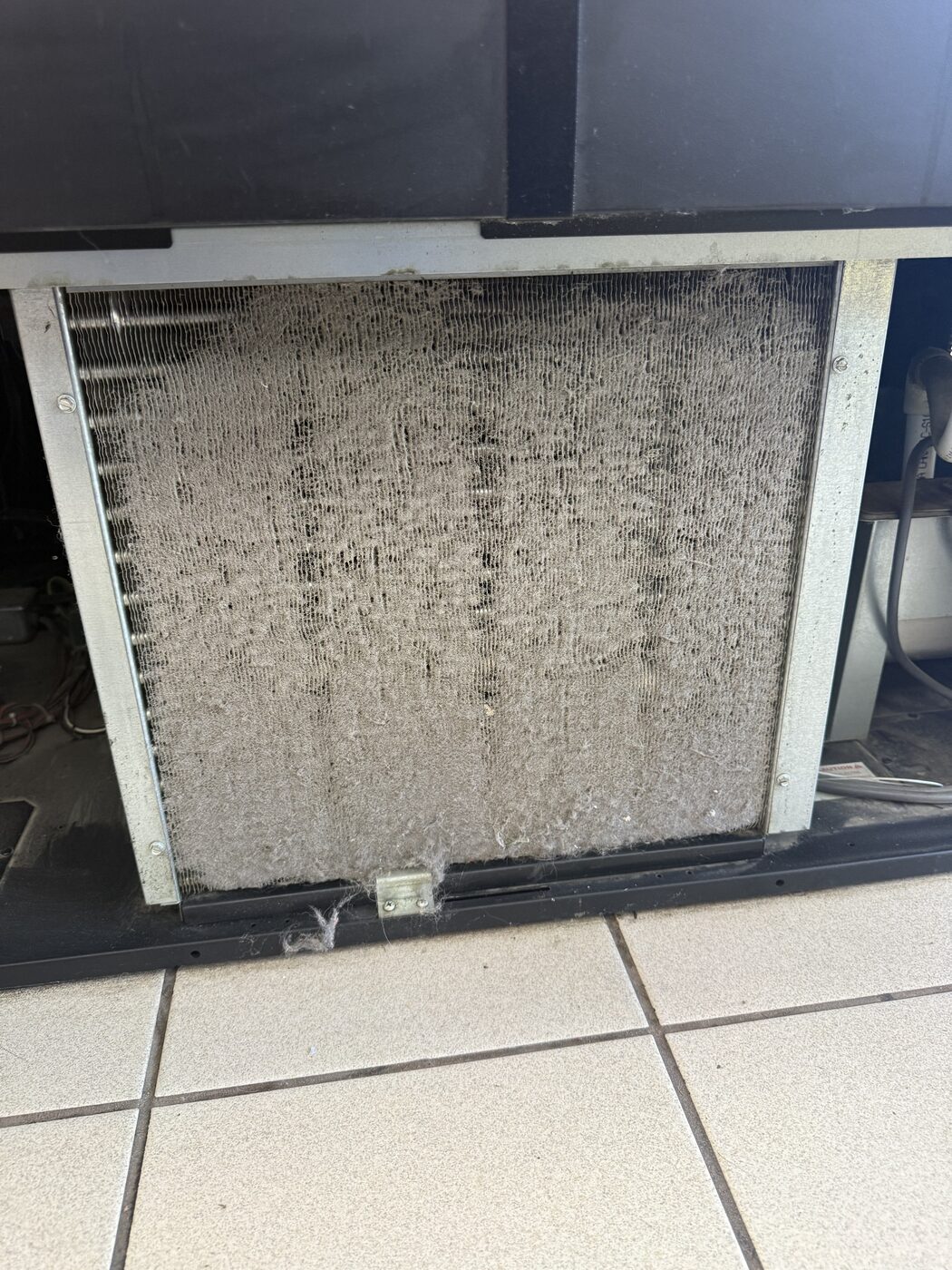
Other times the compressor runs, the fans spin, and the box temperature still creeps up. That is a heat-transfer failure — an evaporator coil glazed with ice or sludge, or a condenser smothered by salt-crusted debris that is strangling airflow. We diagnose it by reading the pressure differential across the coil, not by trusting the number on the display.
The other classic, especially on the high-cycle freezers the seafood trade runs, is a failed defrost. Frost on the evaporator is normal; a dead defrost heater or a stuck termination is not. The ice turns into insulation, cold air stops moving, and product warms whether or not the compressor is running. And on rack systems, a single failing circuit can drag down a whole bank of cases — we isolate the bad branch fast rather than chasing the symptom across the building.
The Equipment and Brands We Meet Across the Port City
When you call, we do not care what the badge says — we care about the make, model, and what the system is actually doing. That said, we see the same gear across New Bedford constantly. The seafood and cold-storage side runs heavy low-temp equipment: Heatcraft and Bohn evaporators, Copeland compressors, and parallel rack systems built for sustained deep-freeze duty, all of it taking a beating from harbor air.
On the restaurant and market side — downtown, the North End, the South End, the West End — we work a lot of True, Beverage-Air, and Continental boxes and cases, plus Hoshizaki and Manitowoc ice machines packed into tight kitchens. Many run ten to fifteen years old on a mix of original and replacement parts, and show the early corrosion you only get this close to the water.
The point is simple: because we see New Bedford’s specific equipment and its specific failure modes day in and day out — from the waterfront freezers to the downtown reach-ins and the rack systems in between — we usually know what to check before the tools come out of the truck. That is local experience across the whole port, not a guess.
Neighborhood by Neighborhood: Where We Work in New Bedford
New Bedford is not one place — it is a string of very different refrigeration worlds, and we know each one. Down on the working waterfront and along MacArthur Drive, it is industrial: fish houses, processors, and cold-storage operations running low-temp freezers and rack systems around the clock, where our job is keeping deep-freeze product safe and the New Bedford Health Department satisfied. These are the calls where minutes equal money, and being a few blocks away off Mill Street matters.
Downtown and the historic district — Purchase Street, Union Street, William Street — are a different animal. Here it is restaurants and cafes running a tight mix of reach-ins, display cases, a back-room walk-in, and an ice machine wedged into a kitchen with no spare square footage. We work clean and fast in those cramped spaces without shutting down your service. The North End, anchored by the Acushnet Avenue commercial spine, brings the Portuguese and Cape Verdean restaurant and market scene, plus the Hicks-Logan industrial blocks off Coggeshall Street where light manufacturing and food operations keep their own cold rooms.
The South End and West End add neighborhood markets, bakeries, and corner stores — smaller systems, but the same intolerance for downtime when the case holding a weekend’s inventory quits. Wherever you are in the city, we already know the access quirks, the loading situations, and the kind of equipment we are likely to find before we knock.
Compliance and Documentation That Survives an Inspection
Running commercial refrigeration at a fishing port means living inside the rules, and we work with them rather than around them. For systems above the Massachusetts refrigerant threshold, we document each visit for the operator’s MassDEP Refrigerant Management Program file, and we recover and handle refrigerant under EPA 608 every time. New Bedford food establishments need their temperature logs intact and corrective action documented for 105 CMR 590 inspections by the city Health Department, and our service tickets are built to fit that record set.
That is part of why a broad, single-vendor approach helps: when one team services your whole cold chain, your documentation is consistent across every unit instead of scattered across three contractors with three different ticket formats. When the inspector asks how a temperature excursion was corrected, you have one clean record to point to. Call 508-521-9477 and we will make sure the paperwork is as cold-chain-tight as the equipment.
Service Area and Response Times Around New Bedford, MA
New Bedford, MA is the center of our dispatch map — it is our home city, and our shop is at 88 Mill Street. Waterfront, downtown, the North End, and the South End are frequently a short hop away, with most weekday calls placed before noon getting same-day service. Getting around town we know the bottlenecks: Route 18 (JFK Memorial Highway) along the harbor, I-195 across the top of the city, Route 6 through the center, and the surface routes off Coggeshall Street and Acushnet Avenue.
From New Bedford we reach the neighboring South Coast towns fast — Fairhaven over the bridge, Acushnet just north, Dartmouth to the west, and Fall River up I-195 are routinely same-day. Into Rhode Island — Providence, Warwick, Newport — we are commonly there inside two hours. Overnight and weekend emergencies are triaged by what is losing inventory fastest: a waterfront freezer full of seafood climbing past spec at midnight goes straight to the front of the line. We will tell you on the phone what realistic arrival looks like before you commit.
Ready to get commercial refrigeration repair in New Bedford, MA?
Call 508-521-9477 Schedule NowKeeping New Bedford kitchens inspection-ready
Massachusetts state food code (105 CMR 590); New Bedford Health Department inspects. For New Bedford kitchens that means one number matters every day: TCS food holds at 41°F or below, and an inspector’s thermometer — not your unit’s display — is what decides it. Cooked food has to drop from 135°F to 70°F within two hours and hit 41°F within six, which is exactly the kind of load that exposes refrigeration equipment already running on the edge.
New Bedford is the largest commercial fishing port on the East Coast — heavy seafood processing and cold storage, plus a Portuguese and Cape Verdean restaurant scene. Fish houses and cold-storage operations run industrial walk-in freezers where a failure means major product loss; restaurants downtown run a mix of reach-ins and ice machines. When we service refrigeration equipment in New Bedford, our EPA Section 608-certified technicians verify actual holding temperature, door seal and defrost performance before closing the call — so the next inspection reads the same number you do.