When a walk-in freezer fails, every minute counts. Product loss can hit hard—especially in commercial kitchens, grocery stores, or cold storage warehouses where temperature-sensitive goods are at risk. A sudden power outage, compressor failure, or refrigerant leak can ruin thousands in inventory. If you’re facing a walk-in freezer failure product loss insurance claim, acting fast isn’t just smart—it’s essential.
The longer the unit stays down, the more the damage grows. Under EPA Section 608, commercial refrigeration systems have strict leak thresholds, and if your system uses HFCs, even small leaks can trigger compliance issues. Knowing how to document, report, and file an emergency insurance claim can save your business. This guide walks you through what to do—before the clock runs out.
Walk-In Freezer Failure: When Product Loss Triggers an Insurance Claim
A walk-in freezer breakdown isn’t just a repair issue—it’s a product loss crisis. In commercial kitchens, markets, and retail stores across southeastern MA and RI, that loss can be thousands in spoiled food. A failure in cold storage—like a compressor overrun, evaporator icing, or refrigerant leak—can push temperatures above 32°F within hours. FDA Food Code requires TCS foods to stay at 41°F or below, so even a brief spike risks spoilage and safety violations. If the freezer door gasket is damaged or the anti-condensate heater fails, moisture builds and accelerates loss. When a walk-in freezer fails, timely walk-in freezer repair can prevent further product loss and support a smooth insurance claim process.
Danfoss lists common faults like low refrigerant feed or fan issues—problems that compound fast. The moment you notice the temperature rising, document it: take photos, log the time, and note which products are affected. Insurers need proof of sudden failure, not slow decline. Your walk-in freezer failure product loss insurance claim starts with clear, timely evidence. If you’re in the region, Armus Refrigeration (88 Mill St, New Bedford, MA) responds fast—no matter the hour. We’ve seen it all: from defrost cycle errors to refrigerant leaks in Kolpak units. Every minute counts. Act now.
Why Walk-In Cooler Repair Is Critical Before Insurance Claims Are Processed
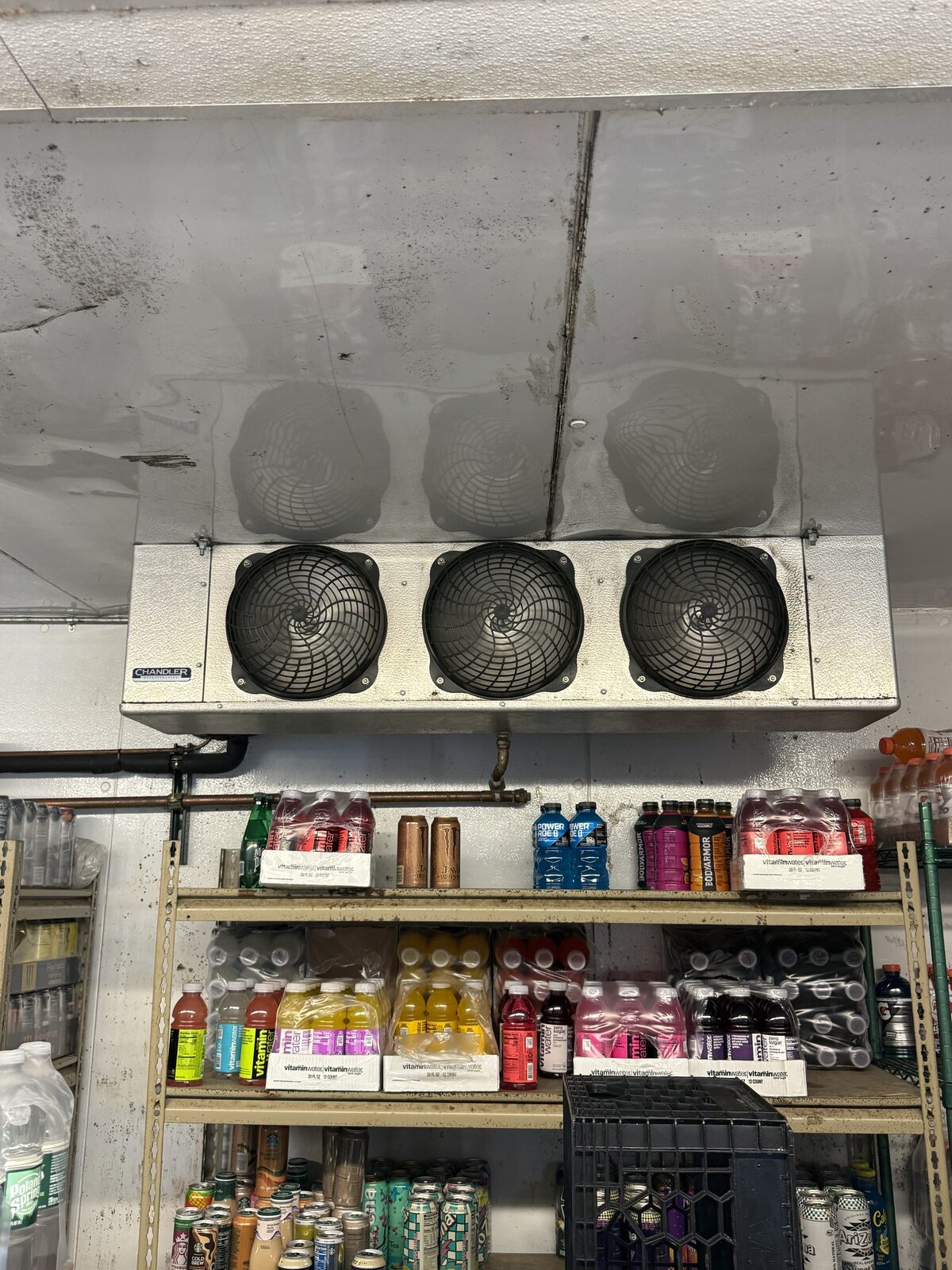
Every minute a walk-in cooler runs above 41°F, you’re risking spoilage and liability. The FDA Food Code mandates cold holding at 41°F or below for time/temperature control for safety foods—most operators keep units in the mid to high 30s to stay safe. If your equipment fails and temperatures rise, that’s not just lost product. It’s a claim red flag.
Insurance companies demand proof you acted fast. Delaying walk-in cooler repair means more spoilage, higher loss estimates, and a harder claim. They’ll ask: Did you respond in time? Was the equipment properly maintained?
An emergency repair isn’t just about fixing the unit—it’s about documenting every step. That includes temperature logs, repair timestamps, and visual evidence of damage like frost or condensation around door seals. Kolpak manuals note that anti-condensate heaters around the door perimeter are critical—when they fail, moisture builds and damages insulation.
Don’t wait. Call Armus Refrigeration at 88 Mill St, New Bedford, MA — 508-521-9477. For more than 15 years, we’ve provided service across southeastern Massachusetts and Rhode Island. Fix it fast, document it completely, and protect your business.
Common Causes of Walk-In Freezer Failure: From Condensation to Compressor Overrun
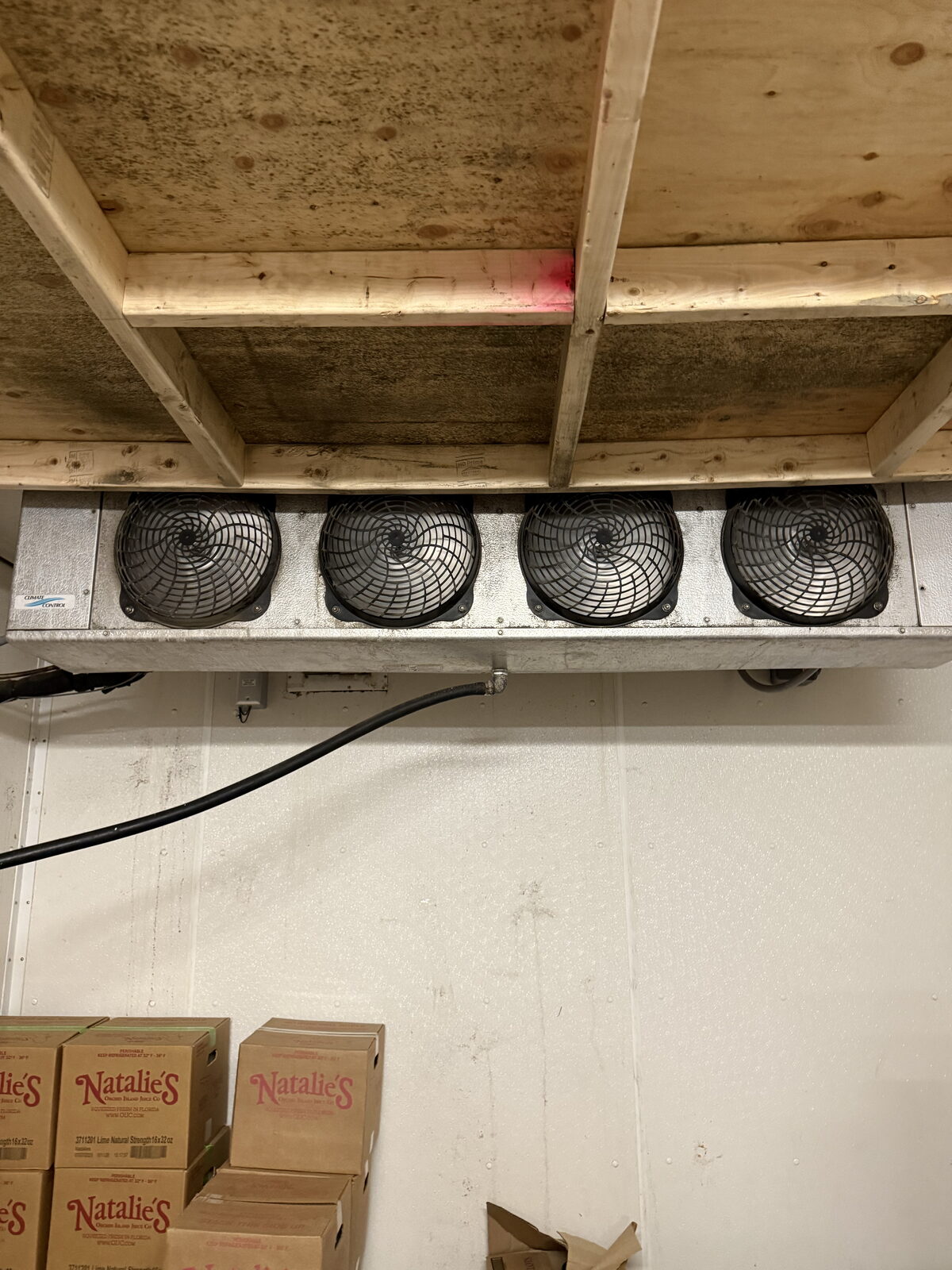
Walk-in freezer failure isn’t always a sudden crash—it’s often a slow build from overlooked issues. Condensation around the door jamb? That’s a red flag. Kolpak’s manual says anti-condensate heaters should run continuously around the perimeter, including under thresholds. If they’re off or moisture is excessive, ice forms and damages the vapor barrier.
Insulation is critical. Federal standards require R-32 for freezers and R-28 for floors. If insulation is compromised—especially at seams or around door frames—heat infiltration spikes, forcing the system to work harder. Kolpak mandates a continuous 3/8-inch bead of non-drying butyl sealant to maintain the vapor barrier, and thermal breaks in freezer floors to prevent cold bridging.
Evaporator icing kills efficiency. Danfoss lists frequent door openings, damaged gaskets, short defrost cycles, and fan issues as top causes. If air from the unit cooler hits the door directly, hoar-frost can form—Heatcraft warns against placing coolers too close to doors or in another unit’s airflow.
Refrigerant management matters. Heatcraft says unit coolers should run 6°F to 10°F superheat at a 10°F design TD. Too little superheat? You risk liquid refrigerant returning to the compressor—causing oil dilution and eventual compressor overrun.
All this leads to a walk-in freezer failure that triggers a product loss insurance claim. Fix it fast, document it completely—Armus Refrigeration, 88 Mill St, New Bedford, MA — 508-521-9477, handles walk in cooler repair with precision and speed.
Compliance & Prevention: What the EPA and FDA Require for Cold Storage Safety
A walk-in freezer failure isn’t just a repair issue—it’s a compliance event that can impact your product loss insurance claim. The EPA and FDA set clear rules you must follow to avoid penalties and strengthen your claim.
Under EPA Section 608, commercial refrigeration—including walk-ins—must meet a 20% annual leak rate threshold. If your system holds 15+ pounds of HFC refrigerant, you’re in scope. That means you must fix leaks within 30 days of detection, perform required leak inspections, and keep records for three years. The owner is responsible—no contractor exemption.
If your freezer uses an HFC with a GWP above 53 and holds 1,500 lbs or more, you need automatic leak detection by law—installed within 30 days of January 1, 2026. This applies to cold storage warehouses and supermarket systems.
FDA Food Code requires TCS foods to be held at 41°F or below. Most walk-in coolers run in the mid to high 30s to stay compliant.
Federal standards require R-25 insulation in coolers, R-32 in freezers, and R-28 for freezer floors.
Appliances with GWP 53 or below are exempt from leak repair rules.
Document every repair, inspection, and leak fix. This proves due diligence during a product loss insurance claim.
Armus Refrigeration, 88 Mill St, New Bedford, MA — 508-521-9477, handles walk in cooler repair with precision and speed.
What Our Techs Check First (From the Field)
When we arrive on-site, we don’t guess. We follow a field-tested order. First, we check the door gasket. A damaged or loose seal lets warm air in — that’s the #1 cause of evaporator icing. Next, we inspect the anti-condensate heater around the door jamb. If frost or condensation shows there, the heater’s dead. We then verify the defrost cycle timing. A short or skipped defrost leads to ice buildup in the drain pan — often due to a failed heater or clogged line.
We check superheat with the system running: low-TD freezers need 10°F or less, per Sporlan. If it’s higher, refrigerant feed is off. We also confirm the unit cooler isn’t near a door or in another’s airflow — Heatcraft warns that causes hoar-frost and defrost failure. Last, we look at the drain and pan pitch. If water pools, it won’t drain — even with a working heater. All this before we call it a loss. Armus Refrigeration, 88 Mill St, New Bedford, MA — 508-521-9477.
Frequently Asked Questions
What happens if my walk-in freezer fails and I can’t prove the leak rate was under 20%?
If your walk-in freezer failed due to a refrigerant leak, and the leak rate exceeded 20% per year—per EPA Section 608—your insurance claim may still stand. But you must show compliance efforts: documented leak inspections, repair logs, and records proving you acted within the 30-day repair window. Non-compliance can reduce or deny your product loss claim.
Does my restaurant’s walk-in freezer qualify as commercial refrigeration under EPA rules?
Yes, your walk-in freezer qualifies as commercial refrigeration under 40 CFR 82.152 if it’s used in food retail or cold storage. That means it’s subject to the 20% annual leak rate threshold, not the 10% comfort-cooling standard. This applies once the system holds 15+ pounds of HFC refrigerant. Always verify the charge weight and maintain compliance records.
Can I use virgin refrigerant to repair my walk-in freezer after January 2029?
No, starting January 1, 2029, servicing supermarket systems and commercial refrigeration like your walk-in freezer requires reclaimed HFCs, not virgin refrigerant, under 40 CFR 84.112. Using virgin refrigerant after that date violates federal rules. This applies even if your freezer is low-pressure or uses a low-GWP refrigerant. Always use reclaimed, properly recovered refrigerant for repairs.
Related Services
- Walk-In Cooler Repair in Sandwich, MA
- Walk-In Cooler Repair in New Bedford, MA
- Walk-In Cooler Repair in MA & RI
Sources We Work From
The standards and manufacturer service requirements behind this page:
- Kolpak Walk-In Installation & Operation Manual
- Cornell LII — 40 CFR 82.152 Definitions
- EPA Fact Sheet — AIM Act Automatic Leak Detection Requirements (January 2026)
- 10 CFR 431.306, Energy conservation standards for walk-in coolers and walk-in freezers
- 42 U.S.C. 6311(20), Definitions
- Heatcraft Engineering Manual, H-ENGM0408
For the rules and standards behind this work, see the FDA Food Code and ENERGY STAR commercial food service guidelines from the federal agencies that govern commercial refrigeration.
How we write these: every procedure, temperature and interval on this page is taken from manufacturer service literature or federal food and refrigerant code, listed in Sources above, and reviewed by our own technicians against what we see in the field. We revise the page when a standard or a manufacturer procedure changes.