Walk into your freezer and find the walls glazed over, the evaporator buried in frost, or a sheet of ice creeping across the floor? You’re not imagining a problem. A little frost is normal in any walk-in, but heavy ice buildup is your freezer telling you something is wrong — and if you ignore it, you’re risking your product, your energy bill, and eventually the compressor. The good news: a lot of icing has a plain, findable cause. This is what a seasoned tech looks at, what you can safely check yourself, and when the ice means it’s time to pick up the phone.
Why Frost and Ice Sheets Form in a Walk-In Freezer
Ice in a freezer is just moisture that found its way onto a cold surface and froze. In a healthy walk-in, the defrost cycle melts that frost off the evaporator coil a few times a day, and the water drains away. When you see ice accumulating — thick coil frost, sheets on the ceiling or floor, or a crusted-over fan guard — one of two things is happening: too much moisture is getting in, or the freezer isn’t clearing the frost it normally would. Here are the usual culprits.
Worn or damaged door gaskets and seals
The rubber gasket around your door is the single most common source of icing. Once it hardens, tears, or flattens out, warm humid kitchen air leaks in around the edges and freezes on contact. If you see frost concentrated near the door frame or hinges, or you can slide a dollar bill out from a closed door with no resistance, your gasket is done.
Doors left ajar or a failing closer
A busy line means doors that don’t get shut all the way, latches that don’t catch, and auto-closers that have given up. Every minute a freezer door hangs open, it pulls in a rush of warm, moist air that lands on the coil and freezes. A door propped for stocking is one of the fastest ways to ice a unit over.
Humidity infiltration
Even with a good door, humidity sneaks in — through a cracked door sweep, a failed heater wire around the frame, or a room that runs hot and damp in summer. Southeastern Massachusetts and Rhode Island kitchens get muggy, and that moisture has to go somewhere. It goes onto your coldest surfaces as frost.
A failed defrost heater or defrost timer
This is the big one. Your freezer is supposed to frost up between defrost cycles — then a defrost heater warms the coil and melts it off on a schedule set by a timer or control board. If the heater burns out or the timer sticks, the coil never clears. Frost piles on frost until the evaporator is a solid block of ice, airflow chokes off, and the freezer stops holding temperature. Heavy, even ice covering the entire coil almost always points here.
A blocked or frozen condensate drain
When defrost water can’t drain, it refreezes. A clogged drain line or a failed drain-pan heater leaves a growing sheet of ice under the coil and across the floor — a slip hazard and a sign the melt water has nowhere to go.
What’s Safe to Check Yourself
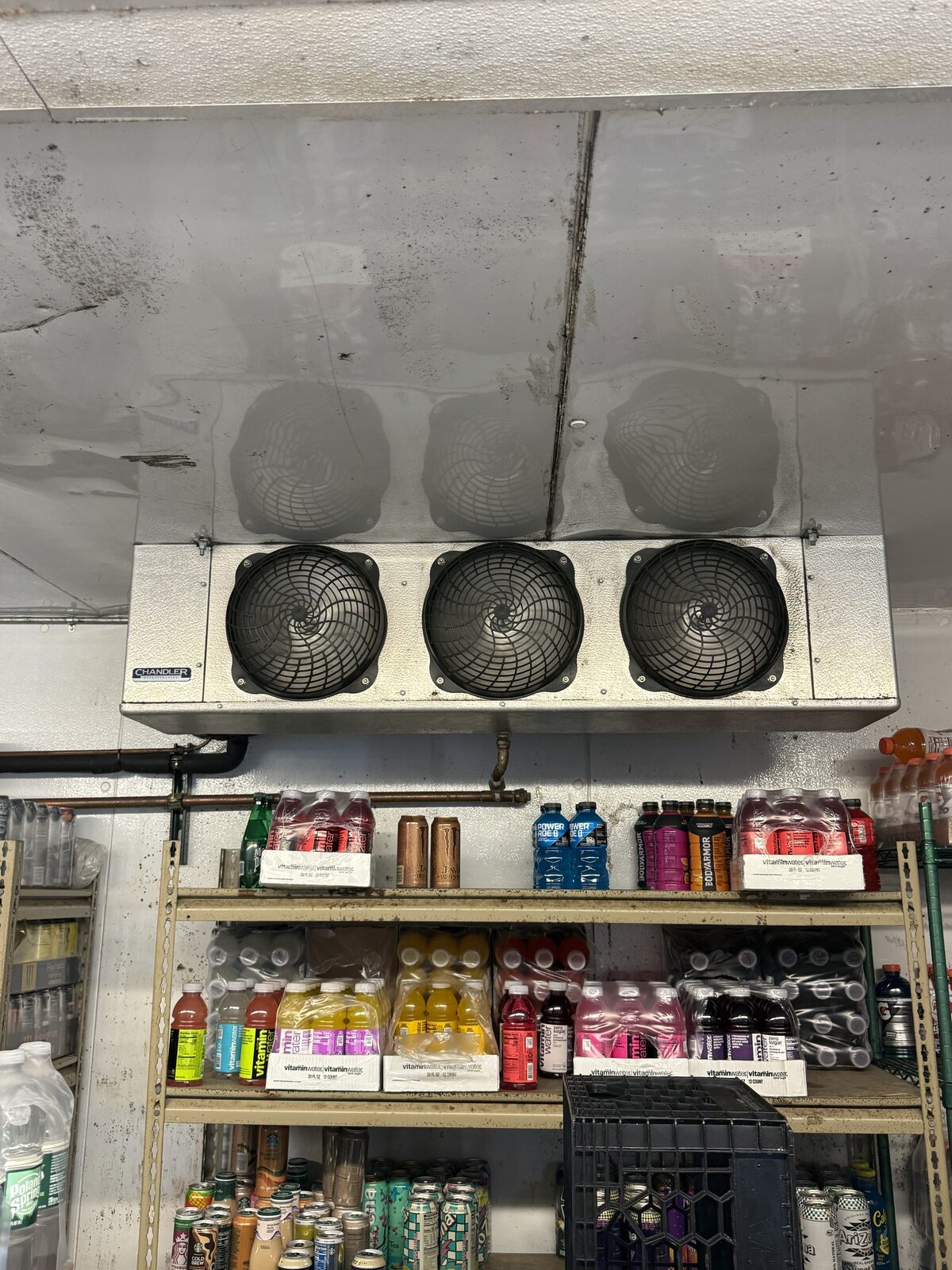
Before you call anyone, there are a few things a manager can safely inspect. None of these require opening electrical panels or touching refrigerant — leave that to a tech.
- Watch the door in action. During a busy hour, is it actually closing and latching every time? Look for product blocking the sweep or a strip curtain that’s torn or missing.
- Inspect the gasket. Run your hand along the seal for cracks, gaps, and hard spots. Close the door on a slip of paper in a few places — if it pulls out with no drag, the gasket isn’t sealing.
- Look at where the ice is. Frost near the door points to a seal or door issue. A fully iced-over coil points to defrost. Ice on the floor points to a drain problem. Where it forms tells the story.
- Check the temperature log. Is the box still holding zero, or has it been creeping up? A freezer that’s icing and warming needs attention faster than one that’s just frosty.
- Clear obvious blockages. Make sure boxes aren’t stacked against the evaporator fans or covering vents. Restricted airflow accelerates frost.
- Do a manual defrost if it’s safe. If a coil is fully iced, you can shut the unit down, move product to backup storage, and let it thaw naturally with the door open. Never chip or pry ice off with a knife or screwdriver — you’ll puncture the coil and turn a service call into a coil replacement.
A manual thaw is a temporary reset, not a repair. If the ice comes back within a day or two, the underlying cause is still there.
When Ice Buildup Means the Defrost System Is Failing — Call a Pro
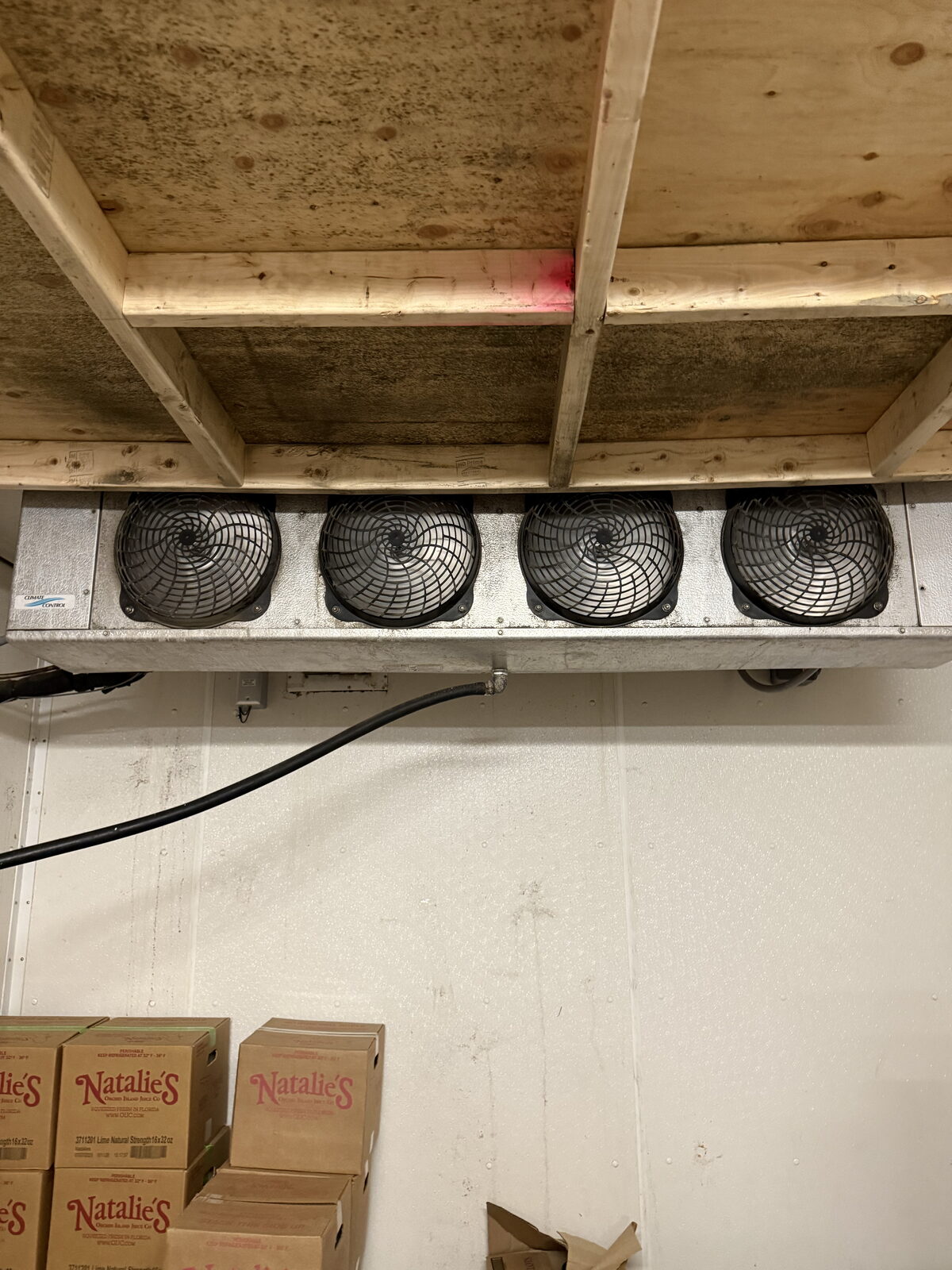
Some icing you can manage. Some is a clear signal to bring in a technician before you lose a walk-in full of inventory. Call for professional freezer frost and ice buildup repair when:
- The coil re-freezes solid within a day or two of a manual defrost — a strong sign of a dead defrost heater, stuck timer, or failed control board.
- You hear the defrost cycle never kicking on, or the box never seems to go through a melt period.
- Ice keeps sheeting across the floor from a drain that won’t clear.
- The freezer is icing up and the temperature is climbing — that combination means airflow is choked and the unit is losing the battle.
Defrost diagnosis involves testing heaters, timers, termination thermostats, and control boards — live electrical work that isn’t a DIY job. A tech can pinpoint the failed part in one visit instead of leaving you to guess while product warms. If icing has already progressed to the point the box won’t cool, that’s squarely have your walk-in freezer serviced territory, and it’s worth moving fast. And if the unit has stopped cooling entirely — not just frosting — see our guidance on a refrigeration system that’s not cooling, because the fixes and the urgency are different.
FAQ
Is some frost in my walk-in freezer normal?
Yes. A light, even layer of frost on the evaporator coil between defrost cycles is completely normal — the defrost system is designed to melt it off automatically. What’s not normal is thick ice that keeps growing, sheets on the ceiling or floor, or a coil frozen into a solid block. That level of buildup means moisture is getting in or the defrost cycle isn’t clearing it.
Can I just chip the ice off the coil to fix it?
No — please don’t. Chipping with a knife, scraper, or screwdriver almost always punctures the thin aluminum coil fins or the refrigerant tubing, which turns a repair into a full coil replacement. If a coil is iced over, shut the unit down and let it thaw naturally, then have a tech find out why it iced in the first place.
How fast should I act if my freezer is icing up?
If the box is still holding temperature and you’ve caught it early, you have a little time to inspect the door and gasket. But if the temperature is climbing, the coil is fully iced, or ice keeps coming back after a defrost, treat it as urgent — a walk-in full of thawing product can cost far more than the repair. Same-day service is the safe call.
Still not cooling? Don’t risk your inventory. Call 508-521-9477 for same-day commercial refrigeration repair across New Bedford, Fall River, and Southeastern Mass & Rhode Island — we diagnose fast and get you back up.
Walk into your freezer and find the walls glazed over, the evaporator buried in frost, or a sheet of ice creeping across the floor? You’re not imagining a problem. A little frost is normal in any walk-in, but heavy ice buildup is your freezer telling you something is wrong — and if you ignore it, you’re risking your product, your energy bill, and eventually the compressor. The good news: a lot of icing has a plain, findable cause. This is what a seasoned tech looks at, what you can safely check yourself, and when the ice means it’s time to pick up the phone.
Why Frost and Ice Sheets Form in a Walk-In Freezer
Ice in a freezer is just moisture that found its way onto a cold surface and froze. In a healthy walk-in, the defrost cycle melts that frost off the evaporator coil a few times a day, and the water drains away. When you see ice accumulating — thick coil frost, sheets on the ceiling or floor, or a crusted-over fan guard — one of two things is happening: too much moisture is getting in, or the freezer isn’t clearing the frost it normally would. Here are the usual culprits.
Worn or damaged door gaskets and seals
The rubber gasket around your door is the single most common source of icing. Once it hardens, tears, or flattens out, warm humid kitchen air leaks in around the edges and freezes on contact. If you see frost concentrated near the door frame or hinges, or you can slide a dollar bill out from a closed door with no resistance, your gasket is done.
Doors left ajar or a failing closer
A busy line means doors that don’t get shut all the way, latches that don’t catch, and auto-closers that have given up. Every minute a freezer door hangs open, it pulls in a rush of warm, moist air that lands on the coil and freezes. A door propped for stocking is one of the fastest ways to ice a unit over.
Humidity infiltration
Even with a good door, humidity sneaks in — through a cracked door sweep, a failed heater wire around the frame, or a room that runs hot and damp in summer. Southeastern Massachusetts and Rhode Island kitchens get muggy, and that moisture has to go somewhere. It goes onto your coldest surfaces as frost.
A failed defrost heater or defrost timer
This is the big one. Your freezer is supposed to frost up between defrost cycles — then a defrost heater warms the coil and melts it off on a schedule set by a timer or control board. If the heater burns out or the timer sticks, the coil never clears. Frost piles on frost until the evaporator is a solid block of ice, airflow chokes off, and the freezer stops holding temperature. Heavy, even ice covering the entire coil almost always points here.
A blocked or frozen condensate drain
When defrost water can’t drain, it refreezes. A clogged drain line or a failed drain-pan heater leaves a growing sheet of ice under the coil and across the floor — a slip hazard and a sign the melt water has nowhere to go.
What’s Safe to Check Yourself
Before you call anyone, there are a few things a manager can safely inspect. None of these require opening electrical panels or touching refrigerant — leave that to a tech.
- Watch the door in action. During a busy hour, is it actually closing and latching every time? Look for product blocking the sweep or a strip curtain that’s torn or missing.
- Inspect the gasket. Run your hand along the seal for cracks, gaps, and hard spots. Close the door on a slip of paper in a few places — if it pulls out with no drag, the gasket isn’t sealing.
- Look at where the ice is. Frost near the door points to a seal or door issue. A fully iced-over coil points to defrost. Ice on the floor points to a drain problem. Where it forms tells the story.
- Check the temperature log. Is the box still holding zero, or has it been creeping up? A freezer that’s icing and warming needs attention faster than one that’s just frosty.
- Clear obvious blockages. Make sure boxes aren’t stacked against the evaporator fans or covering vents. Restricted airflow accelerates frost.
- Do a manual defrost if it’s safe. If a coil is fully iced, you can shut the unit down, move product to backup storage, and let it thaw naturally with the door open. Never chip or pry ice off with a knife or screwdriver — you’ll puncture the coil and turn a service call into a coil replacement.
A manual thaw is a temporary reset, not a repair. If the ice comes back within a day or two, the underlying cause is still there.
When Ice Buildup Means the Defrost System Is Failing — Call a Pro
Some icing you can manage. Some is a clear signal to bring in a technician before you lose a walk-in full of inventory. Call for professional freezer frost and ice buildup repair when:
- The coil re-freezes solid within a day or two of a manual defrost — a strong sign of a dead defrost heater, stuck timer, or failed control board.
- You hear the defrost cycle never kicking on, or the box never seems to go through a melt period.
- Ice keeps sheeting across the floor from a drain that won’t clear.
- The freezer is icing up and the temperature is climbing — that combination means airflow is choked and the unit is losing the battle.
Defrost diagnosis involves testing heaters, timers, termination thermostats, and control boards — live electrical work that isn’t a DIY job. A tech can pinpoint the failed part in one visit instead of leaving you to guess while product warms. If icing has already progressed to the point the box won’t cool, that’s squarely have your walk-in freezer serviced territory, and it’s worth moving fast. And if the unit has stopped cooling entirely — not just frosting — see our guidance on a refrigeration system that’s not cooling, because the fixes and the urgency are different.
FAQ
Is some frost in my walk-in freezer normal?
Yes. A light, even layer of frost on the evaporator coil between defrost cycles is completely normal — the defrost system is designed to melt it off automatically. What’s not normal is thick ice that keeps growing, sheets on the ceiling or floor, or a coil frozen into a solid block. That level of buildup means moisture is getting in or the defrost cycle isn’t clearing it.
Can I just chip the ice off the coil to fix it?
No — please don’t. Chipping with a knife, scraper, or screwdriver almost always punctures the thin aluminum coil fins or the refrigerant tubing, which turns a repair into a full coil replacement. If a coil is iced over, shut the unit down and let it thaw naturally, then have a tech find out why it iced in the first place.
How fast should I act if my freezer is icing up?
If the box is still holding temperature and you’ve caught it early, you have a little time to inspect the door and gasket. But if the temperature is climbing, the coil is fully iced, or ice keeps coming back after a defrost, treat it as urgent — a walk-in full of thawing product can cost far more than the repair. Same-day service is the safe call.
Still not cooling? Don’t risk your inventory. Call 508-521-9477 for same-day commercial refrigeration repair across New Bedford, Fall River, and Southeastern Mass & Rhode Island — we diagnose fast and get you back up.