When the walk-in cooler stops holding temperature in the middle of a Friday dinner rush, you don’t have hours to spare. Product is warming, your line is improvising, and somewhere in the back of your mind sits the health inspector and the dollar value of everything on those shelves. It’s stressful — and it’s exactly the kind of call we take every week from kitchens across the SouthCoast. The good news: most failures are fixable fast when you catch them early and get a local tech moving.
This is a plain-English guide to what actually determines how quickly you get back up, what you can safely do while you wait, and why a nearby crew matters more than you’d think for both food cost and compliance.
Why response time decides what this failure costs you
Refrigeration problems are a race against the clock, and the clock isn’t measuring your comfort — it’s measuring your inventory and your license. Massachusetts follows the FDA Food Code: cold food has to be held at 41°F or below, and anything sitting in the “danger zone” between 41°F and 135°F for more than four hours generally has to be thrown out. A cooler that drifts to 50°F overnight can quietly turn thousands of dollars of proteins and dairy into a dumpster run, plus a scramble to restock before you open.
That’s why the single most important number in a restaurant breakdown is response time. A tech who can be on-site in hours instead of the next afternoon is often the difference between a service call and a total loss. It’s the whole reason we built our restaurant refrigeration service around fast local dispatch rather than a regional queue where you’re behind fifty other tickets.
What to do while you wait for the tech
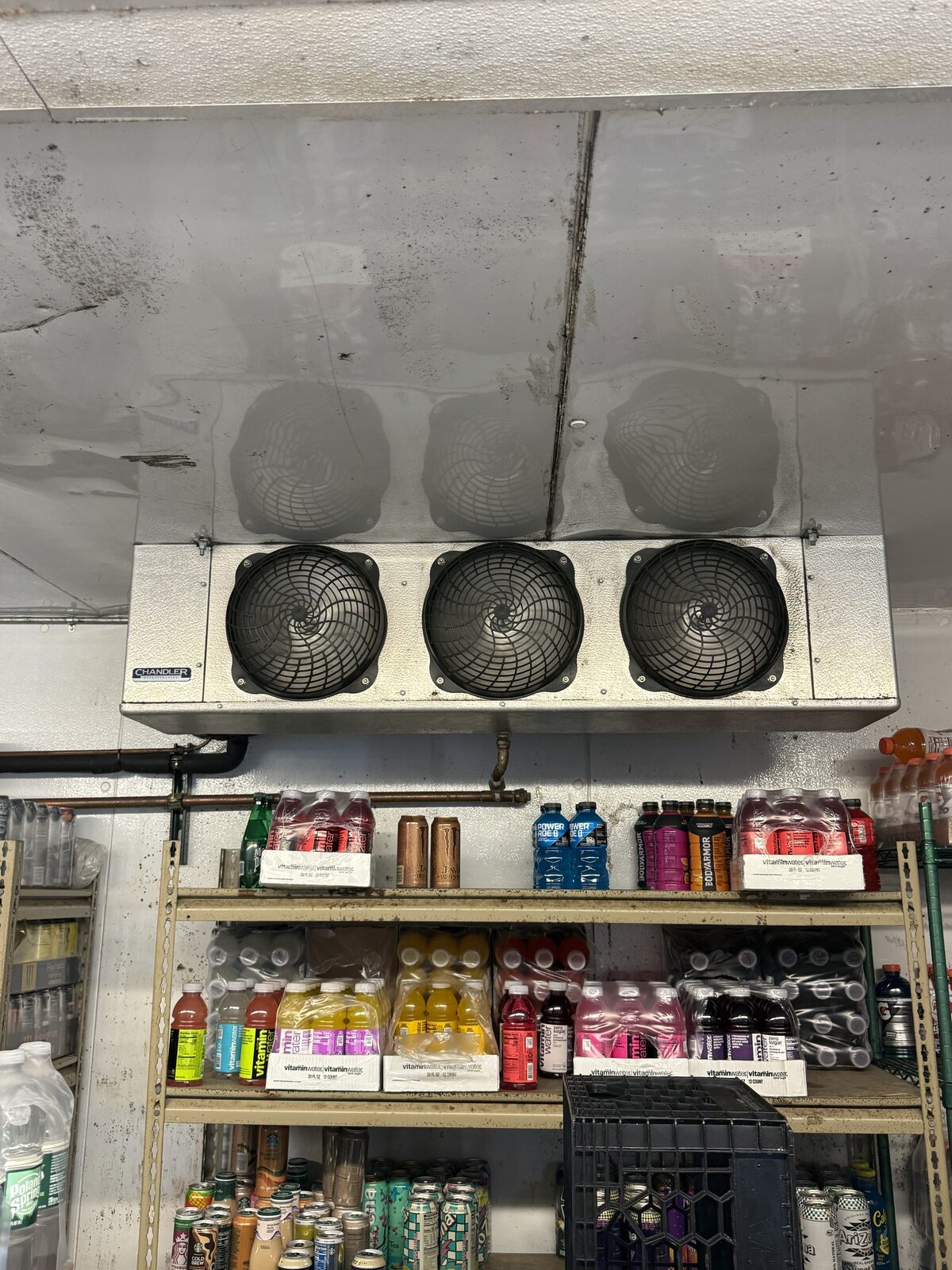
Once you’ve called for help, a few calm minutes can save your product. Work through this in order — none of it requires tools or risk:
- Note the time and the temperature. Read the built-in thermometer (or drop a probe into the coldest product). Write down when the unit started drifting — you’ll want this for both the tech and your food-safety log.
- Keep the doors shut. A closed, dark cooler holds cold for a surprisingly long time. Stop the “let me just check it” openings, and don’t load in warm product.
- Check the obvious. Confirm the unit is plugged in, the breaker hasn’t tripped, and the thermostat hasn’t been bumped or set to “defrost.” A shared circuit knocked out by a mixer or microwave is a common false alarm.
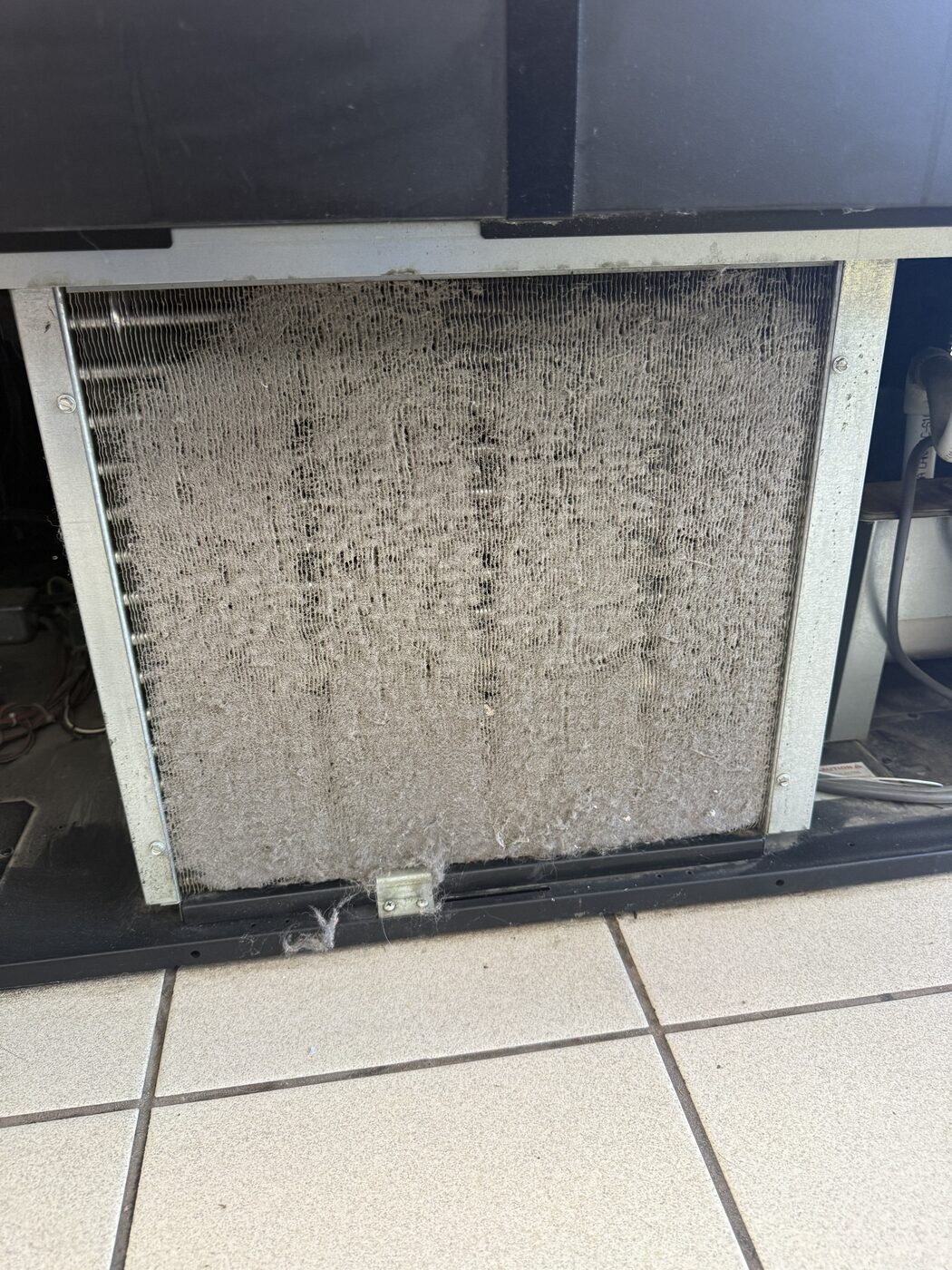
- Clear the airflow. Make sure vents inside aren’t blocked by boxes, and that the condenser coil and its area aren’t packed with grease and dust. A choked coil makes a healthy compressor run hot and quit.
- Listen for a second. Is the compressor humming and are the fans spinning? Dead-silent usually points to power or a control; running hard but not cooling often points to refrigerant, coils, or a fan motor. Either way, tell the tech what you hear.
- Move your high-value product. Shift proteins, dairy, and prepped items into a working reach-in, a backup freezer, or coolers packed with ice. Protect the expensive, time-sensitive stuff first.
- Log your temperatures. Keep noting temps every 30–60 minutes. That record protects you if an inspector asks, and it helps the tech understand how fast the unit is failing.
If those quick checks don’t bring it back — or the reading is already climbing — that’s your cue to stop troubleshooting and let a tech take over before the four-hour window closes.
Local coverage that actually shows up the same day
“We’ll get someone out” only helps if that someone is close. Because our trucks work the SouthCoast every day, we’re not driving in from Boston or Providence to reach you. If you’re downtown, on the waterfront, or out by the highway, our New Bedford and Fall River coverage means a tech who’s already nearby, knows the neighborhoods, and can often be at your door the same day you call.
We handle the full range of restaurant equipment — walk-in coolers and freezers, reach-ins, prep tables, undercounter units, ice machines, and display cases — as part of our broader commercial refrigeration repair work. And when something goes down after the lunch prep or right before service, our emergency refrigeration repair line is there so you’re not waiting until Monday with a cooler full of spoiling product.
Protecting food cost and staying health-code compliant
Fast local repair does two jobs at once. First, it protects the money already sitting in your walk-in — every hour a unit holds temperature is inventory you don’t have to dump and re-order. Second, it protects your standing with the local board of health. Inspectors don’t just want to see a cold cooler; they want to see that you responded quickly, logged temps, and moved product out of the danger zone. A documented same-day service call is exactly the paper trail that turns a potential violation into a non-issue. A dependable repair partner isn’t just a fix-it number — it’s part of how a well-run kitchen stays open and stays clean.
When to call a pro
Call sooner rather than later if any of these are true: the internal temperature is above 41°F and still rising after 30 minutes; you see ice buildup on the coils or evaporator; there’s water pooling on the floor; the compressor is short-cycling (clicking on and off) or won’t start; you smell a hot-electrical or burning odor; or the unit is running constantly but never reaches setpoint. Refrigerant work, electrical repairs, and sealed-system diagnostics are licensed jobs for good reason — a wrong guess can turn a $300 fix into a compressor replacement. When product and compliance are on the line, don’t gamble the difference.
FAQ
How fast can you actually get to my restaurant?
Because our trucks work New Bedford, Fall River, and the surrounding SouthCoast daily, same-day service is the norm rather than the exception — and true emergencies get moved to the front of the line. The best thing you can do is call the moment the unit starts drifting, not after it’s fully warm.
Can you fix it same day, or do you need to order parts?
Most common failures — capacitors, contactors, fan motors, thermostats, dirty coils, and many refrigerant issues — are diagnosed and repaired on the first visit from parts on the truck. For an unusual part we’ll get you a clear timeline and, where possible, help you keep product cold in the meantime.
What temperature should my restaurant cooler and freezer hold?
Coolers should hold 41°F or below for safe cold holding, and freezers should stay at 0°F or below to keep product solidly frozen. If your cooler is creeping past 41°F or your freezer is above 10°F, treat it as a problem to fix now, not next week.
Still not cooling? Don’t risk your inventory. Call 508-521-9477 for same-day commercial refrigeration repair across New Bedford, Fall River, and Southeastern Mass & Rhode Island — we diagnose fast and get you back up.
When the walk-in cooler stops holding temperature in the middle of a Friday dinner rush, you don’t have hours to spare. Product is warming, your line is improvising, and somewhere in the back of your mind sits the health inspector and the dollar value of everything on those shelves. It’s stressful — and it’s exactly the kind of call we take every week from kitchens across the SouthCoast. The good news: most failures are fixable fast when you catch them early and get a local tech moving.
This is a plain-English guide to what actually determines how quickly you get back up, what you can safely do while you wait, and why a nearby crew matters more than you’d think for both food cost and compliance.
Why response time decides what this failure costs you
Refrigeration problems are a race against the clock, and the clock isn’t measuring your comfort — it’s measuring your inventory and your license. Massachusetts follows the FDA Food Code: cold food has to be held at 41°F or below, and anything sitting in the “danger zone” between 41°F and 135°F for more than four hours generally has to be thrown out. A cooler that drifts to 50°F overnight can quietly turn thousands of dollars of proteins and dairy into a dumpster run, plus a scramble to restock before you open.
That’s why the single most important number in a restaurant breakdown is response time. A tech who can be on-site in hours instead of the next afternoon is often the difference between a service call and a total loss. It’s the whole reason we built our restaurant refrigeration service around fast local dispatch rather than a regional queue where you’re behind fifty other tickets.
What to do while you wait for the tech
Once you’ve called for help, a few calm minutes can save your product. Work through this in order — none of it requires tools or risk:
- Note the time and the temperature. Read the built-in thermometer (or drop a probe into the coldest product). Write down when the unit started drifting — you’ll want this for both the tech and your food-safety log.
- Keep the doors shut. A closed, dark cooler holds cold for a surprisingly long time. Stop the “let me just check it” openings, and don’t load in warm product.
- Check the obvious. Confirm the unit is plugged in, the breaker hasn’t tripped, and the thermostat hasn’t been bumped or set to “defrost.” A shared circuit knocked out by a mixer or microwave is a common false alarm.
- Clear the airflow. Make sure vents inside aren’t blocked by boxes, and that the condenser coil and its area aren’t packed with grease and dust. A choked coil makes a healthy compressor run hot and quit.
- Listen for a second. Is the compressor humming and are the fans spinning? Dead-silent usually points to power or a control; running hard but not cooling often points to refrigerant, coils, or a fan motor. Either way, tell the tech what you hear.
- Move your high-value product. Shift proteins, dairy, and prepped items into a working reach-in, a backup freezer, or coolers packed with ice. Protect the expensive, time-sensitive stuff first.
- Log your temperatures. Keep noting temps every 30–60 minutes. That record protects you if an inspector asks, and it helps the tech understand how fast the unit is failing.
If those quick checks don’t bring it back — or the reading is already climbing — that’s your cue to stop troubleshooting and let a tech take over before the four-hour window closes.
Local coverage that actually shows up the same day
“We’ll get someone out” only helps if that someone is close. Because our trucks work the SouthCoast every day, we’re not driving in from Boston or Providence to reach you. If you’re downtown, on the waterfront, or out by the highway, our New Bedford and Fall River coverage means a tech who’s already nearby, knows the neighborhoods, and can often be at your door the same day you call.
We handle the full range of restaurant equipment — walk-in coolers and freezers, reach-ins, prep tables, undercounter units, ice machines, and display cases — as part of our broader commercial refrigeration repair work. And when something goes down after the lunch prep or right before service, our emergency refrigeration repair line is there so you’re not waiting until Monday with a cooler full of spoiling product.
Protecting food cost and staying health-code compliant
Fast local repair does two jobs at once. First, it protects the money already sitting in your walk-in — every hour a unit holds temperature is inventory you don’t have to dump and re-order. Second, it protects your standing with the local board of health. Inspectors don’t just want to see a cold cooler; they want to see that you responded quickly, logged temps, and moved product out of the danger zone. A documented same-day service call is exactly the paper trail that turns a potential violation into a non-issue. A dependable repair partner isn’t just a fix-it number — it’s part of how a well-run kitchen stays open and stays clean.
When to call a pro
Call sooner rather than later if any of these are true: the internal temperature is above 41°F and still rising after 30 minutes; you see ice buildup on the coils or evaporator; there’s water pooling on the floor; the compressor is short-cycling (clicking on and off) or won’t start; you smell a hot-electrical or burning odor; or the unit is running constantly but never reaches setpoint. Refrigerant work, electrical repairs, and sealed-system diagnostics are licensed jobs for good reason — a wrong guess can turn a $300 fix into a compressor replacement. When product and compliance are on the line, don’t gamble the difference.
FAQ
How fast can you actually get to my restaurant?
Because our trucks work New Bedford, Fall River, and the surrounding SouthCoast daily, same-day service is the norm rather than the exception — and true emergencies get moved to the front of the line. The best thing you can do is call the moment the unit starts drifting, not after it’s fully warm.
Can you fix it same day, or do you need to order parts?
Most common failures — capacitors, contactors, fan motors, thermostats, dirty coils, and many refrigerant issues — are diagnosed and repaired on the first visit from parts on the truck. For an unusual part we’ll get you a clear timeline and, where possible, help you keep product cold in the meantime.
What temperature should my restaurant cooler and freezer hold?
Coolers should hold 41°F or below for safe cold holding, and freezers should stay at 0°F or below to keep product solidly frozen. If your cooler is creeping past 41°F or your freezer is above 10°F, treat it as a problem to fix now, not next week.
Still not cooling? Don’t risk your inventory. Call 508-521-9477 for same-day commercial refrigeration repair across New Bedford, Fall River, and Southeastern Mass & Rhode Island — we diagnose fast and get you back up.