Ice Buildup in a Walk-In Freezer
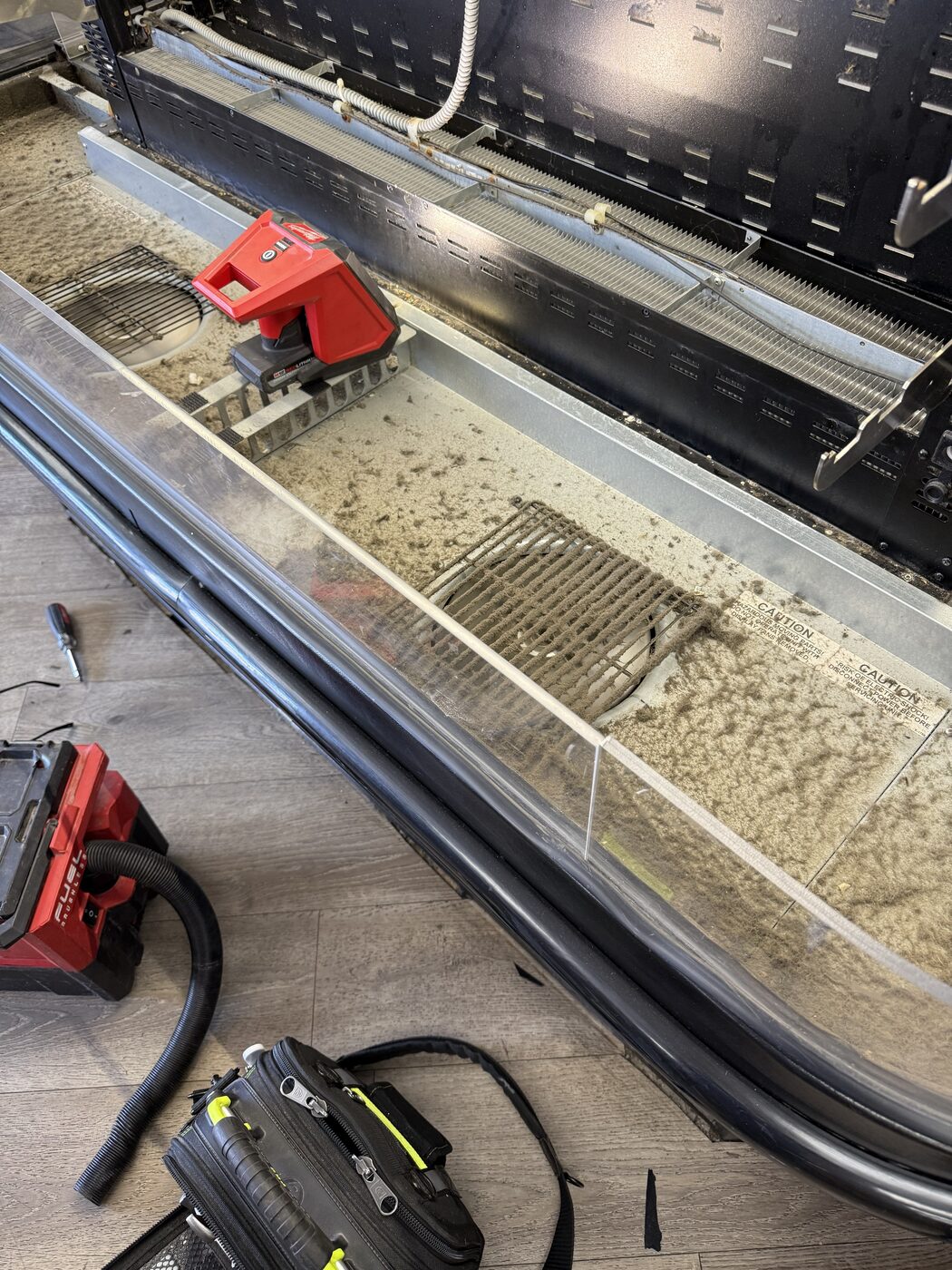
Ice buildup in a walk-in freezer is one of the most common calls we get, and it almost always points to a defrost, airflow, or door-seal problem rather than a low refrigerant charge. Heavy frost on the evaporator coil, a sheet of ice on the floor under the blower, or a freezer door frosting shut affects walk-in freezers, reach-in freezers, and the evaporator coils inside both. Left unchecked, a commercial freezer icing up runs warmer, draws more power, and eventually trips on high head pressure or starves the coil of airflow. Armus Refrigeration handles these repairs across New Bedford, Fall River, the South Coast, the South Shore, Cape Cod, Greater Boston, and Rhode Island, with EPA-608 certified techs on call 24/7.
What’s likely happening
- A failed defrost cycle leaves the evaporator coil frosted over because the defrost heater, timer, or termination thermostat stopped clearing it.
- Worn or torn door gaskets let warm, humid kitchen air leak in, and that moisture freezes onto the coil and door frame.
- A blocked condensate drain backs up melt water, which refreezes into a sheet of ice under the blower or on the floor.
- Restricted airflow from iced fins or a stalled evaporator fan motor means cold air cannot circulate, so frost piles up in one spot.
- A defrost timer stuck or set for too few cycles never gives the coil enough heat to fully melt accumulated frost between runs.
- A door left propped open or an auto-closer that no longer pulls the door tight floods the box with humidity that lands on the coil.
- An undersized or failing defrost heater warms the coil partway, refreezing the runoff before it ever reaches the drain pan.
What Armus checks & fixes
- We test the defrost heater for continuity and correct amp draw, then replace burned-out elements that no longer reach melt temperature.
- We check the defrost timer or electronic defrost control and reset cycle count and duration, replacing the timer if it is stuck.
- We verify the termination/defrost thermostat opens and closes at spec so the coil actually finishes and ends each defrost.
- We inspect door gaskets for tears, gaps, and compression set, and replace worn magnetic gaskets to seal out humid air.
- We clear the condensate drain line and drain-pan heater, flushing blockages so melt water leaves the box instead of refreezing.
- We confirm the evaporator fan motors spin freely at full RPM, replacing seized motors and bent or iced fan blades.
- We measure superheat and confirm the TXV is feeding the coil correctly so the system is not running starved or flooded.
Why this happens
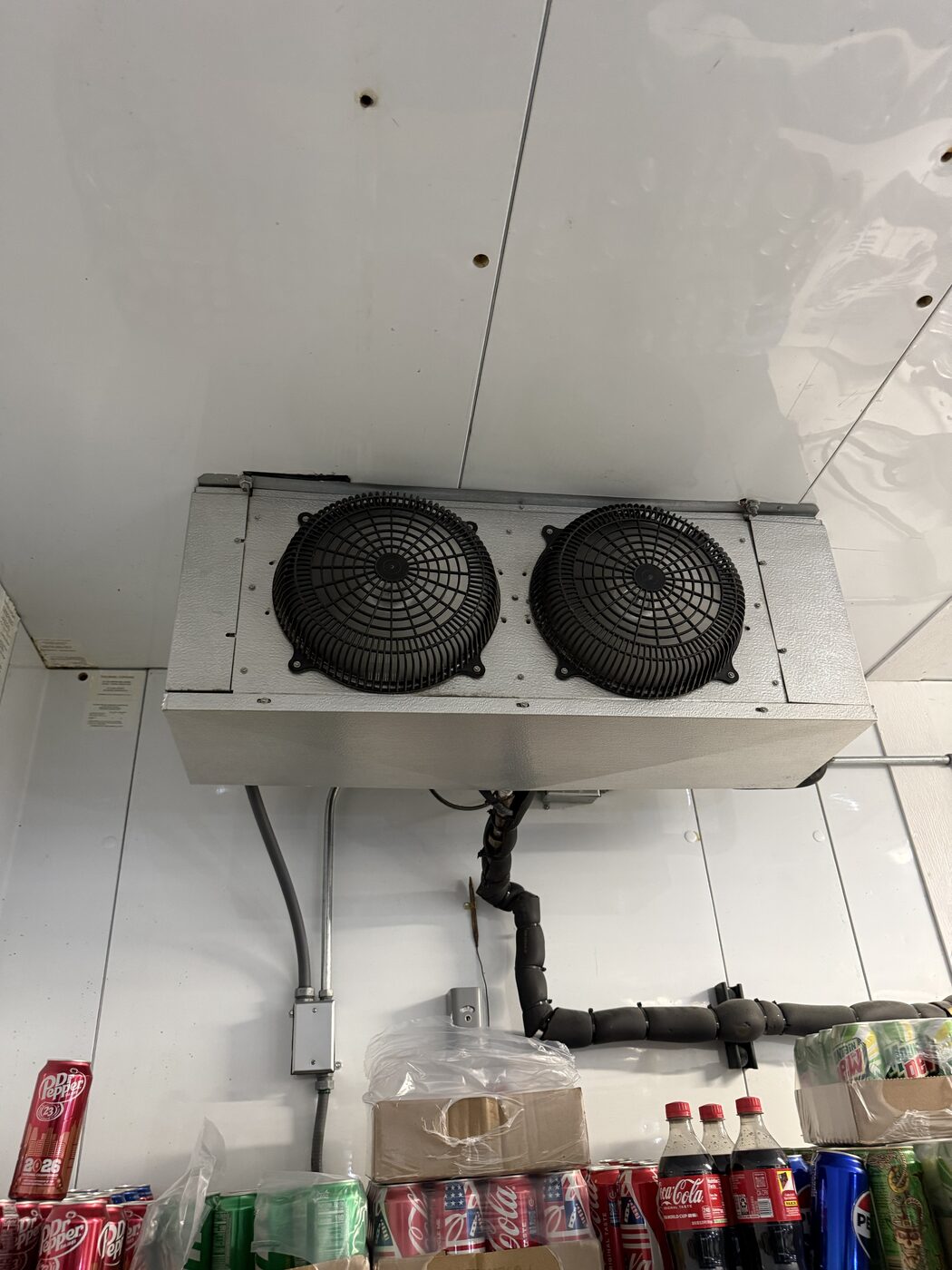
Every walk-in freezer runs an evaporator coil colder than the air around it, so the moisture that rides in on each door opening condenses and freezes directly onto the fins. That is normal, which is why the system runs a scheduled defrost cycle several times a day: a defrost timer or electronic control cuts the compressor, energizes the defrost heater to melt the coil clear, and a termination thermostat ends the cycle once the coil warms past roughly 50 to 55 degrees. When any one of those three parts fails, the coil never fully clears, frost compounds run after run, and within a day or two the fins become a solid block of ice.
Frost that shows up only on the evaporator coil and not the product is the tell-tale sign of a defrost fault rather than a refrigerant problem. A correctly charged system with proper superheat will still ice the coil if the defrost heater is open, the timer is stuck, or the termination thermostat reads wrong. As the coil glazes over, airflow across the fins collapses, the box temperature climbs even though the compressor runs nonstop, and the iced coil can eventually flood liquid back to the compressor.
Door and drain problems add a humidity load the defrost cycle was never sized to handle. A worn gasket or a door that no longer self-closes lets a steady stream of warm, moist air into the box, and that water lands on the coil and door frame as frost. If the condensate drain or its pan heater is blocked, the water the defrost does melt cannot escape, so it pools and refreezes into the ice sheet techs find under the blower.
Airflow is the other half of the equation. A seized evaporator fan motor, an iced fan blade, or a coil so frosted that air cannot pass all create cold dead zones where frost accumulates unevenly. Restricted airflow also drives down suction pressure and superheat, pulling the coil colder and accelerating the icing in a feedback loop until both the defrost and airflow faults are corrected.
Equipment we service
We repair this on every type of commercial refrigeration:
How we fix it — our process
- Confirm the symptom and pull temps — We log box, coil, and discharge-air temperatures and watch the unit through a full cycle to see where the ice is forming.
- Test the defrost circuit — We meter the defrost heater, timer, and termination thermostat to find which component stopped clearing the coil.
- Inspect doors, gaskets, and drains — We check the gaskets, door closer, and condensate drain line for the moisture and water sources feeding the buildup.
- Check airflow and the refrigerant side — We verify the evaporator fans run at full RPM and read superheat and pressures to rule out charge or TXV issues.
- Repair or replace the faulty parts — We swap the failed heater, timer, thermostat, gasket, or fan motor and clear the drain in the same visit when parts are on the truck.
- Verify a clean defrost and hand back a cold box — We run a full defrost, confirm the coil clears and the box pulls back down to set point before we leave.
Service area
Armus Refrigeration handles ice buildup in a walk-in freezer for restaurants, markets, c-stores, schools, and commercial kitchens across New Bedford, the South Coast, the South Shore, Cape Cod, Greater Boston, and Rhode Island — including:
Frequently asked questions
Why does my walk-in freezer keep icing up?
Why is frost only on the coil?
Will ice buildup damage the freezer?
Can I just chip the ice off myself?
How long does a defrost repair take?
Do you cover my area for emergency freezer repair?
Brands We Service
We repair and maintain every major commercial refrigeration & ice brand.