You open the reach-in, reach for a case of product, and something feels off — the air inside is cool but not cold, the milk’s a little warm, or the temperature gauge is creeping the wrong way. When you run a deli, a convenience store, or any food-service spot, a commercial refrigerator that isn’t getting cold is more than an annoyance. It’s your inventory on the clock. The good news: a lot of “not cooling” calls come down to a handful of common, checkable causes. Let’s walk through them the way a tech would if we were standing at the unit together.
First, Confirm What “Not Cooling” Actually Means
Before you assume the worst, put a real number on it. Grab a thermometer (or trust a calibrated built-in display) and check the interior temperature. A commercial fridge should hold at or below 40°F for food safety. There’s a big difference between a box that’s sitting at 45°F and drifting warmer versus one that’s climbed to 55°F and clearly given up. Note the number, note the time, and note whether the compressor is running. Those three details tell a tech more than “it stopped working,” and they help you decide how urgent the situation is for your product.
Quick Answer: How to Fix a Commercial Refrigerator That’s Not Cooling
If your unit is running but the walk-in or reach-in isn’t holding temperature, work through these checks in order before you call for repair:
- Confirm the reading. Use a separate thermometer, not the built-in dial — a bad sensor can lie to you.
- Check the door gaskets. Close a dollar bill in the door; if it slides out easily, warm air is leaking in and the compressor will never catch up.
- Clear the vents. Overstocked shelves block the evaporator fan and stop cold air from reaching the front of the case.
- Clean the condenser coil. A coil coated in grease or dust can’t release heat, so the compressor runs constantly without the box ever getting cold.
- Check for ice on the coil. Frost buildup usually points to a defrost-system problem, not a refrigerant one.
If you’ve gone through all five and the unit still isn’t cooling, the problem is most likely sealed-system (refrigerant, compressor) or electrical. That’s not a DIY repair, and it’s what we handle for restaurants, delis, and convenience stores across New Bedford, Fall River, and Southeastern Mass & Rhode Island.
Quick Checks You Can Do Right Now
Run through these in order before anything else. About a third of “my commercial fridge isn’t getting cold” problems get solved right here — and none of them require tools or opening up the unit.
- Check the thermostat setting. It sounds obvious, but dials get bumped by carts, mops, and busy hands. Make sure it wasn’t nudged toward “warm” or switched to a defrost or off position. Set it to the middle-cold range and give it time.
- Look at the door and gaskets. Make sure the door is actually latching, not propped or blocked by a crooked shelf. Run your hand around the rubber gasket for a cool draft leaking out. Cracked, torn, or gummed-up gaskets let warm room air pour in all shift long.
- Clear the interior vents. Every commercial box has supply vents that circulate cold air. If product, boxes, or a stacked case is jammed against them, the cold can’t move. Pull things off the vents and the back wall.
- Check for overstuffing. A packed-to-the-ceiling fridge chokes airflow and traps warm spots. Leave breathing room, especially after a big delivery.
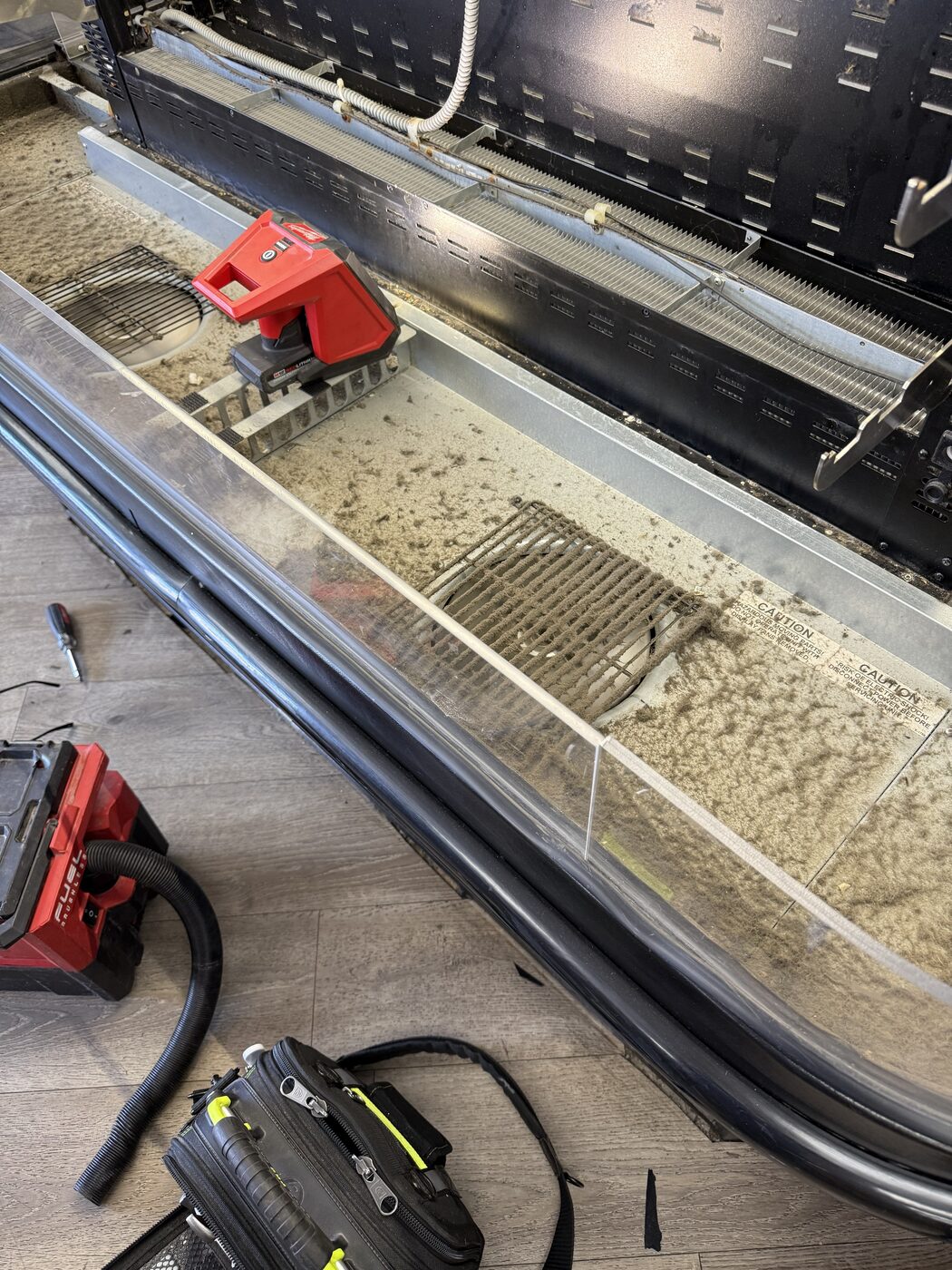
- Inspect the condenser coil. Find the coil (usually behind a front grille or on top) and look for a blanket of dust, grease, and lint. A clogged condenser is one of the single most common reasons a unit runs and runs but never gets cold.
- Listen for the evaporator fan. Open the door and listen for the small interior fan that blows cold air around. If it’s silent while the compressor hums, that fan may be stalled or failed — and without it, the air just sits.
- Give it time after a fix. If you cleaned a coil or shut a door that was ajar, a full box can take a few hours to pull back down to temp. Don’t judge it in ten minutes.
The Usual Suspects When a Commercial Fridge Won’t Cool
If the quick checks didn’t do it, the cause is usually one of these — and this is where it starts to cross from housekeeping into actual commercial refrigerator repair.
A dirty condenser coil
The condenser is how your system dumps heat. Cake it in kitchen grease and dust and it can’t release that heat, so the compressor works harder, runs longer, and still can’t hit temperature. In a busy food-service kitchen, coils clog fast. A gentle cleaning on a regular schedule prevents a surprising number of breakdowns and high-temp scares.
Worn door gaskets
Gaskets are cheap, but a bad one is expensive. When the seal fails, the unit fights a constant flood of warm, humid air. You’ll often see ice building up in odd places, longer run times, and a box that never quite catches up — classic signs behind refrigeration that isn’t cooling the way it used to.
A failed evaporator fan
The evaporator fan pushes cold air off the interior coil and out into the box. When that motor dies, the coil can even freeze into a block of ice while the shelves in front of it turn warm. If part of your fridge is cold and part is warm, a struggling evaporator fan is a prime suspect — and so are the temperature swings that come with a fan cycling in and out.
Compressor and refrigerant issues
The compressor is the heart of the system. If it’s humming but the box stays warm, short-cycling on and off, or dead silent, you may be looking at a failing compressor, a bad start component, or a refrigerant problem. A low charge from a slow leak makes a unit run nonstop and never get cold. These aren’t DIY territory — sealed-system and electrical work needs a licensed refrigeration tech and proper recovery equipment.
When to Call a Pro
Call for service when: the box is holding above 40°F and climbing, the compressor won’t start or won’t stop, you see ice forming on the coils, you hear grinding or clicking, or you’ve done every quick check and it still won’t cool. Don’t keep “restarting” a unit that has food in it and hoping — every hour above 40°F is a food-safety and inventory risk. Whether it’s a walk-in, a prep table, or a countertop reach-in cooler, a tech can put gauges on it, read the actual pressures and temperatures, and fix the real cause instead of guessing.
FAQ
Why is my commercial refrigerator running but not getting cold?
Almost always it’s a heat or airflow problem: a filthy condenser coil that can’t release heat, a stalled evaporator fan that can’t move cold air, or a low refrigerant charge from a leak. The compressor runs and runs because it never satisfies the thermostat. Clean the condenser first; if that doesn’t fix it, have the sealed system checked.
How long should I wait to see if it cools back down?
After you correct something simple — a bumped thermostat, a propped door, a cleaned coil — give a full, stocked unit two to four hours to recover to temp. If it’s still warm after that, or the temperature is going up instead of down, stop waiting and call for repair before your product is at risk.
Can I keep using the fridge while it’s not cooling properly?
Only briefly, and only if it’s still under 40°F. Move perishable, high-risk product to a working unit or cooler with ice as a stopgap. A fridge that can’t hold 40°F isn’t safe for food storage, and pushing it harder often turns a small repair into a compressor replacement.
Still not cooling? Don’t risk your inventory. Call 508-521-9477 for same-day commercial refrigeration repair across New Bedford, Fall River, and Southeastern Mass & Rhode Island — we diagnose fast and get you back up.