If you’ve been hearing your walk-in cooler click on, run for a minute or two, shut off, and then kick right back on again, you already know something isn’t right. It’s the kind of sound that gnaws at you all shift long — because every restart is a reminder that a few thousand dollars of product is sitting behind that door, depending on a compressor that suddenly can’t seem to make up its mind. Short-cycling is one of the most common calls we get, and it’s also one of the most important to act on quickly. The good news: it’s almost always fixable. The bad news: the longer it runs like this, the more it costs you. Here’s what’s happening and what to do about it.
What “short-cycling” actually means
A healthy walk-in cooler runs in long, steady cycles. The compressor comes on, pulls the box down to your set temperature over the course of several minutes, satisfies the thermostat, and shuts off for a good while before it needs to run again. Short-cycling is when that rhythm breaks down — the compressor starts and stops in rapid bursts, sometimes every couple of minutes, sometimes even faster. You’ll notice it as a repeated clicking or clunking from the condensing unit, a box that never quite holds temperature, and often a compressor that feels hot to the touch. The system is working constantly but accomplishing very little, which is exactly why it’s so hard on the equipment.
Why short-cycling wears out a compressor fast
The compressor is the single most expensive part of your refrigeration system, and short-cycling attacks it directly. Every time the compressor starts, it draws a big surge of current and runs without proper oil circulation for the first few seconds. In a normal cycle that startup stress happens a handful of times an hour. When the unit is short-cycling, it can happen dozens of times an hour — multiplying the wear, overheating the motor windings, and starving the internal bearings of lubrication. Left alone, a short-cycling cooler can turn a $150 service call into a compressor replacement in a matter of weeks. That’s why we treat it as urgent, not just annoying.
The most common causes of a cooler that keeps clicking on and off
Short-cycling is a symptom, not a diagnosis. Several very different problems can produce the same clicking pattern, which is why guessing rarely works. These are the culprits we find most often:
- A dirty condenser coil. When the coil is caked with dust, grease, or kitchen debris, the system can’t shed heat. Pressure spikes, the safety control trips, the unit shuts off, cools slightly, and restarts — over and over. This is the number-one cause and often the cheapest fix.
- Low refrigerant charge. A slow leak drops the refrigerant level until the low-pressure control cuts the compressor out, then lets it back in as pressure recovers. The cycling gets faster as the leak worsens.
- A faulty thermostat or pressure control. A worn or miscalibrated control can send start/stop signals far too frequently, or “chatter” between on and off around a narrow band.
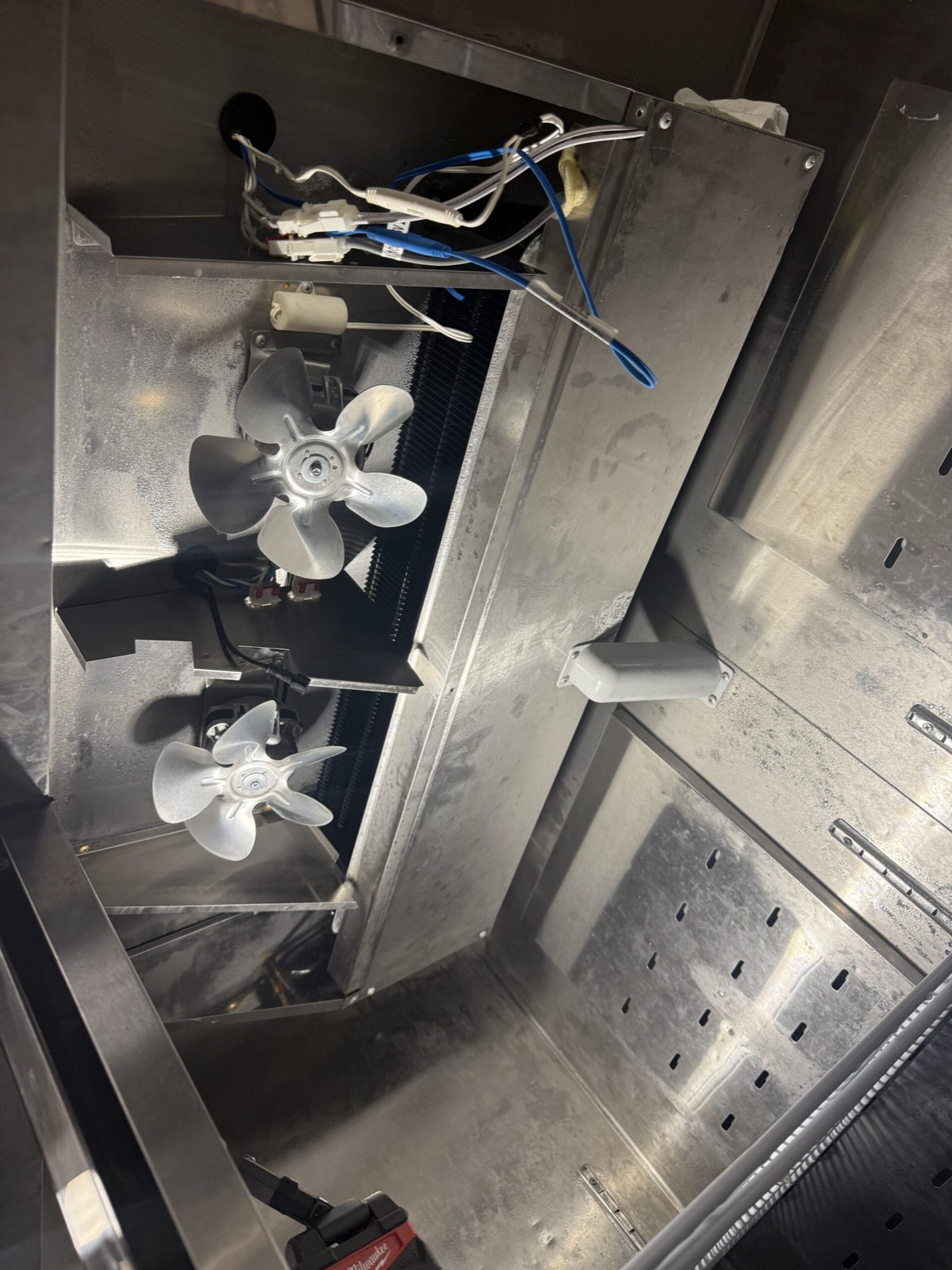
- An iced-over or undersized evaporator coil. A coil buried in frost, or one that’s too small for the load, can’t absorb heat properly and trips the system out prematurely.
- A bad start relay or capacitor. When the compressor’s starting components fail, the motor tries to start, overheats, trips its internal overload, cools, and tries again — a classic short-cycle rhythm.
What you can safely check yourself
There are a few things a manager or owner can look at before the technician arrives — none of which involve opening the sealed refrigeration system or touching electrical components. Work through them in order:
- Look at the condenser coil. Find the condensing unit (often on the roof, in a back room, or on top of the box) and check whether the finned coil is clogged with dust or grease. A visibly filthy coil is a strong clue.
- Confirm airflow around the unit. Make sure nothing is stacked against the condenser and that any fans are actually spinning. Restricted airflow mimics a dirty coil.
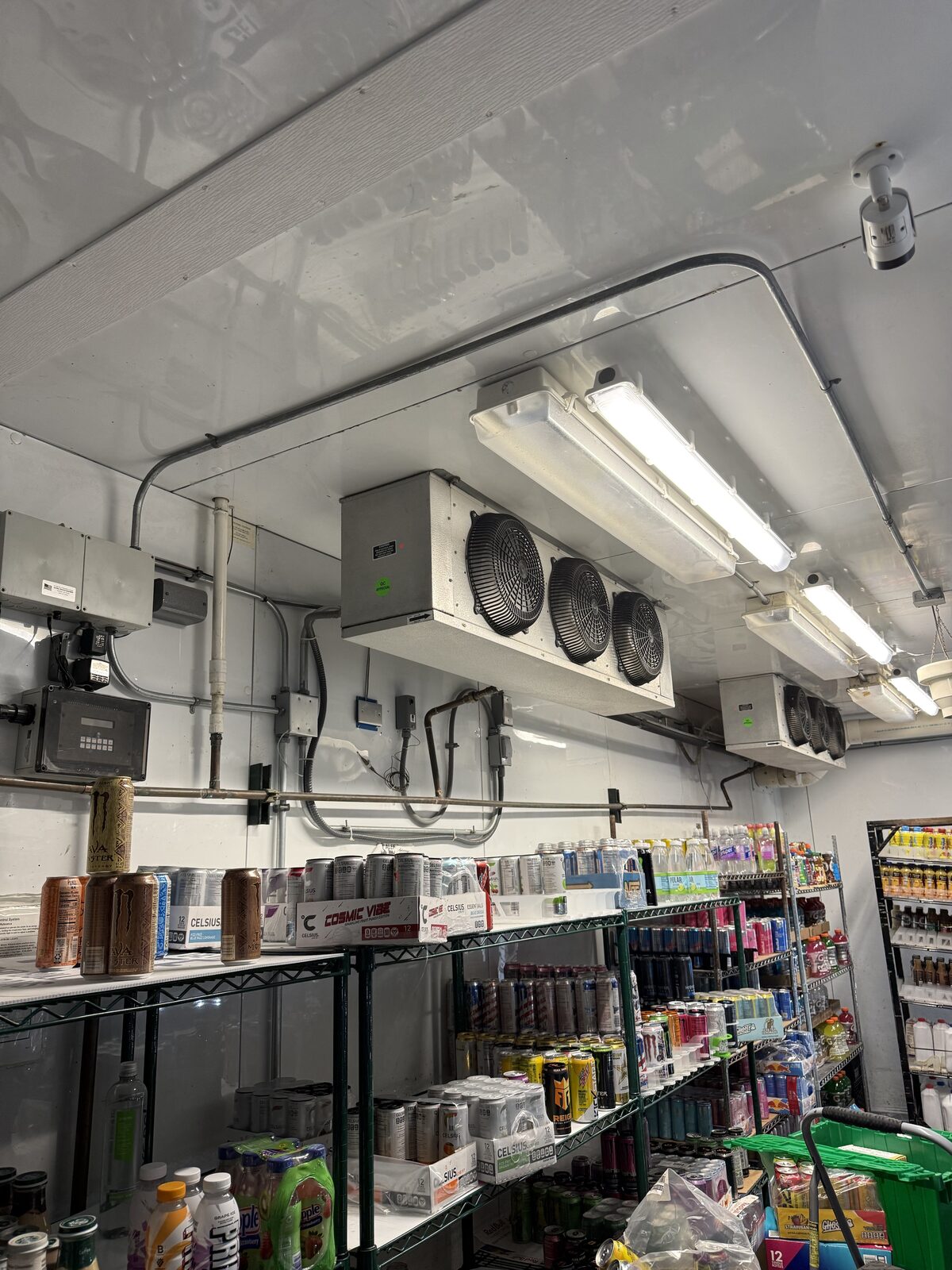
- Check the evaporator coil inside the box. Open the door and look at the coil (usually behind a guard on the ceiling). Heavy ice buildup points to a defrost or airflow problem.
- Verify the door is sealing. A door left ajar or a torn gasket floods the box with warm, humid air and can drive erratic cycling and icing.
- Read the thermostat setting. Make sure no one bumped it to an unrealistic set point. Note the actual box temperature versus the target so you can report it.
- Listen and time the cycles. Count roughly how many seconds the compressor runs and how long it rests. Those numbers help a technician zero in on the cause before they even arrive.
If you find a filthy coil or a propped-open door, addressing it may buy you some breathing room. But if the box still can’t hold a safe temperature, don’t wait it out — the risk to your inventory is real.
When to call a pro
Anything past a dirty coil or a bad door seal belongs with a licensed refrigeration technician. Low refrigerant, failed relays and capacitors, defective pressure controls, and iced evaporators all require gauges, meters, and EPA-certified handling of refrigerant — and misdiagnosing them usually makes the compressor damage worse, not better. Call for service right away if the unit is cycling every few minutes, the compressor is hot to the touch, you see oil or refrigerant residue near the lines, or the box temperature keeps climbing despite the system running constantly. When you’re not sure what’s driving it, it’s far cheaper to have a technician pin down why the system keeps restarting than to gamble on the most expensive part in the box. Our team can also handle the broader issues that show up on an aging walk-in, from failing controls to worn door hardware.
FAQ
Is it safe to keep running my cooler while it short-cycles?
Only for a very short time, and only if it’s still holding a safe food temperature. Every rapid restart adds wear to the compressor, so the safest move is to get it diagnosed quickly and, if the box is warming, transfer your most perishable product to another unit as a precaution.
Could a dirty condenser really cause all this?
Yes — it’s the most common cause we see. A clogged condenser coil traps heat, which spikes system pressure and trips the safety control that shuts the compressor off. As pressure eases, it restarts, and the cycle repeats. A professional cleaning often resolves the problem outright.
How fast can you get someone out?
We offer same-day service across Southeastern Massachusetts and Rhode Island whenever our schedule allows. Because short-cycling can damage the compressor quickly, we prioritize these calls — the sooner we diagnose it, the more likely we are to save you an expensive replacement.
Still not cooling? Don’t risk your inventory. Call 508-521-9477 for same-day commercial refrigeration repair across New Bedford, Fall River, and Southeastern Mass & Rhode Island — we diagnose fast and get you back up.
If you’ve been hearing your walk-in cooler click on, run for a minute or two, shut off, and then kick right back on again, you already know something isn’t right. It’s the kind of sound that gnaws at you all shift long — because every restart is a reminder that a few thousand dollars of product is sitting behind that door, depending on a compressor that suddenly can’t seem to make up its mind. Short-cycling is one of the most common calls we get, and it’s also one of the most important to act on quickly. The good news: it’s almost always fixable. The bad news: the longer it runs like this, the more it costs you. Here’s what’s happening and what to do about it.
What “short-cycling” actually means
A healthy walk-in cooler runs in long, steady cycles. The compressor comes on, pulls the box down to your set temperature over the course of several minutes, satisfies the thermostat, and shuts off for a good while before it needs to run again. Short-cycling is when that rhythm breaks down — the compressor starts and stops in rapid bursts, sometimes every couple of minutes, sometimes even faster. You’ll notice it as a repeated clicking or clunking from the condensing unit, a box that never quite holds temperature, and often a compressor that feels hot to the touch. The system is working constantly but accomplishing very little, which is exactly why it’s so hard on the equipment.
Why short-cycling wears out a compressor fast
The compressor is the single most expensive part of your refrigeration system, and short-cycling attacks it directly. Every time the compressor starts, it draws a big surge of current and runs without proper oil circulation for the first few seconds. In a normal cycle that startup stress happens a handful of times an hour. When the unit is short-cycling, it can happen dozens of times an hour — multiplying the wear, overheating the motor windings, and starving the internal bearings of lubrication. Left alone, a short-cycling cooler can turn a $150 service call into a compressor replacement in a matter of weeks. That’s why we treat it as urgent, not just annoying.
The most common causes of a cooler that keeps clicking on and off
Short-cycling is a symptom, not a diagnosis. Several very different problems can produce the same clicking pattern, which is why guessing rarely works. These are the culprits we find most often:
- A dirty condenser coil. When the coil is caked with dust, grease, or kitchen debris, the system can’t shed heat. Pressure spikes, the safety control trips, the unit shuts off, cools slightly, and restarts — over and over. This is the number-one cause and often the cheapest fix.
- Low refrigerant charge. A slow leak drops the refrigerant level until the low-pressure control cuts the compressor out, then lets it back in as pressure recovers. The cycling gets faster as the leak worsens.
- A faulty thermostat or pressure control. A worn or miscalibrated control can send start/stop signals far too frequently, or “chatter” between on and off around a narrow band.
- An iced-over or undersized evaporator coil. A coil buried in frost, or one that’s too small for the load, can’t absorb heat properly and trips the system out prematurely.
- A bad start relay or capacitor. When the compressor’s starting components fail, the motor tries to start, overheats, trips its internal overload, cools, and tries again — a classic short-cycle rhythm.
What you can safely check yourself
There are a few things a manager or owner can look at before the technician arrives — none of which involve opening the sealed refrigeration system or touching electrical components. Work through them in order:
- Look at the condenser coil. Find the condensing unit (often on the roof, in a back room, or on top of the box) and check whether the finned coil is clogged with dust or grease. A visibly filthy coil is a strong clue.
- Confirm airflow around the unit. Make sure nothing is stacked against the condenser and that any fans are actually spinning. Restricted airflow mimics a dirty coil.
- Check the evaporator coil inside the box. Open the door and look at the coil (usually behind a guard on the ceiling). Heavy ice buildup points to a defrost or airflow problem.
- Verify the door is sealing. A door left ajar or a torn gasket floods the box with warm, humid air and can drive erratic cycling and icing.
- Read the thermostat setting. Make sure no one bumped it to an unrealistic set point. Note the actual box temperature versus the target so you can report it.
- Listen and time the cycles. Count roughly how many seconds the compressor runs and how long it rests. Those numbers help a technician zero in on the cause before they even arrive.
If you find a filthy coil or a propped-open door, addressing it may buy you some breathing room. But if the box still can’t hold a safe temperature, don’t wait it out — the risk to your inventory is real.
When to call a pro
Anything past a dirty coil or a bad door seal belongs with a licensed refrigeration technician. Low refrigerant, failed relays and capacitors, defective pressure controls, and iced evaporators all require gauges, meters, and EPA-certified handling of refrigerant — and misdiagnosing them usually makes the compressor damage worse, not better. Call for service right away if the unit is cycling every few minutes, the compressor is hot to the touch, you see oil or refrigerant residue near the lines, or the box temperature keeps climbing despite the system running constantly. When you’re not sure what’s driving it, it’s far cheaper to have a technician pin down why the system keeps restarting than to gamble on the most expensive part in the box. Our team can also handle the broader issues that show up on an aging walk-in, from failing controls to worn door hardware.
FAQ
Is it safe to keep running my cooler while it short-cycles?
Only for a very short time, and only if it’s still holding a safe food temperature. Every rapid restart adds wear to the compressor, so the safest move is to get it diagnosed quickly and, if the box is warming, transfer your most perishable product to another unit as a precaution.
Could a dirty condenser really cause all this?
Yes — it’s the most common cause we see. A clogged condenser coil traps heat, which spikes system pressure and trips the safety control that shuts the compressor off. As pressure eases, it restarts, and the cycle repeats. A professional cleaning often resolves the problem outright.
How fast can you get someone out?
We offer same-day service across Southeastern Massachusetts and Rhode Island whenever our schedule allows. Because short-cycling can damage the compressor quickly, we prioritize these calls — the sooner we diagnose it, the more likely we are to save you an expensive replacement.
Still not cooling? Don’t risk your inventory. Call 508-521-9477 for same-day commercial refrigeration repair across New Bedford, Fall River, and Southeastern Mass & Rhode Island — we diagnose fast and get you back up.