
When a walk-in freezer skins over with frost or the evaporator coil disappears behind a wall of ice, it always seems to happen at the worst possible moment — a busy prep morning, a full book of covers, thousands of dollars of product on the line. If you are standing in front of your unit right now wondering whether you can defrost it yourself without making things worse, you are in the right place. Done correctly, a manual defrost is straightforward and safe. Done in a hurry — with a heat gun, a metal scraper, or by yanking the door open and hoping for the best — it can crack a coil, bend the fins, or short out a component and turn a two-hour job into a two-day repair.
Here is how to thaw your freezer the right way, protect your inventory, and recognize when the ice is telling you something bigger is wrong.
Why a Walk-In Freezer Sometimes Needs a Manual Defrost
Most commercial walk-ins run an automatic defrost cycle several times a day. A timer or controller briefly heats the evaporator coil to melt the light frost that builds up during normal operation, then drains it away. When that system is healthy, you should never see a solid sheet of ice. So why would you ever need to defrost by hand?
Usually it comes down to one of a few things: the automatic defrost has fallen behind after a door left ajar or a big humidity spike, you are shutting the box down for cleaning or maintenance, or the defrost system itself has failed and ice has built up faster than the unit can clear it. A manual defrost buys you time and gets the coil breathing again — but if you are reaching for it more than rarely, treat that as a symptom, not a routine.
Before You Touch Anything: Protect Your Product
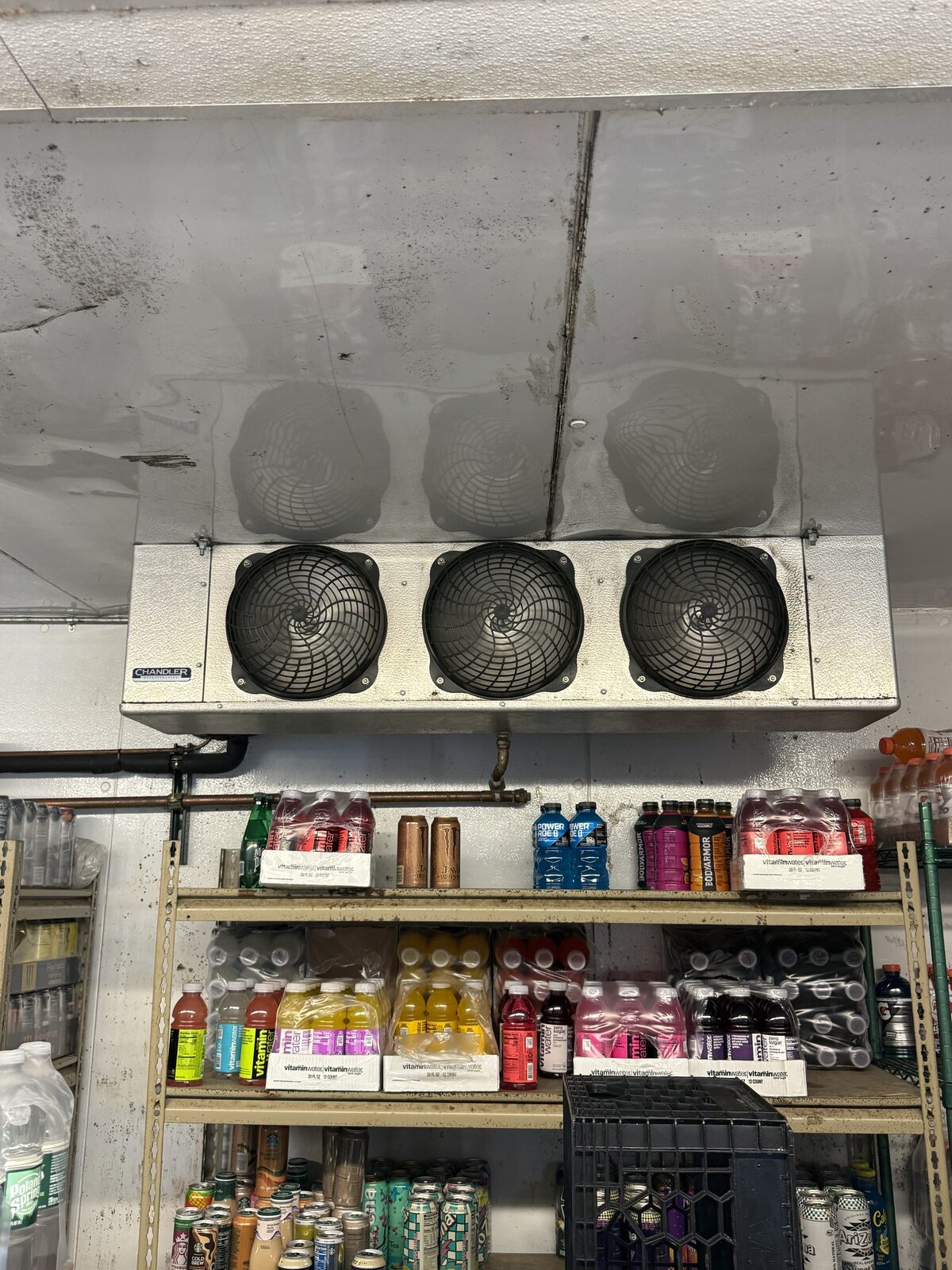
The moment you power down a freezer, the clock starts on your inventory. Have a plan for your product before you flip a single switch. Move everything into another freezer, a reach-in, a freezer truck, or well-packed insulated coolers with dry ice or gel packs. Keep the most valuable and most temperature-sensitive items together and moved first. If you cannot relocate the product, do not start the defrost during service — wait for a slow window when you can keep food safely below 0°F somewhere else. Frozen inventory is the single most expensive thing you can lose here, so it comes first, before the freezer itself.
How to Safely Defrost a Walk-In Freezer, Step by Step
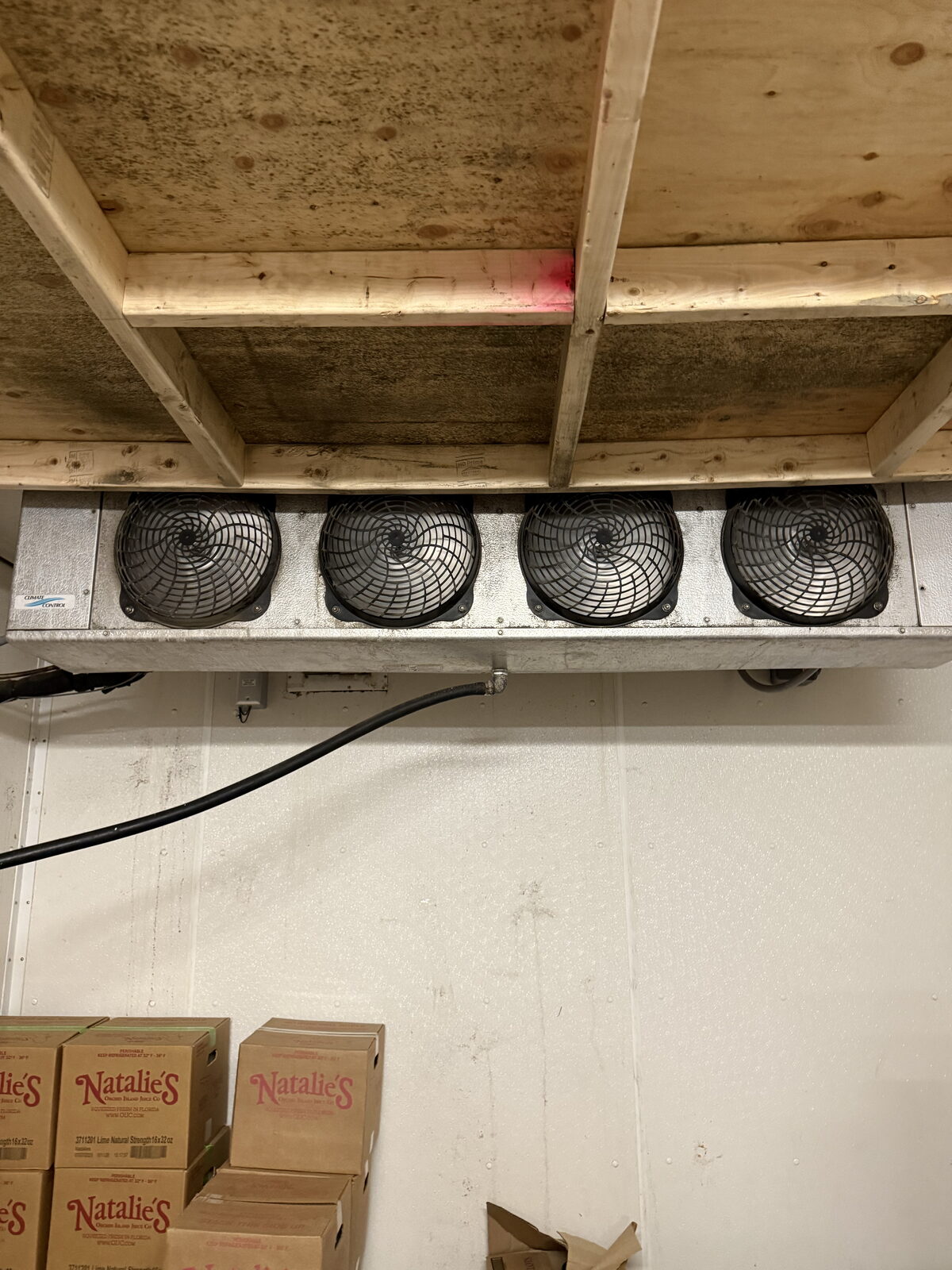
Work through these in order. Do not skip ahead to speed things up — that is exactly how coils get damaged.
- Relocate your product. Move all food to safe cold storage as described above. Confirm the backup space is actually holding temperature before you commit to the defrost.
- Power the unit down at the disconnect. Turn the freezer off at its dedicated switch or breaker, not just the thermostat. This stops the compressor and prevents the fans from blowing meltwater around while the coil thaws.
- Prop the door wide open. Airflow does most of the work. Block the door open so warmer room air can circulate through the box and reach the coil. A single fan set outside the door, blowing in, speeds this up safely.
- Let the ice melt naturally. Patience is the whole game. Give the frost time to release on its own. If you want to help it along, use only gentle, low-heat warm air — never an open flame, a heat gun on high, or boiling water poured over the coil.
- Manage the meltwater. A heavily iced coil can release gallons of water. Lay down towels, position a wet vac, and make sure the floor drain is clear so you are not creating a slip hazard or flooding the box.
- Leave the coil alone. Do not chip, scrape, pry, or hammer the ice off the evaporator. Let it fall away as it softens. This is the step people rush and regret.
- Dry, inspect, and restart. Once the coil and floor are fully clear and dry, wipe down surfaces, check that the drain line is flowing, then power the unit back on. Let it pull down to temperature completely before you reload product.
Why You Should Never Chip or Scrape the Ice
The evaporator coil is a grid of thin copper tubes and aluminum fins carrying refrigerant under pressure. It is far more fragile than it looks under a coat of ice. One firm tap with a screwdriver, an ice pick, or even a plastic scraper can puncture a tube — and a punctured coil means lost refrigerant, a dead freezer, and a repair bill many times larger than the one you were trying to avoid. Bent fins choke airflow and cause the coil to ice right back up. The ice will always come off on its own if you give it heat and time, so there is never a good reason to force it.
Recurring Ice Is a Warning Sign, Not a Chore
Here is the part most owners miss. If your walk-in freezer needs a manual defrost every few weeks — or the coil ices back over within days of thawing it — the box is not the problem. Its automatic defrost system is failing to do its job. Common culprits include a burned-out defrost heater, a stuck defrost timer or controller, a bad termination thermostat, a failed evaporator fan, worn door gaskets letting warm humid air pour in, or a clogged drain line that refreezes into a block. A healthy freezer should almost never need hand-defrosting.
So if you keep fighting the same ice, stop treating the symptom and figure out why the frost and ice keep coming back. Chasing the root cause is cheaper than losing product to a freezer that quietly drifts above safe temperature between defrosts.
When to Call a Pro
A one-off manual defrost is well within reach for most operators. But some situations call for a technician rather than a wet vac and a fan. Bring in help if the ice keeps returning after you defrost, if the freezer will not pull back down to temperature once restarted, if you see oily residue near the coil (a sign of a refrigerant leak), if the drain line stays frozen, if you hear the compressor short-cycling, or if you simply cannot afford the downtime to guess. In any of those cases, it is worth having a refrigeration technician check out the freezer and pinpoint the failing part before your inventory pays the price.
FAQ
How long does it take to defrost a walk-in freezer?
It depends on how much ice has built up. A lightly frosted coil may clear in two to four hours with the door open and a fan running. A coil buried in solid ice can take six to twelve hours or more. Plan the defrost for your slowest window and never rush it by chipping at the ice.
Can I use hot water or a heat gun to speed it up?
Avoid both. Boiling water refreezes fast and can crack components, and a heat gun on high can warp fins or melt wiring insulation. Gentle, low-heat warm air moving across the coil is the fastest method that will not damage the unit.
How often should a walk-in freezer need a manual defrost?
Rarely, if ever. A properly working automatic defrost system should keep the coil clear on its own. If you are hand-defrosting every few weeks, that points to a defrost-system fault that needs to be diagnosed rather than repeated.
Still not cooling? Don’t risk your inventory. Call 508-521-9477 for same-day commercial refrigeration repair across New Bedford, Fall River, and Southeastern Mass & Rhode Island — we diagnose fast and get you back up.
When a walk-in freezer skins over with frost or the evaporator coil disappears behind a wall of ice, it always seems to happen at the worst possible moment — a busy prep morning, a full book of covers, thousands of dollars of product on the line. If you are standing in front of your unit right now wondering whether you can defrost it yourself without making things worse, you are in the right place. Done correctly, a manual defrost is straightforward and safe. Done in a hurry — with a heat gun, a metal scraper, or by yanking the door open and hoping for the best — it can crack a coil, bend the fins, or short out a component and turn a two-hour job into a two-day repair.
Here is how to thaw your freezer the right way, protect your inventory, and recognize when the ice is telling you something bigger is wrong.
Why a Walk-In Freezer Sometimes Needs a Manual Defrost
Most commercial walk-ins run an automatic defrost cycle several times a day. A timer or controller briefly heats the evaporator coil to melt the light frost that builds up during normal operation, then drains it away. When that system is healthy, you should never see a solid sheet of ice. So why would you ever need to defrost by hand?
Usually it comes down to one of a few things: the automatic defrost has fallen behind after a door left ajar or a big humidity spike, you are shutting the box down for cleaning or maintenance, or the defrost system itself has failed and ice has built up faster than the unit can clear it. A manual defrost buys you time and gets the coil breathing again — but if you are reaching for it more than rarely, treat that as a symptom, not a routine.
Before You Touch Anything: Protect Your Product
The moment you power down a freezer, the clock starts on your inventory. Have a plan for your product before you flip a single switch. Move everything into another freezer, a reach-in, a freezer truck, or well-packed insulated coolers with dry ice or gel packs. Keep the most valuable and most temperature-sensitive items together and moved first. If you cannot relocate the product, do not start the defrost during service — wait for a slow window when you can keep food safely below 0°F somewhere else. Frozen inventory is the single most expensive thing you can lose here, so it comes first, before the freezer itself.
How to Safely Defrost a Walk-In Freezer, Step by Step
Work through these in order. Do not skip ahead to speed things up — that is exactly how coils get damaged.
- Relocate your product. Move all food to safe cold storage as described above. Confirm the backup space is actually holding temperature before you commit to the defrost.
- Power the unit down at the disconnect. Turn the freezer off at its dedicated switch or breaker, not just the thermostat. This stops the compressor and prevents the fans from blowing meltwater around while the coil thaws.
- Prop the door wide open. Airflow does most of the work. Block the door open so warmer room air can circulate through the box and reach the coil. A single fan set outside the door, blowing in, speeds this up safely.
- Let the ice melt naturally. Patience is the whole game. Give the frost time to release on its own. If you want to help it along, use only gentle, low-heat warm air — never an open flame, a heat gun on high, or boiling water poured over the coil.
- Manage the meltwater. A heavily iced coil can release gallons of water. Lay down towels, position a wet vac, and make sure the floor drain is clear so you are not creating a slip hazard or flooding the box.
- Leave the coil alone. Do not chip, scrape, pry, or hammer the ice off the evaporator. Let it fall away as it softens. This is the step people rush and regret.
- Dry, inspect, and restart. Once the coil and floor are fully clear and dry, wipe down surfaces, check that the drain line is flowing, then power the unit back on. Let it pull down to temperature completely before you reload product.
Why You Should Never Chip or Scrape the Ice
The evaporator coil is a grid of thin copper tubes and aluminum fins carrying refrigerant under pressure. It is far more fragile than it looks under a coat of ice. One firm tap with a screwdriver, an ice pick, or even a plastic scraper can puncture a tube — and a punctured coil means lost refrigerant, a dead freezer, and a repair bill many times larger than the one you were trying to avoid. Bent fins choke airflow and cause the coil to ice right back up. The ice will always come off on its own if you give it heat and time, so there is never a good reason to force it.
Recurring Ice Is a Warning Sign, Not a Chore
Here is the part most owners miss. If your walk-in freezer needs a manual defrost every few weeks — or the coil ices back over within days of thawing it — the box is not the problem. Its automatic defrost system is failing to do its job. Common culprits include a burned-out defrost heater, a stuck defrost timer or controller, a bad termination thermostat, a failed evaporator fan, worn door gaskets letting warm humid air pour in, or a clogged drain line that refreezes into a block. A healthy freezer should almost never need hand-defrosting.
So if you keep fighting the same ice, stop treating the symptom and figure out why the frost and ice keep coming back. Chasing the root cause is cheaper than losing product to a freezer that quietly drifts above safe temperature between defrosts.
When to Call a Pro
A one-off manual defrost is well within reach for most operators. But some situations call for a technician rather than a wet vac and a fan. Bring in help if the ice keeps returning after you defrost, if the freezer will not pull back down to temperature once restarted, if you see oily residue near the coil (a sign of a refrigerant leak), if the drain line stays frozen, if you hear the compressor short-cycling, or if you simply cannot afford the downtime to guess. In any of those cases, it is worth having a refrigeration technician check out the freezer and pinpoint the failing part before your inventory pays the price.
FAQ
How long does it take to defrost a walk-in freezer?
It depends on how much ice has built up. A lightly frosted coil may clear in two to four hours with the door open and a fan running. A coil buried in solid ice can take six to twelve hours or more. Plan the defrost for your slowest window and never rush it by chipping at the ice.
Can I use hot water or a heat gun to speed it up?
Avoid both. Boiling water refreezes fast and can crack components, and a heat gun on high can warp fins or melt wiring insulation. Gentle, low-heat warm air moving across the coil is the fastest method that will not damage the unit.
How often should a walk-in freezer need a manual defrost?
Rarely, if ever. A properly working automatic defrost system should keep the coil clear on its own. If you are hand-defrosting every few weeks, that points to a defrost-system fault that needs to be diagnosed rather than repeated.
Still not cooling? Don’t risk your inventory. Call 508-521-9477 for same-day commercial refrigeration repair across New Bedford, Fall River, and Southeastern Mass & Rhode Island — we diagnose fast and get you back up.