A restaurant doesn’t have one refrigeration problem. It has six or seven waiting to happen at once: the walk-in, the freezer, the lowboys under the line, the prep tables, the bar coolers, the ice machine. And restaurant equipment never fails at rest. It fails under load, which means during service, at delivery time, or on the Friday of a holiday weekend.
Armus Refrigeration services working restaurants across Southeastern Massachusetts and Rhode Island from our shop in New Bedford. One number, 508-521-9477, covers every piece of refrigeration in the building, 24 hours a day. EPA Section 608-certified techs, licensed in both states, trucks stocked for the equipment New England kitchens actually run: True, Beverage-Air, Manitowoc, Hoshizaki, Scotsman, and the legacy Bohn units still humming in basements from Fall River to Federal Hill.
Restaurant Refrigeration Service — Massachusetts & Rhode Island
Full-service commercial refrigeration for restaurants. Walk-ins, prep tables, line refrigeration, bar coolers — same-day when something stops cooling.
Cities we serve
Restaurant Refrigeration Fails Under Load, Not at Rest
Refrigeration in a working restaurant almost never dies quietly on a slow Tuesday afternoon. It dies when the load peaks, because that’s when a marginal part finally can’t keep up. After fifteen-plus years of service calls in MA and RI kitchens, we know where those peaks live.
The line during service
Lowboys and prep tables on the cook line take the worst duty in the building. The rails sit open, doors and drawers get hit a couple hundred times a night, and the hot line radiates on the cabinet the whole time. On a True T-72, the middle door gasket fails first because that’s the door the line cooks use most. When ice starts building on the interior back wall, that’s a door that stopped sealing weeks ago. Our page on commercial refrigerators that stop cooling walks through the reach-in and prep-table failure chain in detail.
The walk-in at delivery time
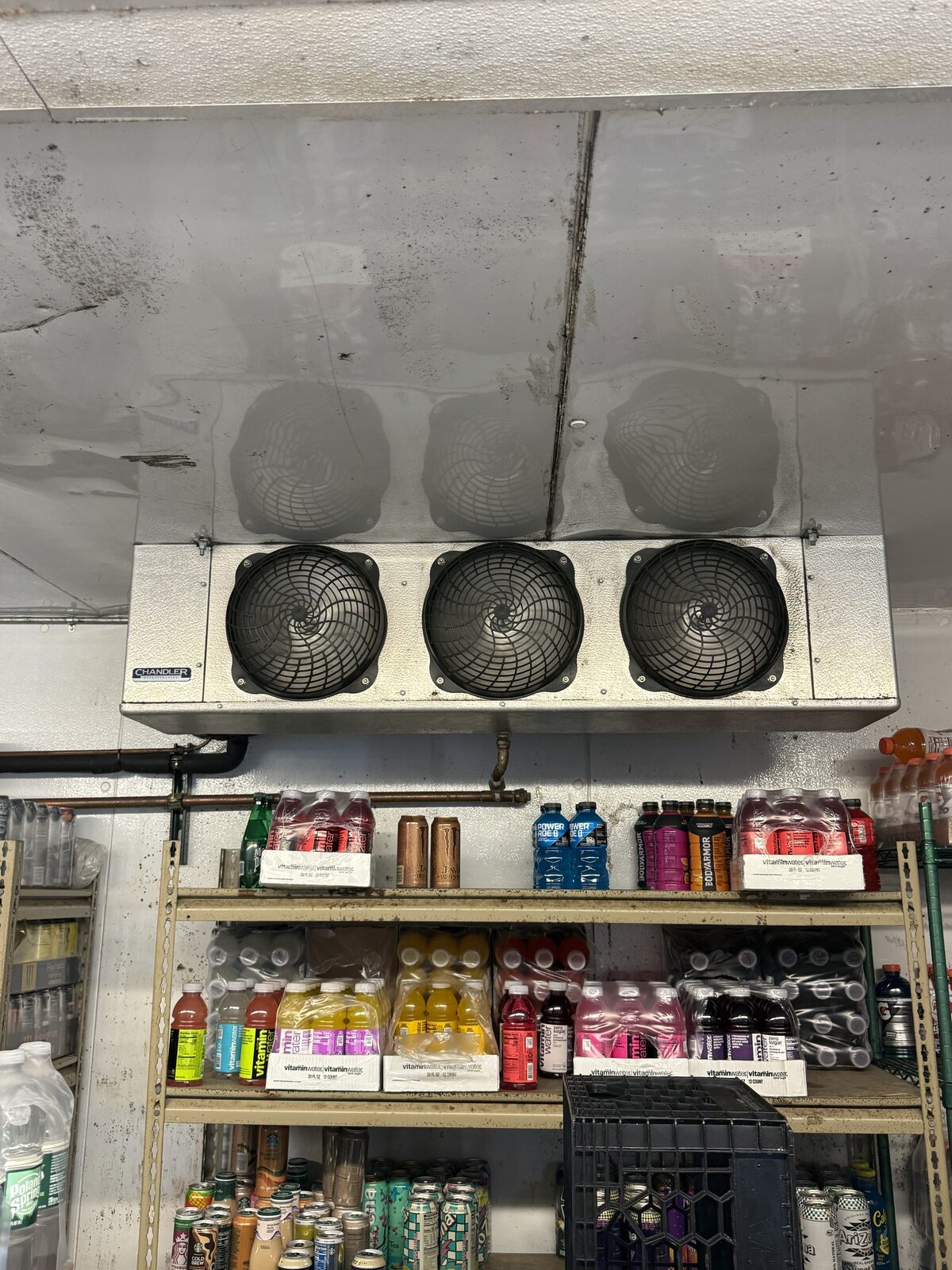
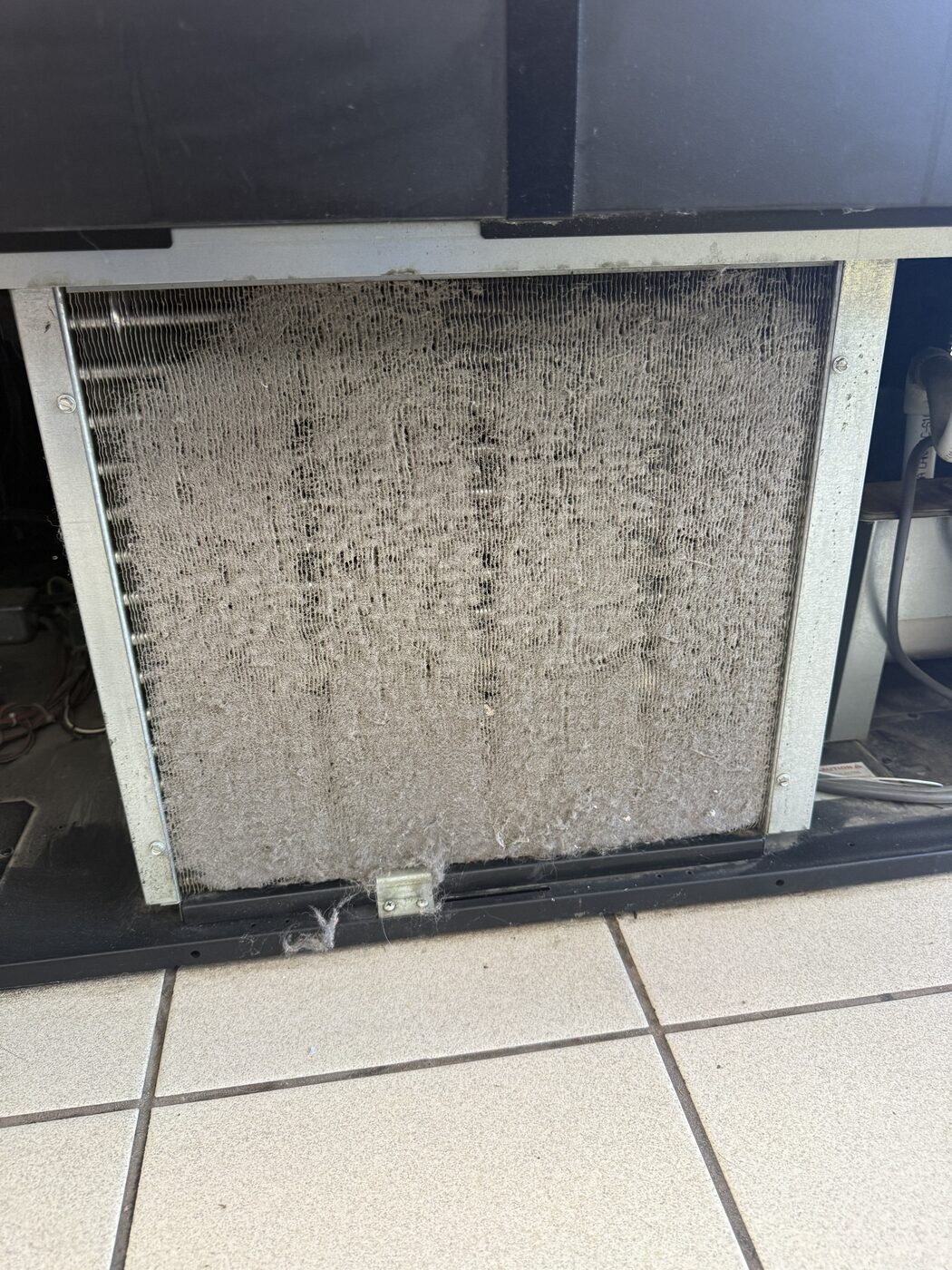
A walk-in that holds 36°F all night gets its stress test when the broadline truck shows up. The door stays blocked open while hand trucks roll through, then a few hundred pounds of product at ambient temperature lands on the shelves at once. A condenser fan motor with dry bearings, or a coil packed with airborne kitchen grease, keeps up fine overnight and falls behind exactly then. If your box recovers slower after every delivery, that’s the cheap warning before the 5 AM call. We handle walk-in cooler repair and walk-in freezer boxes across both states.
The ice machine at bar rush
Ice machines fail invisibly. A scaled evaporator or a mis-reading bin probe still makes some ice, so nobody notices Monday through Thursday. Friday at 8 PM the bar burns through the bin faster than the machine can refill it, and now it’s a crisis. Manitowoc bin probes going intermittent is a pattern we fix constantly, and on South Coast and Rhode Island water, a machine that skips its descaling schedule loses capacity for months before it quits outright. Details on our ice machine repair page.
One Number for the Whole Kitchen: How a Restaurant Relationship Works
Most restaurants end up with a patchwork: an ice machine company, a guy who did the walk-in once, whoever answered the phone for the bar coolers. When something dies during prep, you’re guessing who to call and hoping they pick up.
We run it differently. One call to 508-521-9477 covers every refrigeration class in the building: the walk-ins, the line equipment, the bar and back-bar coolers, the merchandisers, the ice machine. Standing restaurant customers get priority dispatch, and the same techs come back, which matters more than it sounds. We document every unit we touch: model, serial, refrigerant, what failed and when. On multi-unit setups we label which compressor serves which door inside the access panel, so the next visit starts with answers instead of detective work.
The trucks are stocked for restaurant work: door gaskets for True, Beverage-Air, and Continental, start capacitors and relays, contactors, condenser fan motors, Schrader cores, and full refrigerant recovery gear. Most line-equipment repairs happen in one visit. And because we don’t sell new equipment, a repair-or-replace recommendation from us has no commission behind it. If you’d rather head breakdowns off than survive them, our refrigeration maintenance contracts are built exactly for that.
Health Inspection Reality: 105 CMR 590 and RIDOH
Restaurant refrigeration isn’t just an operations problem, it’s a compliance surface. The two states run inspection differently, and if you operate in both, the difference matters.
Massachusetts works under 105 CMR 590, which adopts the 2013 FDA Food Code, and enforcement is local: your inspection comes from the city or town board of health, so New Bedford’s health department and Boston’s Inspectional Services Division each run their own program. Rhode Island adopted the 2022 FDA Food Code under 216-RICR-50-10-1, and inspection is centralized: the Rhode Island Department of Health covers the whole state.
The number both states care about is the same: TCS foods hold at 41°F or below. Cooked food has to cool from 135°F to 70°F within two hours and down to 41°F within six hours total, which is why a walk-in with a tired condenser fails you on cooling logs before it ever fails outright. Freezers have to keep food frozen; the code doesn’t set a specific temperature, though 0°F is the industry quality standard.
A reach-in drifting at 44°F is a violation waiting for an inspector to find it. When a unit has drifted and been corrected, our service ticket documents the corrective action, which is exactly what RIDOH and the MA boards of health want to see sitting next to your temperature logs.
The Restaurant Refrigeration Year in Massachusetts and Rhode Island
Restaurant refrigeration in New England runs on a calendar.
- Spring: seasonal Cape and shoreline restaurants come back online for Memorial Day. Boxes that sat all winter reopen with clogged condensate drains, stiffened gaskets, and ice machines that need sanitizing and a full production test before they’re cleared for service. We book these shakedown visits through April and early May.
- Summer: peak emergency season. At 95°F ambient, head pressure climbs and marginal equipment trips on the high-pressure cutout. Calls cluster between 4 and 11 AM, when prep crews discover what died overnight. Newport and the Cape run May through October at double load.
- Fall: the smart window. A preventive visit in October covering coils, gaskets, drains, and charge is what keeps December holiday catering off the emergency list. Our commercial refrigeration service schedule guide lays out what gets checked and how often.
- Winter: outdoor and rooftop condensers meet single-digit ambient, and boxes without head pressure controls stop cooling “because it got cold out.” Winter is also when we take on bigger planned work, including refrigerant retrofits for R-404A equipment as the HFC phase-down tightens supply. The AIM Act schedule is under active EPA reconsideration as of late 2025, but R-404A service costs already only move in one direction.
What Restaurant Repairs Cost, and Why We Quote On Site
We don’t publish prices, and it’s not a dodge. The same symptom carries wildly different bills. “The ice machine stopped making ice” has been a fifteen-minute probe cleaning on one call and a full auger gearbox replacement on another, and no honest company can tell you which one you have over the phone.
What we can promise is the order of operations: diagnose first, quote straight before any work starts, then repair. No surprises on the invoice and no upsell pressure. When replacement genuinely beats repair, say on a fifteen-year-old cabinet with rust starting at the seams or an R-404A system facing major refrigerant work, we tell you so, and since we don’t sell equipment, that advice costs us the repair revenue instead of earning us a sale.
For budgeting, the rule we give restaurant owners: plan on roughly 3 to 5 percent of your equipment’s replacement value per year for service and preventive work. Kitchens on a steady PM schedule see far fewer emergencies than kitchens that only call when something’s warm, and the emergency is always the expensive version, because it arrives with spoiled product and lost covers attached.
Restaurant Refrigeration Questions
Do you service every piece of refrigeration in a restaurant, or just certain equipment?
Everything that keeps food and drink cold: walk-in coolers and freezers, reach-ins, prep tables and lowboys, bar and back-bar coolers, glass-door merchandisers, and ice machines. One call to 508-521-9477 covers all of it, and the same techs work across all of it, so you never have an ice machine company and a walk-in company pointing fingers at each other while your product warms up.
What temperature does my restaurant refrigeration have to hold to pass inspection?
41°F or below for TCS foods in both states. Massachusetts enforces this locally through each city or town board of health under 105 CMR 590; Rhode Island inspects statewide through RIDOH. Freezers have to keep food frozen, and while the code doesn’t set a specific freezer number, 0°F is the standard quality target. If a unit is holding 43 to 45°F, get it looked at before an inspector logs it for you.
How fast can you get to a restaurant when equipment dies during service?
We run 24/7 dispatch with same-day emergency response across Southeastern Massachusetts and Rhode Island. Most of the coverage area we can typically reach within about an hour; the outer Cape and far corners of Rhode Island can take longer. Call, tell us the equipment and the symptom, and we’ll dispatch and talk you through what to do in the meantime, like where to consolidate product and whether to shut the unit down.
Restaurant Freezer Repair: Reach-Ins, Walk-Ins, Ice Cream Cabinets, and Blast Chillers
Freezers are the least forgiving equipment in the building. A cooler drifting three degrees is something you manage through a shift. A freezer drifting pulls product through a thaw and refreeze cycle that shows up later as ice crystals in the ice cream and freezer burn on the proteins. Restaurant freezer repair is its own discipline, because low-temp equipment lives or dies on the defrost cycle, and that is where most of it goes wrong.
Reach-in freezers on the line
The uprights and undercounter freezers on the cook line take the same beating as the coolers beside them, only colder. Gaskets stiffen and split faster at low temp, and once a freezer door stops sealing you get frost on the interior ceiling toward the back, an evaporator that ices over, and a compressor that never shuts off. On a True T-49F the gasket goes first, and the repair that lasts is a new gasket plus a hinge adjustment so the door stops dragging. The other regular is an evaporator fan motor seizing around year eight: the compressor sounds healthy, the box just will not hold zero. More on cabinet work at our reach-in cooler and freezer repair page.
The walk-in freezer in the backroom
Walk-in freezers fail on defrost far more often than they fail on refrigeration. A defrost termination thermostat stuck open means the cycle starts on the timer but never finishes clearing the coil, so ice builds in layers over weeks until somebody is chipping an evaporator out with a mallet. Condensate is the other one: a drain line running through an unheated wall or alley needs heat tape in a New England winter, or January backs water up into the box and freezes it to the floor. We handle walk-in freezer repair and the frost and ice buildup chase that rides along with it.
Ice cream cabinets and blast chillers
Dipping cabinets, novelty freezers, and hardening cabinets hold well below zero and usually sit out front, where South Coast summer humidity hits them hardest. Lid gaskets sweat, anti-condensate heaters open up, the glass fogs, and nobody buys what they cannot see. Blast chillers are a different animal: they are not storage, they are a process, and when the core probe drifts or the control board takes a surge hit you lose the ability to pull cooked food down from 135°F inside the window the code gives you. Twenty years of low-temp commercial freezer repair in MA and RI kitchens usually tells us which one it is before the panel comes off.
Freezer and Cooler Service Timed Around Your Day, Not Ours
An emergency sets its own schedule. Everything else should fit the kitchen’s clock, so the first thing we ask when booking planned work is what time you open and where your rushes land.
Before service
The pre-open window is the best slot for anything that needs a door hanging open: gasket swaps, condenser and evaporator coil cleanings, drain flushes, and checking real cabinet temperatures against what your logs say. Nothing is loaded yet, the aisles are clear, and a freezer opened up at 7 AM has all day to pull back down before dinner product goes in.
Between rushes
The dead stretch between lunch and dinner is the working window for repairs that take a couple of hours but do not need the box emptied. Start capacitors and relays, condenser fan motors, thermostats, door closers, hinge and strike alignment. Ice machine descaling belongs here too, since a proper nickel-safe cleaning is a soak and a brush-down, not a quick pass. We start it while the bar is quiet and the bin still has enough in it to carry you into the evening.
Overnight and after close
Compressor changes, evaporator coil replacement, refrigerant recovery, and a full manual defrost on a walk-in freezer all want the room empty and the power off for a stretch. That is after-close work, and we dispatch around the clock, so it is a normal booking rather than a favor. It is also the honest way to prove a low-temp repair, since a freezer should be watched through a complete defrost and pull-down before anybody calls it fixed. Tell us your service times when you call and we will build the visit around them.