It’s the middle of the night, your walk-in cooler or reach-in freezer is climbing past temperature, and thousands of dollars of product is suddenly on the line. First, take a breath — the next ten minutes matter far more than panic does. Here’s exactly what to do to safeguard your inventory while you get emergency help on the way.
The First 10 Minutes: Safeguard Your Product
Before you troubleshoot anything, protect the load. Every degree and every minute counts once a unit stops holding temperature, and the choices you make right now decide whether you lose $200 of product or $5,000. Work through this fast:
- Keep the door shut. A closed walk-in or freezer holds cold for hours; an open one loses it in minutes. Resist the urge to keep opening it to “check” — every look dumps cold air out and pulls warm, humid air in.
- Write down the temperature and the time. Note the current reading on your thermometer and the clock time you first noticed the problem. This log is what your insurer and your health inspector will ask for, and it tells the tech how fast you’re losing ground.
- Move your highest-value and most perishable product first. Seafood, raw meat, dairy, and prepped items go to a working cooler, freezer, or a neighboring business if you have one on speed dial. Triage by value and risk, not by what’s closest to the door.
- Ice it down. If you can’t relocate product, pack it with bagged or block ice and cover it. Dry ice, if you can source it, will hold a freezer far longer — keep it away from bare skin and give the space ventilation.
- Group and cover. Consolidate product tightly on shelves and throw insulated blankets or moving pads over it. A dense, covered mass stays cold much longer than scattered, exposed items.
Quick, Safe Checks You Can Do Yourself
Once the product is protected, a few safe checks might get you running again — or at least tell the tech what they’re walking into. Stick to the simple stuff and stay out of electrical panels and sealed refrigerant systems.
- Confirm it has power. Check that the unit is plugged in and that its breaker hasn’t tripped. Reset a tripped breaker once. If it trips again immediately, stop — that’s a fault, not a fluke.
- Look at the thermostat or controller. Make sure a setpoint wasn’t bumped, a defrost cycle isn’t stuck, or a control board isn’t flashing an error code. Snap a photo of any code you see.
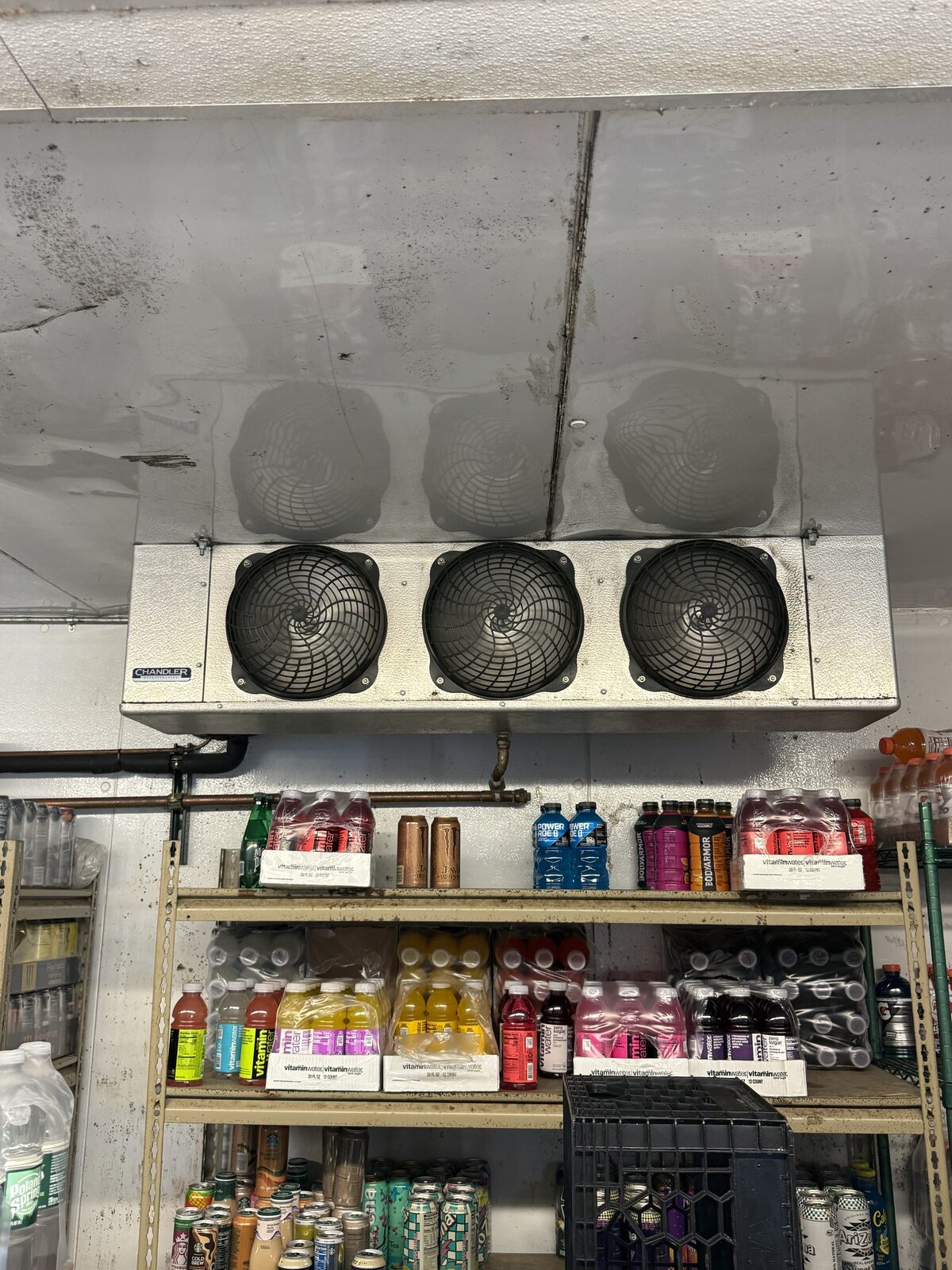
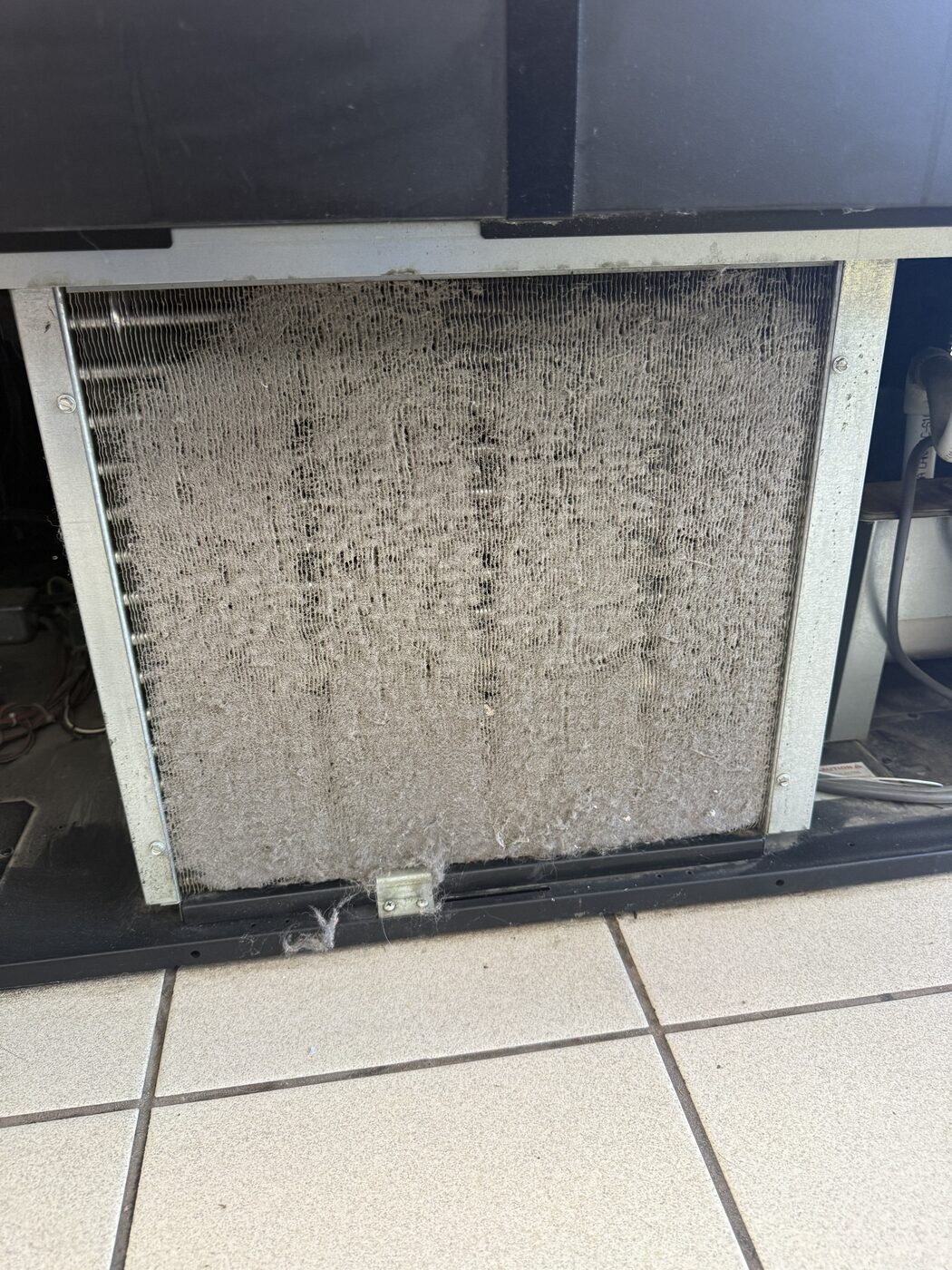
- Feel the condenser coil and fans. A coil caked in dust or grease, or a condenser fan that isn’t spinning, will choke cooling. If the coil is filthy and safe to reach, a careful brush-off can help.
- Check for ice-up. A coil buried in frost usually means a defrost or airflow problem. Don’t chip at it — let it thaw and note it for the tech.
- Listen. A compressor that hums and clicks off, or is silent when it should be running, points to a real failure. If the unit is running but not cooling, that’s its own diagnosis path — here’s more on refrigeration that’s running but not cooling.
If none of that brings it back, don’t keep cycling the unit on and off hoping it catches. You’ll only stress a failing compressor and burn the time your product doesn’t have.
Know Your Food-Safety Thresholds: the 40°F / 4-Hour Rule
Perishable food is safe as long as it stays at or below 40°F. Above that, you’re in the “danger zone” (40°F to 140°F) where bacteria multiply fast. The working rule most inspectors and insurers follow: refrigerated perishables held above 40°F for more than 4 hours — counting the total cumulative time — must be thrown out.
Frozen product has a little more grace. Food that still has ice crystals or is at 40°F or below can be safely refrozen, though quality may drop. A full freezer will typically hold safe temperature for about 48 hours if you leave the door closed (24 hours if it’s half full). That’s why “keep the door shut” is the single most valuable thing you can do overnight.
When in doubt, throw it out — and document what you tossed with photos and your temperature log. That record protects both your customers and your insurance claim.
Walk-In vs. Freezer Failures: Not the Same Emergency
A walk-in cooler creeping from 38°F to 45°F is urgent but survivable for a while. A freezer failure is a faster clock — once frozen product starts to soften, you’re often looking at a total loss on that load if it isn’t caught quickly. Freezers also fail in sneaky ways: a stuck defrost heater, an iced-over evaporator, or a failed door heater can look like a cooling problem when it’s really airflow. If your freezer is the unit that’s down, get familiar with what a real walk-in freezer repair involves so you know what to expect when the tech arrives.
When to Call a Pro — and Why Fast Matters
Call now if the breaker trips repeatedly, you smell a burning or hot electrical odor, the compressor is silent or short-cycling, there’s a refrigerant hiss or oily residue near the lines, or your temperature is still climbing after your basic checks. These aren’t DIY situations, and waiting until morning can turn a single repair into a spoiled-inventory claim.
The math is simple: an emergency refrigeration service call costs a fraction of a walk-in full of product. That’s the whole point of emergency refrigeration repair — a 24/7 tech who can diagnose and often fix the unit before your load crosses the 4-hour line. When every minute is pulling product toward the danger zone, the fastest path to saving the load is getting the right person on site. Searching for emergency refrigeration repair near me at 2 AM should put a real 24-hour dispatcher on the line — not a voicemail you won’t hear back from until business hours.
FAQ
How long will my walk-in stay cold if I keep the door closed?
A well-sealed walk-in cooler can hold safe temperature for several hours, and a full freezer for roughly 24 to 48 hours, as long as the door stays shut. The moment you start opening it repeatedly, that window collapses. Keep it closed, keep your temperature log, and move product only once — into the coldest backup space you have.
Is my food still safe after the refrigeration went out overnight?
Refrigerated perishables are safe if they stayed at or below 40°F. If they were above 40°F for more than four cumulative hours, throw them out. Frozen items that still have ice crystals or are at 40°F or below can be refrozen. When you can’t be sure of the temperature history, discard it and document what you tossed.
Do you really answer calls at 2 AM?
Yes. That’s what 24 hour refrigeration repair means — a live line and same-day dispatch across New Bedford, Fall River, and Southeastern Massachusetts and Rhode Island, so a failing unit at 2 AM gets a real technician, not a callback ticket for the next business day.
Still not cooling? Don’t risk your inventory. Call 508-521-9477 for same-day commercial refrigeration repair across New Bedford, Fall River, and Southeastern Mass & Rhode Island — we diagnose fast and get you back up.
It’s the middle of the night, your walk-in cooler or reach-in freezer is climbing past temperature, and thousands of dollars of product is suddenly on the line. First, take a breath — the next ten minutes matter far more than panic does. Here’s exactly what to do to safeguard your inventory while you get emergency help on the way.
The First 10 Minutes: Safeguard Your Product
Before you troubleshoot anything, protect the load. Every degree and every minute counts once a unit stops holding temperature, and the choices you make right now decide whether you lose $200 of product or $5,000. Work through this fast:
- Keep the door shut. A closed walk-in or freezer holds cold for hours; an open one loses it in minutes. Resist the urge to keep opening it to “check” — every look dumps cold air out and pulls warm, humid air in.
- Write down the temperature and the time. Note the current reading on your thermometer and the clock time you first noticed the problem. This log is what your insurer and your health inspector will ask for, and it tells the tech how fast you’re losing ground.
- Move your highest-value and most perishable product first. Seafood, raw meat, dairy, and prepped items go to a working cooler, freezer, or a neighboring business if you have one on speed dial. Triage by value and risk, not by what’s closest to the door.
- Ice it down. If you can’t relocate product, pack it with bagged or block ice and cover it. Dry ice, if you can source it, will hold a freezer far longer — keep it away from bare skin and give the space ventilation.
- Group and cover. Consolidate product tightly on shelves and throw insulated blankets or moving pads over it. A dense, covered mass stays cold much longer than scattered, exposed items.
Quick, Safe Checks You Can Do Yourself
Once the product is protected, a few safe checks might get you running again — or at least tell the tech what they’re walking into. Stick to the simple stuff and stay out of electrical panels and sealed refrigerant systems.
- Confirm it has power. Check that the unit is plugged in and that its breaker hasn’t tripped. Reset a tripped breaker once. If it trips again immediately, stop — that’s a fault, not a fluke.
- Look at the thermostat or controller. Make sure a setpoint wasn’t bumped, a defrost cycle isn’t stuck, or a control board isn’t flashing an error code. Snap a photo of any code you see.
- Feel the condenser coil and fans. A coil caked in dust or grease, or a condenser fan that isn’t spinning, will choke cooling. If the coil is filthy and safe to reach, a careful brush-off can help.
- Check for ice-up. A coil buried in frost usually means a defrost or airflow problem. Don’t chip at it — let it thaw and note it for the tech.
- Listen. A compressor that hums and clicks off, or is silent when it should be running, points to a real failure. If the unit is running but not cooling, that’s its own diagnosis path — here’s more on refrigeration that’s running but not cooling.
If none of that brings it back, don’t keep cycling the unit on and off hoping it catches. You’ll only stress a failing compressor and burn the time your product doesn’t have.
Know Your Food-Safety Thresholds: the 40°F / 4-Hour Rule
Perishable food is safe as long as it stays at or below 40°F. Above that, you’re in the “danger zone” (40°F to 140°F) where bacteria multiply fast. The working rule most inspectors and insurers follow: refrigerated perishables held above 40°F for more than 4 hours — counting the total cumulative time — must be thrown out.
Frozen product has a little more grace. Food that still has ice crystals or is at 40°F or below can be safely refrozen, though quality may drop. A full freezer will typically hold safe temperature for about 48 hours if you leave the door closed (24 hours if it’s half full). That’s why “keep the door shut” is the single most valuable thing you can do overnight.
When in doubt, throw it out — and document what you tossed with photos and your temperature log. That record protects both your customers and your insurance claim.
Walk-In vs. Freezer Failures: Not the Same Emergency
A walk-in cooler creeping from 38°F to 45°F is urgent but survivable for a while. A freezer failure is a faster clock — once frozen product starts to soften, you’re often looking at a total loss on that load if it isn’t caught quickly. Freezers also fail in sneaky ways: a stuck defrost heater, an iced-over evaporator, or a failed door heater can look like a cooling problem when it’s really airflow. If your freezer is the unit that’s down, get familiar with what a real walk-in freezer repair involves so you know what to expect when the tech arrives.
When to Call a Pro — and Why Fast Matters
Call now if the breaker trips repeatedly, you smell a burning or hot electrical odor, the compressor is silent or short-cycling, there’s a refrigerant hiss or oily residue near the lines, or your temperature is still climbing after your basic checks. These aren’t DIY situations, and waiting until morning can turn a single repair into a spoiled-inventory claim.
The math is simple: an emergency refrigeration service call costs a fraction of a walk-in full of product. That’s the whole point of emergency refrigeration repair — a 24/7 tech who can diagnose and often fix the unit before your load crosses the 4-hour line. When every minute is pulling product toward the danger zone, the fastest path to saving the load is getting the right person on site. Searching for emergency refrigeration repair near me at 2 AM should put a real 24-hour dispatcher on the line — not a voicemail you won’t hear back from until business hours.
FAQ
How long will my walk-in stay cold if I keep the door closed?
A well-sealed walk-in cooler can hold safe temperature for several hours, and a full freezer for roughly 24 to 48 hours, as long as the door stays shut. The moment you start opening it repeatedly, that window collapses. Keep it closed, keep your temperature log, and move product only once — into the coldest backup space you have.
Is my food still safe after the refrigeration went out overnight?
Refrigerated perishables are safe if they stayed at or below 40°F. If they were above 40°F for more than four cumulative hours, throw them out. Frozen items that still have ice crystals or are at 40°F or below can be refrozen. When you can’t be sure of the temperature history, discard it and document what you tossed.
Do you really answer calls at 2 AM?
Yes. That’s what 24 hour refrigeration repair means — a live line and same-day dispatch across New Bedford, Fall River, and Southeastern Massachusetts and Rhode Island, so a failing unit at 2 AM gets a real technician, not a callback ticket for the next business day.
Still not cooling? Don’t risk your inventory. Call 508-521-9477 for same-day commercial refrigeration repair across New Bedford, Fall River, and Southeastern Mass & Rhode Island — we diagnose fast and get you back up.