Commercial Refrigeration Not Cooling
When your commercial refrigeration is not cooling, every hour above setpoint puts product, revenue, and health-code compliance on the clock. It strikes walk-in coolers and freezers, reach-in refrigerators, ice machines, and open display cases alike — sometimes a box that ran fine yesterday simply won’t pull down today. Armus Refrigeration runs full sealed-system diagnostics to find the real cause instead of guessing at parts. We serve restaurants, markets, c-stores, schools, and commercial kitchens across New Bedford, the South Coast, the South Shore, Cape Cod, Greater Boston, and Rhode Island.
What’s likely happening
- A seized or electrically failed compressor means the system can run fans yet move no refrigerant and produce no cooling.
- A refrigerant leak has bled off the charge, so the coil can’t absorb enough heat to reach setpoint.
- A bad thermostat or temperature sensor is misreading the box and never calling for cooling at the right time.
- A dirty, airflow-starved condenser coil traps heat, raising head pressure until the unit can’t reject it.
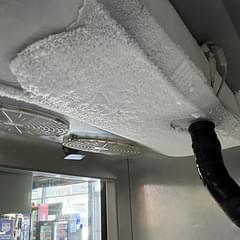
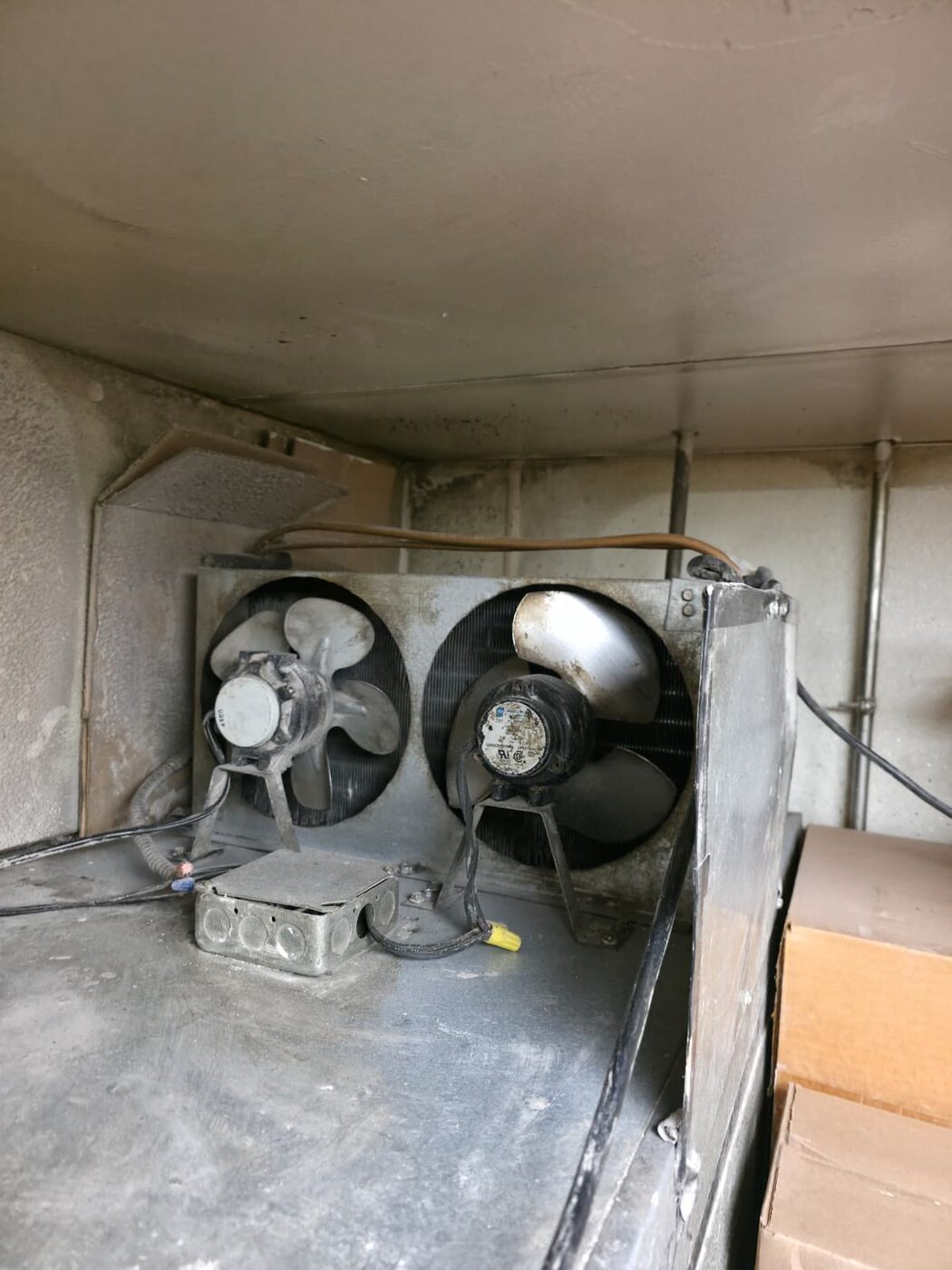
- An iced-up evaporator or a failed evaporator fan motor blocks the airflow that actually cools the box.
- A stuck-open or failed defrost cycle lets the evaporator freeze into a solid block that smothers cooling.
- A weak or restricted metering device starves the evaporator, leaving the walk-in cooler not cold despite a running compressor.
What Armus checks & fixes
- We connect gauges and read suction and head pressure, superheat, and subcooling to pinpoint where the sealed system is failing.
- We electronic-leak-test the joints, coils, and flare fittings, repair the leak, evacuate to a deep vacuum, and weigh in the correct charge.
- We test the compressor windings, run capacitor, start relay, and contactor, then replace a seized or shorted compressor with an OEM match.
- We replace failed thermostats, control boards, and temperature sensors, and verify the calibration against an independent probe.
- We pull and clean a clogged condenser coil, check the condenser fan motor, and restore proper heat rejection.
- We clear an iced evaporator, repair or replace the evaporator fan motor and defrost heater, and confirm the defrost cycle terminates correctly.
- We inspect and replace a stuck or hunting TXV or restricted cap tube so the evaporator feeds and the box pulls down to setpoint before we leave.
Why this happens
Cooling is moved heat. The compressor pulls low-pressure vapor off the evaporator and pushes it as hot, high-pressure gas to the condenser, where it rejects heat and condenses to liquid. That liquid drops through a metering device — usually a TXV or capillary tube — flashes to low pressure in the evaporator, and boils off, absorbing heat from the box. Break any link in that loop and the commercial freezer won’t hold temperature. See how to fix a commercial refrigerator not cooling.
Low charge from a leak is the most common culprit. With too little refrigerant, the evaporator starves, superheat climbs, and the coil never gets cold enough to pull the box down — even though the compressor runs nonstop. Just topping off masks the leak; the charge bleeds out again within weeks, so the leak has to be found, repaired, and the system weighed in to spec.
Airflow failures imitate a sealed-system problem. A condenser packed with grease and dust can’t reject heat, so head pressure spikes and the compressor either trips on its overload or runs hot and inefficient. On the low side, a frozen evaporator or a dead evap fan stops air moving across the cold coil, so the box warms while the coil ices over and the unit shows a cooler not reaching setpoint.
Controls and the defrost cycle round out the list. A drifting thermostat or a failed sensor can stop the unit from calling for cooling, while a contactor that won’t pull in leaves the compressor dead. A defrost circuit stuck off lets the evaporator build a block of ice that chokes airflow; stuck on, the box never finishes pulling down. Reading superheat, subcooling, and the electrical circuit together is how we tell these apart instead of throwing parts at it.
Equipment we service
We repair this on every type of commercial refrigeration:
How we fix it — our process
- Confirm the symptom — We log actual box and product temperatures, check the controller, and verify the unit is calling for cooling.
- Read the sealed system — We connect gauges and take suction, head, superheat, and subcooling numbers to locate the fault.
- Check airflow and electrical — We inspect the condenser, evaporator, fan motors, contactor, and capacitors for restriction or failure.
- Isolate the root cause — We separate a charge or leak issue from a compressor, control, or defrost problem before quoting any part.
- Repair with OEM parts — We fix the leak, replace the failed component, and recharge to the nameplate spec.
- Verify pulldown — We watch the box pull down to setpoint and confirm a normal cycle before we leave.
Service area
Armus Refrigeration handles commercial refrigeration not cooling for restaurants, markets, c-stores, schools, and commercial kitchens across New Bedford, the South Coast, the South Shore, Cape Cod, Greater Boston, and Rhode Island — including:
Frequently asked questions
The compressor is running but it’s still not cold — why?
How fast can you respond in an emergency?
Is my product still safe while I wait?
Can you fix a walk-in cooler that isn’t cold but the freezer next to it is fine?
Will I need a whole new compressor or unit?
Why does my cooler keep losing temperature only during the busy rush?
Brands We Service
We repair and maintain every major commercial refrigeration & ice brand.