When a commercial freezer stops holding temperature, the clock starts running on thousands of dollars of frozen product. Whether it’s a reach-in behind your line or a walk-in packed with a week’s worth of inventory, a unit reading 20°F when it should be at 0°F is the kind of emergency you feel in your gut. The good news: a fair number of “not freezing” calls come down to a short list of causes, and you can check most of them before anyone picks up a wrench. Below is the same walk-through a seasoned tech runs on arrival.
Before you start, keep the door shut as much as possible and move your most valuable product to a working unit. Then work through the checks in order.
A 6-Step First-Response Checklist
Run these in sequence. Each one rules out a cause and points you toward the next.
- Confirm the setpoint. Someone bumped the dial or the controller got reset more often than you’d think. A freezer should be holding around -10°F to 0°F. Make sure it’s actually set there and not in a defrost or “off” mode.
- Check that it’s getting power and running. Verify the breaker, the plug, and that the compressor and fans are actually humming. A tripped breaker or a nudged plug behind the unit is a five-minute fix.
- Feel the condenser coils. Are they buried in dust, grease, and lint? A choked condenser is the single most common reason a freezer slowly loses its ability to freeze.
- Look for frost or ice on the evaporator coils. A solid sheet of ice inside the cabinet means air can’t move across the coil, and the box warms up.
- Inspect the door gaskets. Run your hand around the seal for warm air leaks and check for cracked, torn, or flattened gasket.
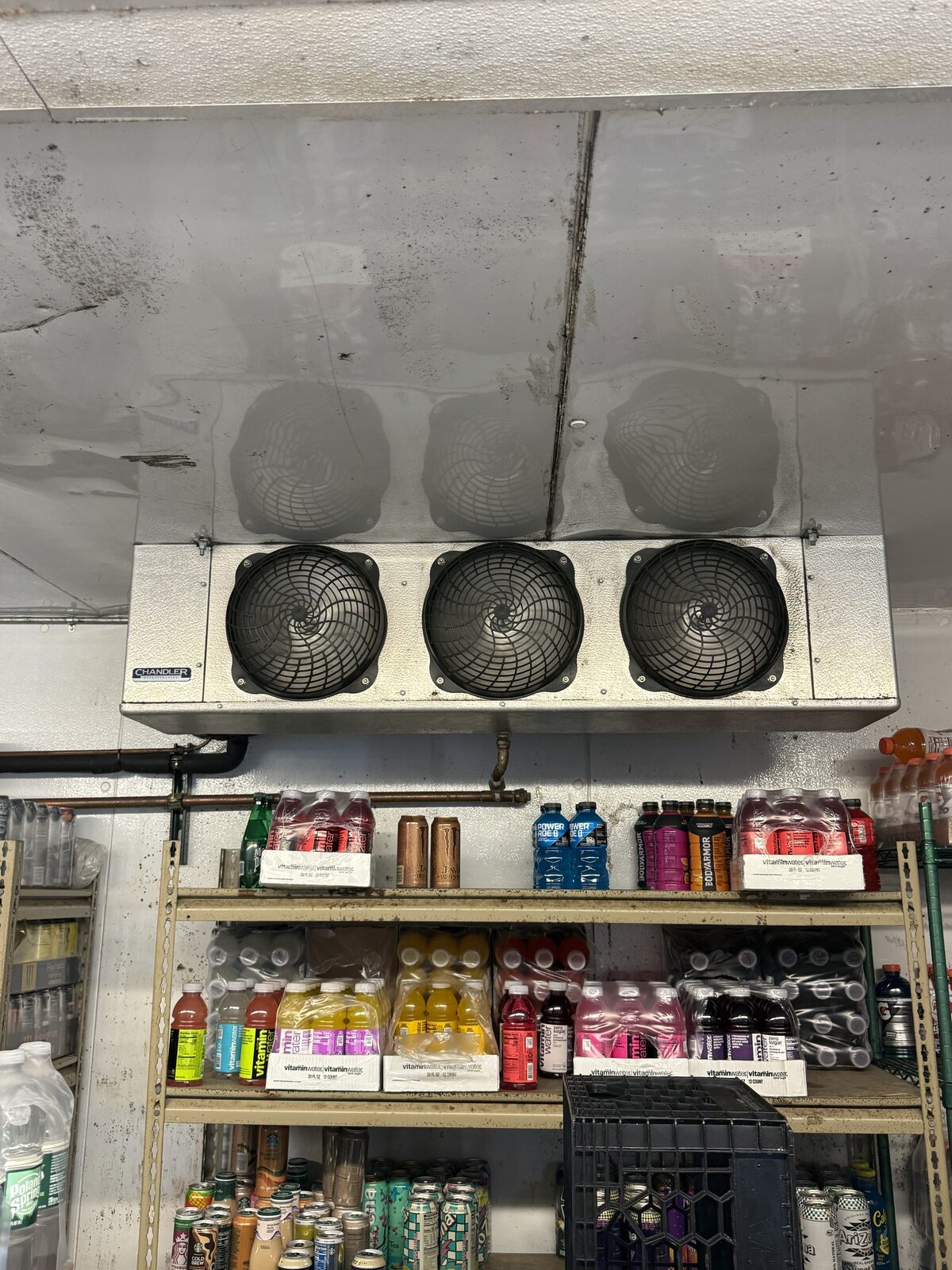
- Listen for the evaporator fan. No airflow from the inside vents means the fan motor or a frost-jammed blade is likely the culprit.
Start With the Setpoint and Power
It sounds too simple, but always rule it out first. Walk-in controllers and reach-in thermostats get bumped, overridden during a busy shift, or knocked into a manual defrost cycle. If the display is dark or flashing an error, note the code before you touch anything. If the unit is dead entirely, you may be looking at a controller, a relay, or a power supply problem rather than the cooling system itself.
Frost and Iced-Up Coils
A little frost is normal. A block of ice is not. When the evaporator coil ices over, air can’t pass through it, so the cabinet warms even though the compressor is running hard. Icing usually points to a failed defrost cycle: a bad defrost timer, a stuck heater, a failed termination sensor, or a door left open long enough to flood the box with humid air. You can thaw the coil manually to buy time, but if it re-ices within a day, the defrost system needs attention. This is one of the most common failure points on both reach-ins and larger boxes, which is why we treat it as a core part of any have a technician diagnose it diagnosis.
A Dirty Condenser Is the #1 Silent Killer
The condenser coil is how your freezer dumps heat outside the cabinet. In a busy kitchen it gets caked with grease, flour, dust, and lint until it can barely breathe. When that happens, head pressure climbs, the compressor overheats, efficiency tanks, and the box can’t pull down to temperature no matter how long it runs. On a walk-in, the condenser is often up on the roof or overhead where nobody sees it. A monthly cleaning with a coil brush and a vacuum prevents more freezer failures than any other single habit. If your unit is one of the larger boxes, our a walk-in freezer service call visits almost always start here.
Door Seals and Gaskets
A cracked or flattened gasket lets warm, humid kitchen air pour in every time the door opens and closes. That does two things: it warms the box, and it feeds the evaporator coil moisture that turns into the ice we talked about above. Do the dollar-bill test: close a bill in the door and try to pull it out. If it slides freely, the seal isn’t gripping. Gaskets are wear items and one of the cheapest, highest-payoff parts to replace on a commercial unit.
The Evaporator Fan
The evaporator fan pushes cold air off the coil and through the cabinet. If it seizes, burns out, or gets jammed by ice, the coil may still get cold but that cold never reaches your product, so the thermometer reads warm while the coil frosts up. Open the box and confirm you feel steady airflow from the interior vents. No air movement, plus a cold coil, is a classic bad-fan signature. A stalled fan is a quick part swap for a tech, but ignored it will ice the coil solid within hours.
Signs It’s the Refrigerant or Compressor
If the coils are clean, the seals are good, the fans run, and the box still won’t freeze, you may be into the sealed system. Warning signs of a refrigerant charge or compressor problem include: a compressor that runs constantly but never pulls temperature down, hissing or bubbling sounds, an oily film near line joints, or a compressor that’s hot to the touch and cycling on its overload. These are not DIY fixes. Refrigerant handling is regulated, and a compressor replacement is a diagnosis you want a licensed tech to confirm before you spend the money. The same symptoms show up on coolers too, which we cover under refrigeration that won’t cool.
Short-Cycling: When the Freezer Won’t Stay Running
If your freezer keeps kicking on and off in quick bursts and never settles into a real cooling cycle, that’s short-cycling, and it will leave the box warm while wearing out the compressor fast. Causes range from a dirty condenser and low refrigerant to a failing start relay, an overheating compressor, or a miswired control. Because it damages the most expensive part in the unit every time it happens, short-cycling is worth diagnosing quickly. We break down the causes and fixes in our guide to why it keeps short-cycling.
When to Call a Pro
Do the safe checks yourself: setpoint, power, condenser cleaning, gasket inspection, and confirming the fans run. Those solve a real share of “not freezing” calls with zero cost. Call a professional the moment you see any of the following, because every hour of delay is inventory at risk:
- The coil re-ices within a day of thawing it (defrost system failure).
- The compressor runs nonstop but the box never reaches temperature.
- You hear hissing, bubbling, or see oily residue on the refrigerant lines.
- The unit short-cycles or trips its breaker.
- Any repair involving refrigerant, wiring, or the compressor.
When product is on the line, a fast, correct diagnosis beats guessing every time.
FAQ
Why is my commercial freezer running but not freezing?
The most common reasons are a dirty condenser coil that can’t release heat, an iced-over evaporator coil blocking airflow, or a stalled evaporator fan. If those check out, it usually points to a refrigerant charge or compressor issue that needs a technician.
How cold should a commercial freezer be?
A commercial freezer should hold between -10°F and 0°F for safe long-term food storage. If yours is steady above 10°F, treat it as a failure in progress and start the checklist above before product quality drops.
Can I keep using the freezer while it’s being diagnosed?
Only briefly, and keep the door shut. If the box is drifting above 0°F, move your most valuable frozen product to a working unit right away. Warm cycling risks food safety and puts extra strain on a compressor that may already be struggling.
Still not cooling? Don’t risk your inventory. Call 508-521-9477 for same-day commercial refrigeration repair across New Bedford, Fall River, and Southeastern Mass & Rhode Island — we diagnose fast and get you back up.
When a commercial freezer stops holding temperature, the clock starts running on thousands of dollars of frozen product. Whether it’s a reach-in behind your line or a walk-in packed with a week’s worth of inventory, a unit reading 20°F when it should be at 0°F is the kind of emergency you feel in your gut. The good news: a fair number of “not freezing” calls come down to a short list of causes, and you can check most of them before anyone picks up a wrench. Below is the same walk-through a seasoned tech runs on arrival.
Before you start, keep the door shut as much as possible and move your most valuable product to a working unit. Then work through the checks in order.
A 6-Step First-Response Checklist
Run these in sequence. Each one rules out a cause and points you toward the next.
- Confirm the setpoint. Someone bumped the dial or the controller got reset more often than you’d think. A freezer should be holding around -10°F to 0°F. Make sure it’s actually set there and not in a defrost or “off” mode.
- Check that it’s getting power and running. Verify the breaker, the plug, and that the compressor and fans are actually humming. A tripped breaker or a nudged plug behind the unit is a five-minute fix.
- Feel the condenser coils. Are they buried in dust, grease, and lint? A choked condenser is the single most common reason a freezer slowly loses its ability to freeze.
- Look for frost or ice on the evaporator coils. A solid sheet of ice inside the cabinet means air can’t move across the coil, and the box warms up.
- Inspect the door gaskets. Run your hand around the seal for warm air leaks and check for cracked, torn, or flattened gasket.
- Listen for the evaporator fan. No airflow from the inside vents means the fan motor or a frost-jammed blade is likely the culprit.
Start With the Setpoint and Power
It sounds too simple, but always rule it out first. Walk-in controllers and reach-in thermostats get bumped, overridden during a busy shift, or knocked into a manual defrost cycle. If the display is dark or flashing an error, note the code before you touch anything. If the unit is dead entirely, you may be looking at a controller, a relay, or a power supply problem rather than the cooling system itself.
Frost and Iced-Up Coils
A little frost is normal. A block of ice is not. When the evaporator coil ices over, air can’t pass through it, so the cabinet warms even though the compressor is running hard. Icing usually points to a failed defrost cycle: a bad defrost timer, a stuck heater, a failed termination sensor, or a door left open long enough to flood the box with humid air. You can thaw the coil manually to buy time, but if it re-ices within a day, the defrost system needs attention. This is one of the most common failure points on both reach-ins and larger boxes, which is why we treat it as a core part of any have a technician diagnose it diagnosis.
A Dirty Condenser Is the #1 Silent Killer
The condenser coil is how your freezer dumps heat outside the cabinet. In a busy kitchen it gets caked with grease, flour, dust, and lint until it can barely breathe. When that happens, head pressure climbs, the compressor overheats, efficiency tanks, and the box can’t pull down to temperature no matter how long it runs. On a walk-in, the condenser is often up on the roof or overhead where nobody sees it. A monthly cleaning with a coil brush and a vacuum prevents more freezer failures than any other single habit. If your unit is one of the larger boxes, our a walk-in freezer service call visits almost always start here.
Door Seals and Gaskets
A cracked or flattened gasket lets warm, humid kitchen air pour in every time the door opens and closes. That does two things: it warms the box, and it feeds the evaporator coil moisture that turns into the ice we talked about above. Do the dollar-bill test: close a bill in the door and try to pull it out. If it slides freely, the seal isn’t gripping. Gaskets are wear items and one of the cheapest, highest-payoff parts to replace on a commercial unit.
The Evaporator Fan
The evaporator fan pushes cold air off the coil and through the cabinet. If it seizes, burns out, or gets jammed by ice, the coil may still get cold but that cold never reaches your product, so the thermometer reads warm while the coil frosts up. Open the box and confirm you feel steady airflow from the interior vents. No air movement, plus a cold coil, is a classic bad-fan signature. A stalled fan is a quick part swap for a tech, but ignored it will ice the coil solid within hours.
Signs It’s the Refrigerant or Compressor
If the coils are clean, the seals are good, the fans run, and the box still won’t freeze, you may be into the sealed system. Warning signs of a refrigerant charge or compressor problem include: a compressor that runs constantly but never pulls temperature down, hissing or bubbling sounds, an oily film near line joints, or a compressor that’s hot to the touch and cycling on its overload. These are not DIY fixes. Refrigerant handling is regulated, and a compressor replacement is a diagnosis you want a licensed tech to confirm before you spend the money. The same symptoms show up on coolers too, which we cover under refrigeration that won’t cool.
Short-Cycling: When the Freezer Won’t Stay Running
If your freezer keeps kicking on and off in quick bursts and never settles into a real cooling cycle, that’s short-cycling, and it will leave the box warm while wearing out the compressor fast. Causes range from a dirty condenser and low refrigerant to a failing start relay, an overheating compressor, or a miswired control. Because it damages the most expensive part in the unit every time it happens, short-cycling is worth diagnosing quickly. We break down the causes and fixes in our guide to why it keeps short-cycling.
When to Call a Pro
Do the safe checks yourself: setpoint, power, condenser cleaning, gasket inspection, and confirming the fans run. Those solve a real share of “not freezing” calls with zero cost. Call a professional the moment you see any of the following, because every hour of delay is inventory at risk:
- The coil re-ices within a day of thawing it (defrost system failure).
- The compressor runs nonstop but the box never reaches temperature.
- You hear hissing, bubbling, or see oily residue on the refrigerant lines.
- The unit short-cycles or trips its breaker.
- Any repair involving refrigerant, wiring, or the compressor.
When product is on the line, a fast, correct diagnosis beats guessing every time.
FAQ
Why is my commercial freezer running but not freezing?
The most common reasons are a dirty condenser coil that can’t release heat, an iced-over evaporator coil blocking airflow, or a stalled evaporator fan. If those check out, it usually points to a refrigerant charge or compressor issue that needs a technician.
How cold should a commercial freezer be?
A commercial freezer should hold between -10°F and 0°F for safe long-term food storage. If yours is steady above 10°F, treat it as a failure in progress and start the checklist above before product quality drops.
Can I keep using the freezer while it’s being diagnosed?
Only briefly, and keep the door shut. If the box is drifting above 0°F, move your most valuable frozen product to a working unit right away. Warm cycling risks food safety and puts extra strain on a compressor that may already be struggling.
Still not cooling? Don’t risk your inventory. Call 508-521-9477 for same-day commercial refrigeration repair across New Bedford, Fall River, and Southeastern Mass & Rhode Island — we diagnose fast and get you back up.