Commercial Cooler Temperature Fluctuating
A commercial cooler temperature fluctuating up and down is one of the most dangerous faults in a kitchen, because the box can look fine on the display while product slips in and out of the safe zone all day. We see it on walk-in coolers and freezers, reach-in refrigerators, prep tables, glass-door merchandisers, and ice machines, and almost always it traces back to a control, a sensor, or the refrigeration cycle itself rather than a single failed part. Armus Refrigeration troubleshoots and stabilizes erratic box temperatures across Southeastern Massachusetts and Rhode Island, from New Bedford, Fall River, and Dartmouth out to Cape Cod, Greater Boston, and Providence. We are EPA-608 certified, available 24/7, and 5.0-star rated, so when your numbers won’t hold steady we get the box locked back on setpoint before your inventory pays for it.
What’s likely happening
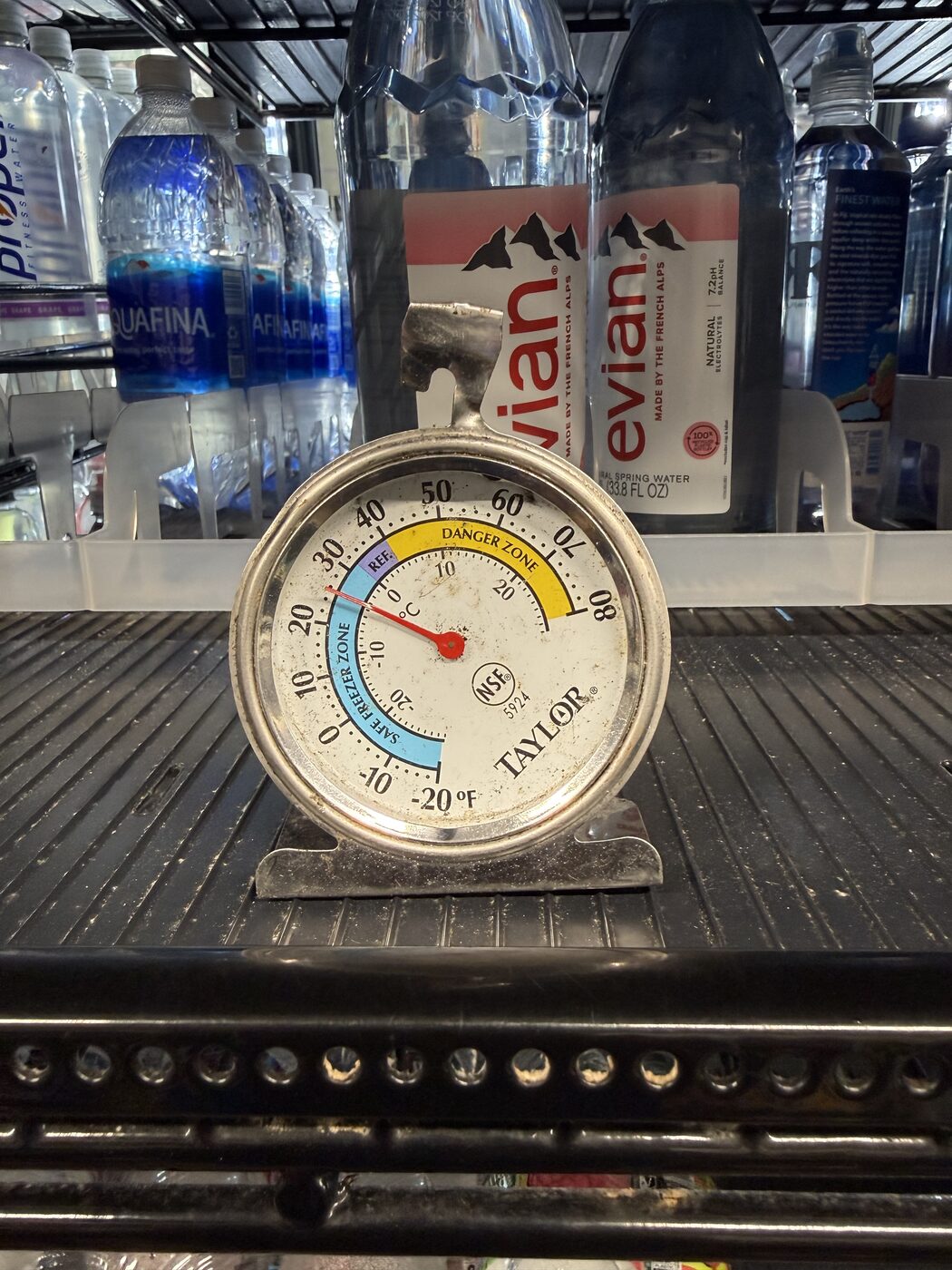
- A temperature sensor or thermistor that has drifted out of calibration tells the controller the wrong reading, so the unit cools too long, then too little.
- An aging or glitching electronic control board misreads inputs or mistimes the compressor, producing erratic on-off cycling and visible temperature swings.
- A defrost cycle that runs too often, too long, or fails to terminate dumps heat into the box and spikes the temperature after every cycle.
- A low refrigerant charge from a slow leak starves the evaporator, so the unit can’t recover setpoint and the temperature wanders upward between cycles.
- Heavy door traffic, propped doors, or warm product loaded at once flood the box with humidity and heat the compressor struggles to pull back down.
- Iced or dirty evaporator coils and weak airflow create cold spots and warm spots, so the sensor sees a moving target and the box never settles.
- A failing contactor, relay, or short-cycling pressure control interrupts the compressor unevenly, letting the box temperature climb and fall on its own.
What Armus checks & fixes
- We verify the actual box temperature against the displayed reading with calibrated instruments, then recalibrate or replace the thermistor or sensor probe.
- We test the electronic control board’s inputs and outputs, reflash or reprogram setpoints and differentials, and swap the board when it fails diagnostics.
- We audit the defrost schedule, heaters, and termination sensor, then correct defrost frequency, duration, and the termination set point to stop post-defrost spikes.
- We check superheat, subcooling, and pressures to confirm the charge, find and repair leaks, then weigh in the correct refrigerant per the nameplate.
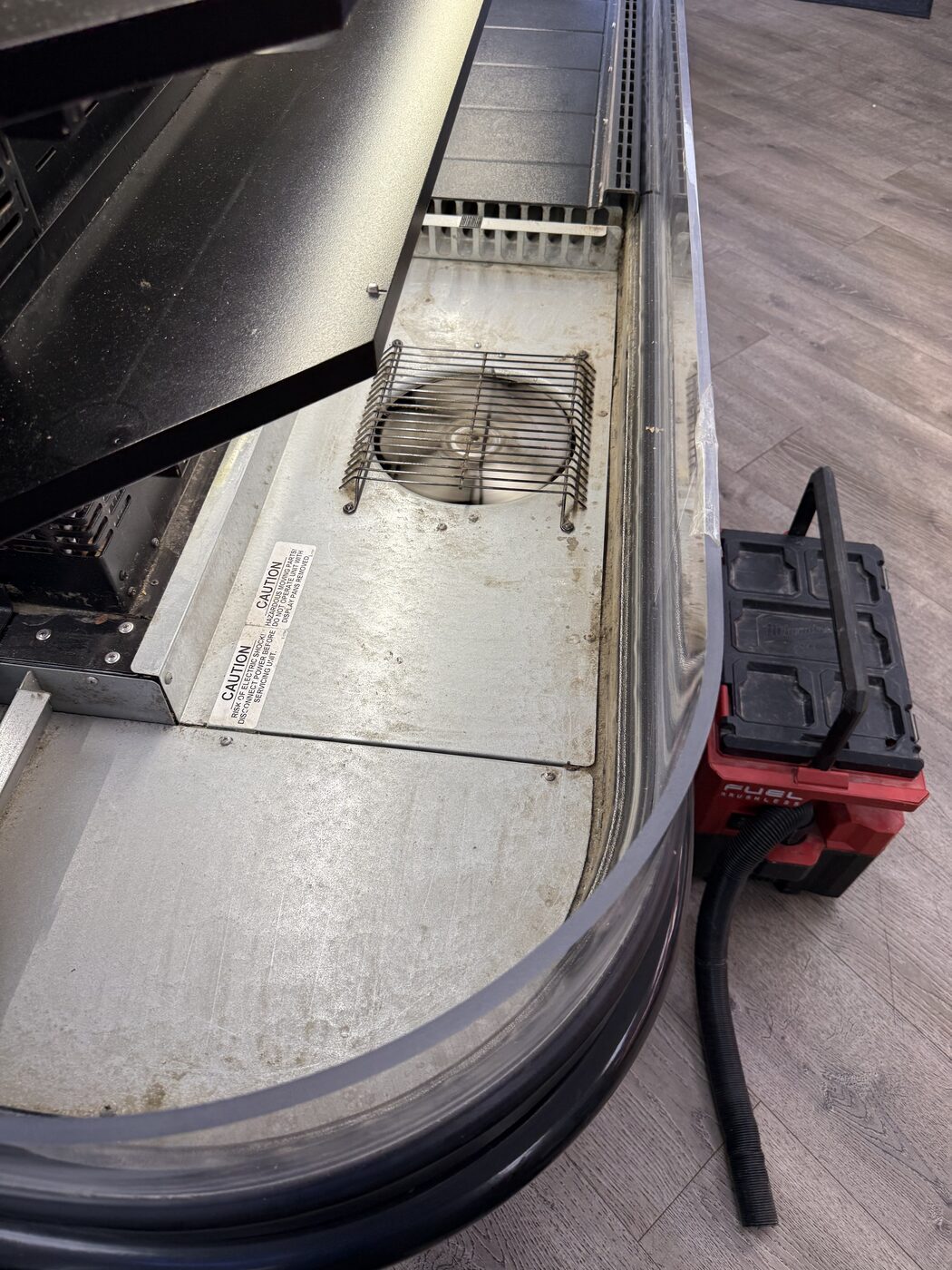
- We inspect and clean evaporator and condenser coils, confirm fan motors and airflow, and clear any ice buildup choking the box.
- We test the contactor, start components, relays, and pressure controls, replacing worn or chattering parts that interrupt compressor run time.
- We confirm door gaskets, hinges, sweep heaters, and closers seal tight so ambient heat and humidity stop loading the box.
Why this happens
Stable box temperature depends on three things agreeing: an accurate sensor, a controller that acts on it correctly, and a refrigeration circuit that can actually hit setpoint. When a thermistor drifts even a few degrees, the controller satisfies on a false reading and shuts the compressor early, so the real box temperature overshoots before the next call for cooling. The swing you see on the display is the gap between what the sensor reports and what the product is actually living in.
On the refrigeration side, an undercharged system runs low evaporator pressure and high superheat, meaning the coil isn’t fully active and the box loses ground between cycles. A TXV that hunts, a flooding or starving evaporator, or a partially iced coil all change how fast the box pulls down, so recovery time stretches and shortens unpredictably. Add a defrost cycle that terminates on time instead of on temperature, and every defrost leaves residual heat the system must fight back down, producing a sawtooth temperature pattern.
Electrical and mechanical wear shows up as instability before it shows up as a hard failure. A pitted contactor or a chattering relay interrupts compressor run time at random, and a short-cycling low-pressure control stops and starts the system faster than the box can stabilize. Layer heavy door usage and warm product loads on top, and the controller is constantly chasing a moving load it was tuned for under steady conditions.
Because the symptom can originate at the sensor, the board, the defrost, the charge, or the airflow, guessing wastes refrigerant and parts. The fix is methodical measurement of each link in the chain until the one that’s lying is found and corrected.
Equipment we service
We repair this on every type of commercial refrigeration:
How we fix it — our process
- Confirm the real numbers — We log actual box temperature over a cycle and compare it to the controller display to separate a sensor problem from a cooling problem.
- Check sensor and controls — We test the thermistor or probe for calibration drift and verify the control board’s setpoint, differential, and defrost programming.
- Read the refrigeration cycle — We take pressures, superheat, and subcooling to judge the charge and confirm the TXV and evaporator are behaving.
- Inspect airflow and defrost — We examine coils, fan motors, ice buildup, and defrost heaters and termination so heat isn’t being trapped or dumped.
- Verify the electrical path — We test the contactor, relays, start components, and pressure controls for the interruptions that cause uneven cycling.
- Repair and confirm stability — We correct the failed link, then watch a full cycle to confirm the box holds setpoint within its rated differential before we leave.
Service area
Armus Refrigeration handles commercial cooler temperature fluctuating for restaurants, markets, c-stores, schools, and commercial kitchens across New Bedford, the South Coast, the South Shore, Cape Cod, Greater Boston, and Rhode Island — including:
Frequently asked questions
Why does my cooler temp keep going up and down?
Can a sensor be recalibrated instead of replaced?
Is my product safe if the temp swings?
How fast can Armus get to a cooler with temperature problems?
Will you find out why the temperature is swinging or just reset it?
Do you work on coolers with electronic or digital controllers?
Brands We Service
We repair and maintain every major commercial refrigeration & ice brand.