Commercial Refrigeration High Energy Costs
Commercial refrigeration high energy costs almost always mean your equipment is running far longer than it should to hold the same temperature. We see it on walk-in coolers and freezers, reach-in refrigerators, and remote condensing units that hum nearly nonstop and still struggle to stay in range. Armus Refrigeration diagnoses and corrects the real cause across New Bedford, the South Coast, Cape Cod, Greater Boston, and Rhode Island. We are EPA-608 certified, available 24/7, and rated 5.0 on Google for fixing the problem instead of masking it.
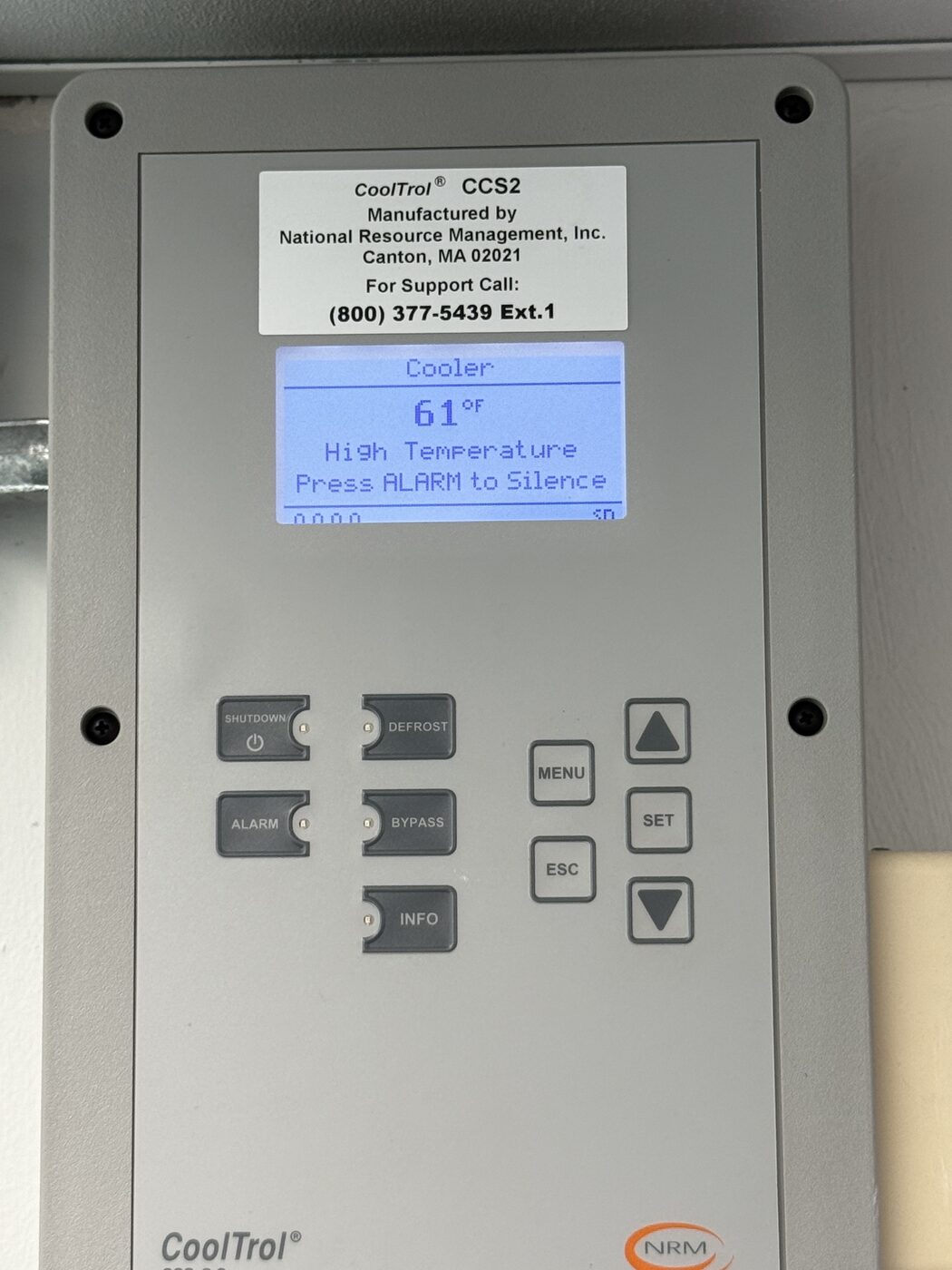
What’s likely happening
- Worn or torn door gaskets let cold air leak out, so the compressor runs constantly to replace it.
- Dirty condenser coils trap heat and force the unit to work harder for every degree of cooling.
- A low refrigerant charge from a slow leak drops capacity, so run times climb and bills follow.
- Iced-over evaporator coils block airflow and insulate the fins, choking the box’s ability to cool.
- A failing component like a relay, fan motor, or contactor makes the system labor far past its design load.
- A broken defrost cycle leaves the coil packed with frost, so the unit runs nonstop without ever recovering.
- Worn or sagging doors and bad sweep gaskets pull humid room air in, dumping latent heat onto the coil.
What Armus checks & fixes
- We test door gaskets for seal and compression, then replace torn gaskets and realign doors that no longer close tight.
- We deep-clean condenser and evaporator coils so the system can reject and absorb heat the way it was designed to.
- We check the refrigerant charge against superheat and subcooling targets, find any leak, repair it, and recharge to spec.
- We inspect the defrost cycle, timers, heaters, and termination sensors, then repair what is leaving the coil iced.
- We test condenser and evaporator fan motors and replace worn bearings or weak motors that are dragging efficiency down.
- We verify the TXV, contactor, relays, and controls so the unit cycles correctly instead of laboring around the clock.
- We measure run times and amp draw before and after, confirming the cooler cycles right before we leave the site.
Why this happens
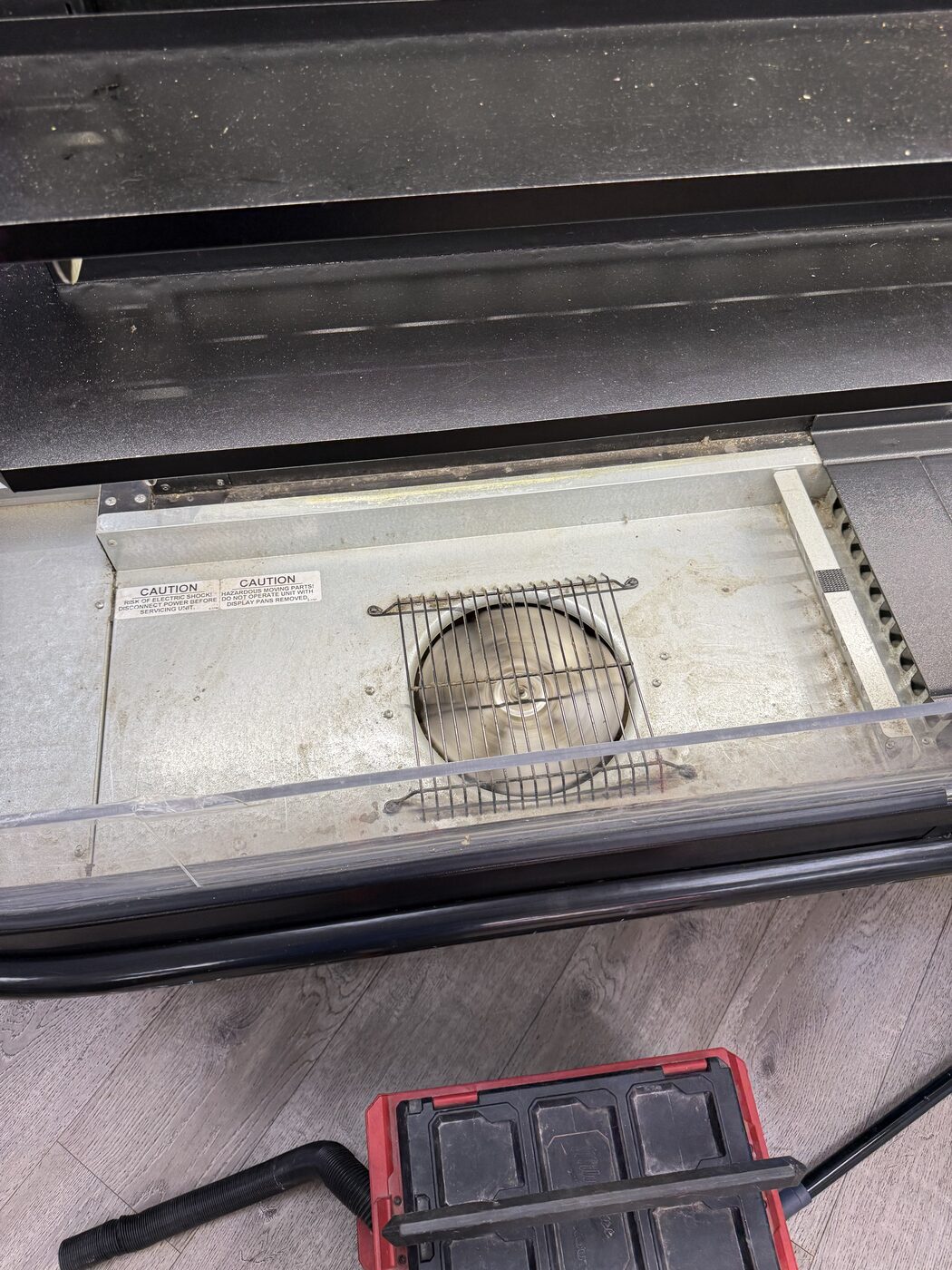
A refrigeration system only earns its energy when heat moves cleanly in two places: the evaporator absorbs heat inside the box, and the condenser rejects it outside. When condenser coils foul with grease and dust, head pressure climbs, the compressor draws more amps, and run times stretch to cover the lost capacity. The same penalty shows up when the charge drifts low, because the evaporator can no longer carry the latent and sensible load, and superheat runs high while the box never quite reaches setpoint.
Door gaskets are the quiet budget-killer. A hardened or torn gasket, or a door that no longer pulls square against the frame, lets a steady ribbon of warm, humid air leak into the box. That moisture lands on the cold evaporator and freezes, so the coil ices, airflow drops, and the unit runs longer to fight a problem it created. A healthy defrost cycle is supposed to clear that frost on schedule; when the defrost timer, heater, or termination sensor fails, the coil stays packed and run time goes vertical.
Mechanical wear compounds all of it. A weak condenser fan motor or a chattering contactor, a TXV that hunts instead of metering steadily, or a relay that drops the compressor in and out all force the system to labor past its design point. Each component looks minor on its own, but together they turn a unit that should cycle into one that runs nearly continuously, which is exactly what your electric bill is showing you. Catching these early on a preventive-maintenance visit is almost always cheaper than paying for the wasted kilowatt-hours and the eventual compressor failure they cause.
Equipment we service
We repair this on every type of commercial refrigeration:
How we fix it — our process
- Baseline the bill and the box. We confirm temperatures, run times, and amp draw so we can measure the actual waste, not just guess at it.
- Inspect doors and gaskets. We check every seal, hinge, and sweep for leaks pulling warm humid air into the box.
- Read the refrigeration cycle. We take superheat, subcooling, and pressures to judge charge and TXV performance, then find any leak.
- Clean and check airflow. We deep-clean the condenser and evaporator coils and confirm the defrost cycle is clearing frost on schedule.
- Repair or replace the failing parts. We swap worn gaskets, fan motors, contactors, relays, or defrost components with OEM parts.
- Verify the efficiency gain. We re-measure run times and amp draw so you can see the cooler running cost drop before we leave.
Service area
Armus Refrigeration handles commercial refrigeration high energy costs for restaurants, markets, c-stores, schools, and commercial kitchens across New Bedford, the South Coast, the South Shore, Cape Cod, Greater Boston, and Rhode Island — including:
Frequently asked questions
Why did my electric bill jump?
How often should condenser coils be cleaned?
Does maintenance actually lower running cost?
Why is my walk-in cooler using too much electricity?
My refrigeration is running constantly. Is that dangerous?
Do you serve my area in Massachusetts or Rhode Island?
Brands We Service
We repair and maintain every major commercial refrigeration & ice brand.