Commercial Cooler Leaking Water
A commercial cooler leaking water onto your floor is almost always a drainage or defrost problem, not a sign the unit is dying — but it is a slip hazard and a health-code violation you cannot ignore. Armus Refrigeration finds and fixes the source of water under walk-in coolers, prep tables, ice machines, and display cases across New Bedford, Fall River, Dartmouth, and the rest of Southeastern Massachusetts and Rhode Island. Whether it is a clogged condensate drain line, a cracked drain pan, or an iced-up evaporator melting off all at once, our EPA-608 certified techs trace the leak back to the real cause instead of mopping the symptom. We answer 24/7 and carry the drain, pan, and heater parts to clear most leaks the same day.
What’s likely happening
- The condensate drain line is clogged with grease, food debris, or biofilm, so meltwater backs up and overflows onto the floor.
- The drain line has frozen solid inside or just past the cabinet, blocking the path and forcing condensate to spill over the pan edge.
- A cracked, corroded, or off-level drain pan can no longer hold the water it collects and lets it run off one corner.
- The evaporator coil iced over and is now shedding a large slug of meltwater that the drain cannot keep up with.
- Worn or torn door gaskets let warm, humid air in, and the moisture condenses and runs down inside walls and onto the floor.
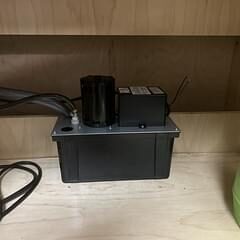
- A condensate evaporator pan under a reach-in or display case has cracked or its element has failed, so collected water pools beneath the unit.
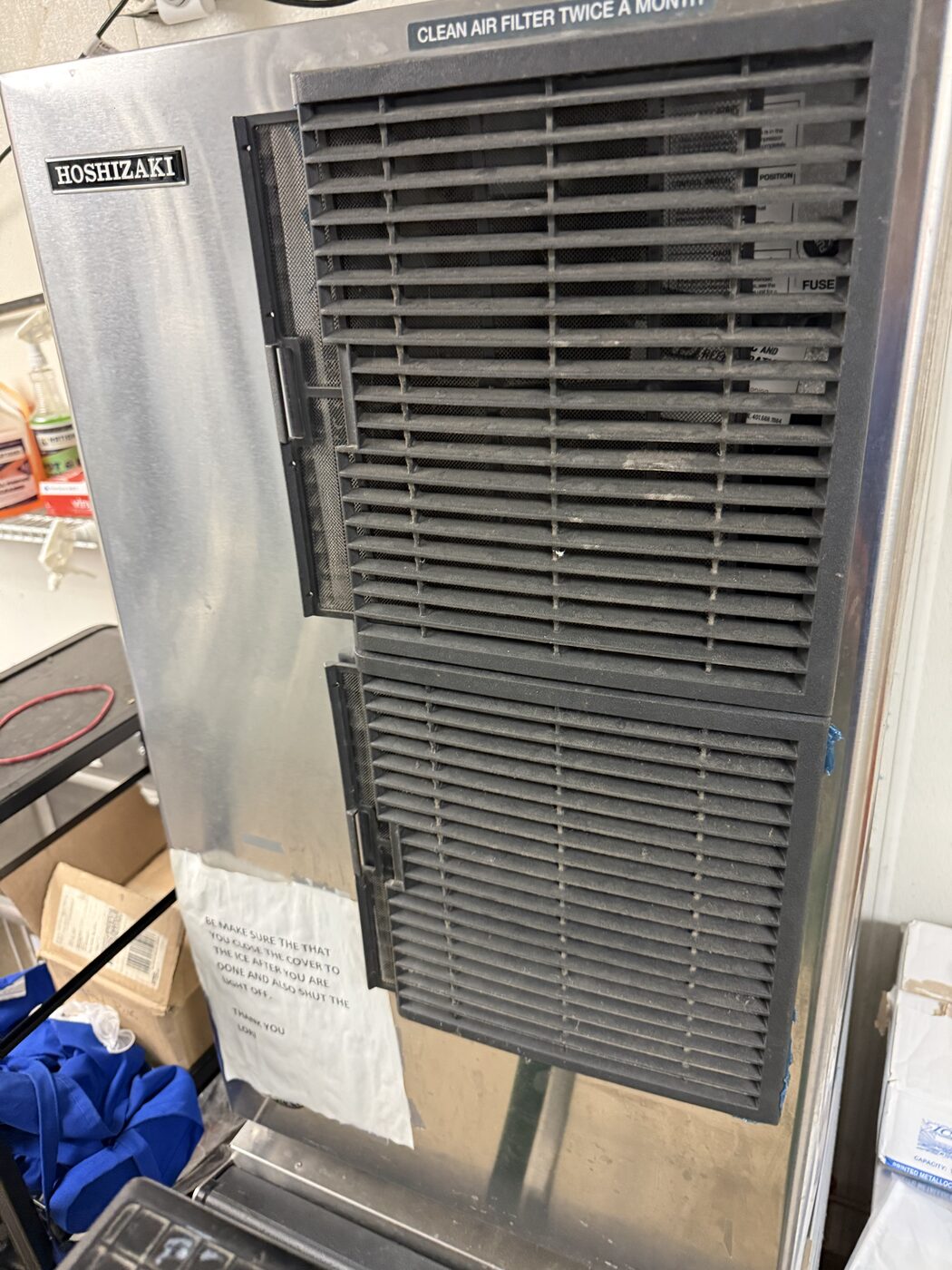
- A blocked or disconnected drain hose on a prep table or ice machine is dumping condensate straight to the floor instead of the drain.
What Armus checks & fixes
- We snake and flush the condensate drain line with a CO2 gun or hot water to clear the grease and biofilm clog at its source.
- We test the drain-line heater and replace failed heat tape so a frozen line cannot block again in cold weather.
- We inspect the drain pan for cracks and corrosion, re-level it, and replace the pan and its slope if it can no longer drain.
- We diagnose why the evaporator iced up — failed defrost timer, heater, or termination thermostat — and repair the defrost circuit, not just the runoff.
- We check and replace worn door gaskets, hinges, and sweep heaters so warm-air infiltration stops creating condensation inside the box.
- We test the condensate evaporator pan and its element on reach-ins and display cases, replacing a cracked pan or burned-out heater.
- We re-secure or replace blocked drain hoses on prep tables and ice machines and verify free flow to a proper air gap and floor drain.
Why this happens
Every refrigeration system makes water by design. As the evaporator coil pulls heat out of the box, humidity in the air condenses on the cold fins and drips into a drain pan beneath the coil. That condensate is supposed to run through a pitched, trapped drain line to a floor drain or evaporator pan. When the line clogs with grease and biofilm — common on walk-in coolers and prep tables in busy kitchens — the pan fills and overflows, and you see walk-in cooler water on the floor that has nothing to do with the refrigeration itself.
In a walk-in or low-temp box, the drain line is the weak point in freezing weather. Most are protected by a drain-line heater or heat tape; when that element fails, residual condensate freezes inside the line and turns it into a plug. The pan keeps collecting water, finds the lowest edge, and runs out — which is why a condensate leak often shows up overnight or during a cold snap and disappears when the room warms.
A leaking cooler can also be a defrost-cycle symptom. If the evaporator ices over — from a failed defrost timer, defrost heater, or termination thermostat, low charge, or a stuck TXV starving the coil — the coil eventually sheds that ice as a surge of meltwater the drain was never sized to handle, so it overflows. Fixing the runoff without fixing the defrost circuit just guarantees the puddle comes back.
Finally, not all the water comes from the drain at all. Torn door gaskets, failed sweep heaters, and a box held open too long let warm, humid kitchen air inside, where it condenses on cold surfaces and runs down walls and door frames. This door-seal condensation is the easiest cause to miss and the most dangerous — it leaves a thin, clear film right at the threshold where staff walk in and out.
Equipment we service
We repair this on every type of commercial refrigeration:
How we fix it — our process
- Confirm the source — We trace where the water originates: drain pan, drain line, evaporator coil, or door seal, so we fix the cause and not the puddle.
- Inspect the drain path — We check the pan level and condition and run water through the line to find exactly where it backs up or freezes.
- Clear and flush — We snake and flush the clogged drain line and test the drain-line heater, replacing heat tape that has failed.
- Diagnose the coil and defrost — If the evaporator is icing, we test the defrost timer, heater, and termination thermostat and check charge and the TXV.
- Repair or replace parts — We swap a cracked drain pan, failed evaporator pan element, worn gaskets, or sweep heater as the diagnosis dictates.
- Verify dry through a full cycle — We run the unit through defrost and watch the drain carry water away cleanly before we leave, and dry the floor.
Service area
Armus Refrigeration handles commercial cooler leaking water for restaurants, markets, c-stores, schools, and commercial kitchens across New Bedford, the South Coast, the South Shore, Cape Cod, Greater Boston, and Rhode Island — including:
Frequently asked questions
Why is there water under my cooler?
Is a leaking cooler a health-code problem?
Can a clogged drain line be cleared same day?
There’s water but the cooler is still cold — do I need a repair?
Will mopping it up fix the problem?
Do you service ice machine and prep-table leaks too?
Brands We Service
We repair and maintain every major commercial refrigeration & ice brand.