Grocery and supermarket refrigeration repair across MA and RI
A restaurant that loses a walk-in loses one service. A grocery store that loses a rack loses the front half of the sales floor, and it cannot lock the doors while somebody sorts it out. Registers keep ringing, customers keep pulling doors open, and every hour the product in that case gets closer to the dumpster.
Armus Refrigeration has run commercial refrigeration service across Southeastern Massachusetts and Rhode Island for years, with EPA Section 608-certified technicians and 24/7 emergency dispatch. We cover supermarkets, independent and ethnic markets, butcher shops, fish markets and convenience stores. We are a service company, not a dealer, so when we tell you a case is worth rebuilding or worth walking away from, nothing rides on that answer except being right.
The grocery cold chain, front to back
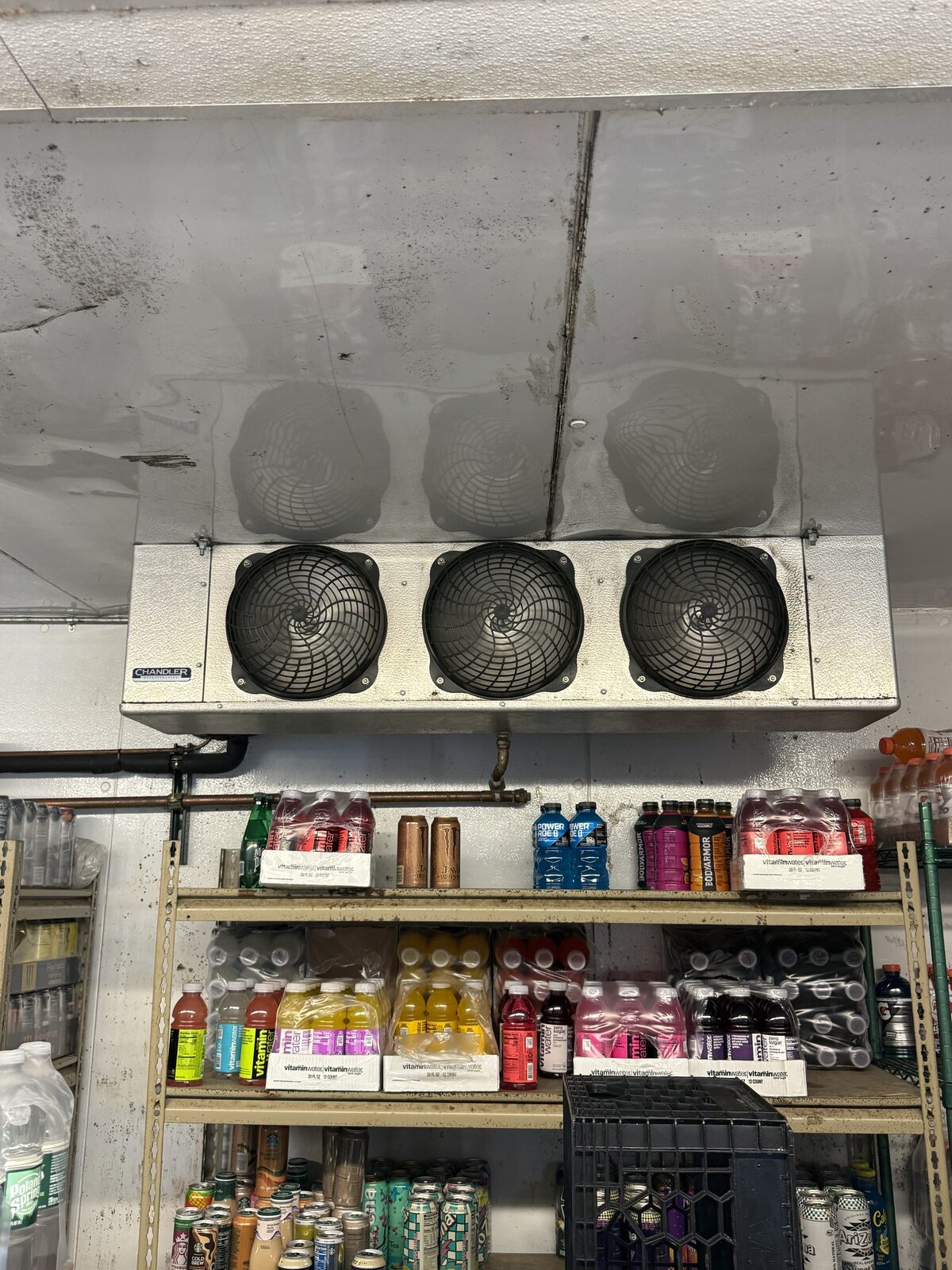
Retail refrigeration is not one system. It is a chain of very different equipment, and the weak link changes by department.
- Multi-deck open cases. Produce, dairy, grab-and-go. No doors, no glass. They hold temperature with a moving air curtain instead of a seal, so anything that disturbs that curtain costs product temperature fast: stock above the load line, a blocked return air grille, a store fan aimed across the opening.
- Glass-door reach-in lineups. Frozen aisle, beverage walls, the c-store cooler run. Anti-sweat door heaters, gaskets, hinges and closers do most of the failing here. Fogged glass is a sales problem before it is a temperature problem.
- Service and deli cases. Meat, seafood, prepared foods. Tight windows, constant traffic from the associate side, and a drain that has to stay clear.
- Ice cream and novelty freezers. Low-temp coffin and island cases, and the least forgiving equipment in the building, because ice cream shows damage long before it reaches an unsafe temperature.
- Backroom walk-in coolers and freezers. Your buffer when something on the floor fails, which is why it cannot be the unit nobody has checked in three years. See walk-in cooler repair.
- Rack systems and condensers. Parallel compressor racks and remote or rooftop condensers feeding everything above, plus ice machines and bagged ice merchandisers.
Why retail refrigeration fails differently than a restaurant kitchen
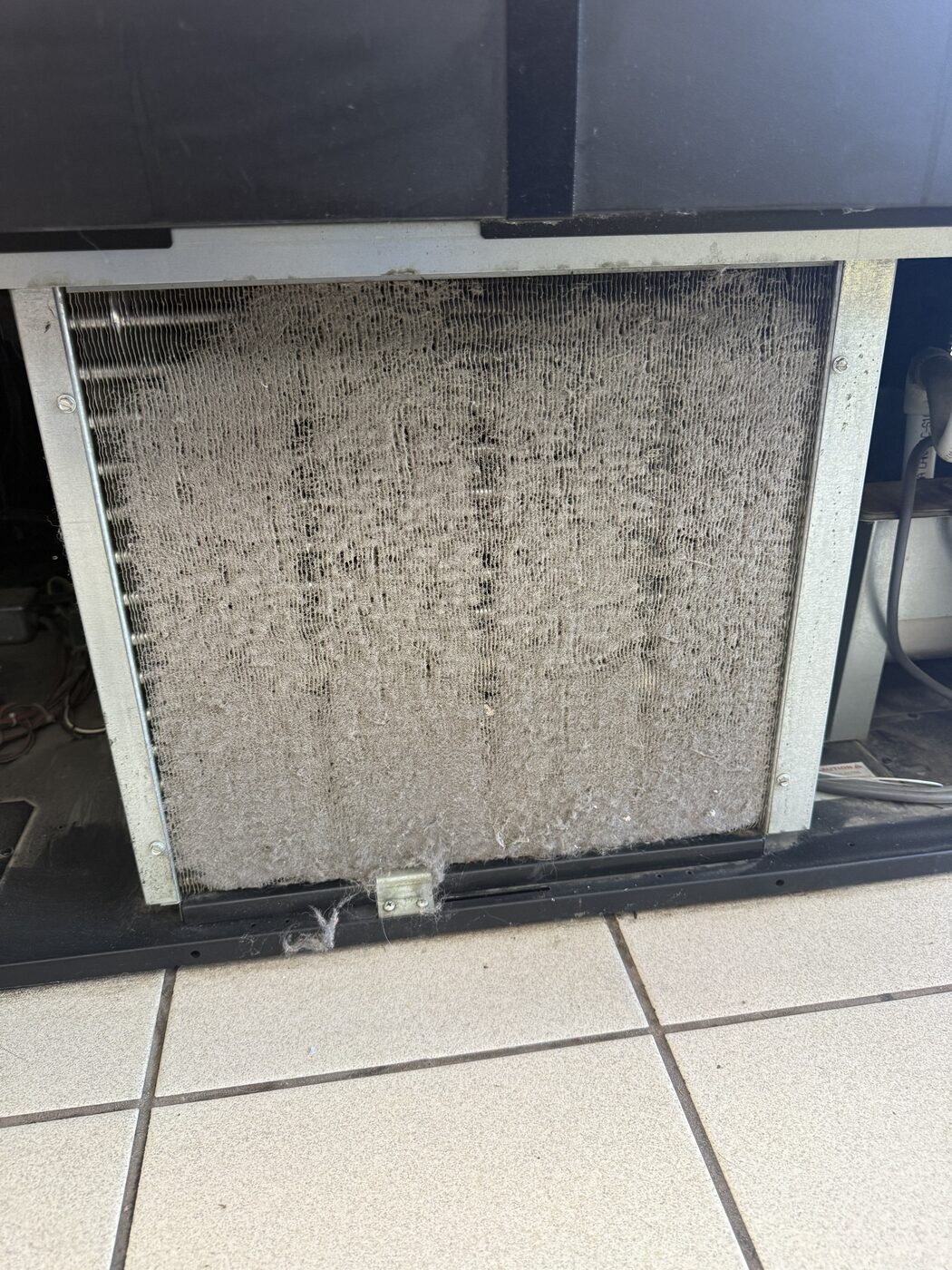
Restaurant equipment gets a break. It works hard through service, then coasts overnight with the doors shut. Retail equipment never gets that.
- Duty never drops. Cases run 24 hours a day, seven days a week, including every hour the store is closed. Compressors and fan motors stack up runtime two to three times faster than the same part in a kitchen. Whatever failure age you have in your head for a fan motor, cut it down here.
- Open cases fight the whole room. A multi-deck refrigerates a slice of your sales floor along with the product. Store humidity, entrance doors, January heating and every air mover in the building load that curtain. Coils frost faster and the case is far more sensitive to airflow than any closed box.
- Night curtains are load control, not decoration. Pulling them at close cuts case load overnight and lets coils clear. Stores that quietly stop, usually because a roller broke and nobody replaced it, see runtime and frost climb within a week.
- Defrost is a schedule, not a setting. A restaurant has a handful of circuits. A store has dozens, each with its own defrost frequency, duration and termination. When those stack up, or a controller loses its program after a power event, you get coils that never fully clear and a warm lineup nobody can explain.
When one rack feeds twenty cases
That is the difference that matters most. On a parallel rack, several compressors share suction groups feeding circuits all over the store. It is why a supermarket can hold temperature at all, and it also means the symptom and the cause usually sit in different rooms. So the first question is always the same: one case, or the whole group?
If one case is warm and its neighbors on the same suction group hold fine, the fault is in that circuit: an expansion valve out of adjustment, a plugged distributor, a defrost that is not terminating, a stalled evaporator fan, or airflow inside the case. If the whole group drifts together, the problem is upstream: charge, a compressor down on the rack, a condenser that cannot reject heat, an oil control fault, or an EPR valve off setpoint. The mess we get called in to clean up is the case-by-case chase, where somebody adjusts three cases over two weeks while one compressor runs unloaded the whole time. Read the rack, then the circuit, then the case.
Convenience stores and small markets
A c-store cooler wall is not a small supermarket. Most of those lineups are self-contained units sharing a common cabinet face, and only some doors are linked. We have opened six-door walls where three separate compressors served the run and nobody knew which fed what, so we label the panel on the way out. The other steady c-store call is fogged glass, where an anti-sweat heater run goes open circuit and the doors sweat through July humidity. Customers cannot see the product, so they stop buying it.
What a warm case actually costs you
Run this math on your own store, with your own numbers, before deciding a service call is expensive. Count the doors, or the linear feet, and put your wholesale cost against one full door of ice cream or one run of case-ready meat. That figure is what a failed circuit puts at risk in an afternoon. Frozen novelties never even have to reach an unsafe temperature to become unsellable: ice cream that softens and refreezes shows heat shock on the surface, and customers put it back.
Then add what never reaches a spoilage sheet. The labor to pull, condemn and re-merchandise the case. The empty shelf until the next delivery lands. The regular who came for that item, found a hole, and took the whole basket somewhere else.
The preventive side is small and predictable by comparison: coil cleaning, gasket and door closer replacement, defrost verification, drain flushes, controller calibration, curtain repair. Our commercial refrigeration maintenance plans put that on a schedule with documented temperatures per unit per visit, and customers on a consistent schedule see emergency calls drop by roughly 70 percent.
Cold holding and temperature logs for retail food
Grocery is inspected under the same food code as restaurants, but enforcement differs by state. Massachusetts runs under 105 CMR 590, which adopts the 2013 FDA Food Code, and enforcement is local: your city or town Board of Health inspects the store. Rhode Island runs under 216-RICR-50-10-1, which adopts the 2022 FDA Food Code, and enforcement is central through the Rhode Island Department of Health. A chain with stores on both sides of the line answers to a different inspector in every Massachusetts town, and to one statewide office in Rhode Island.
The number is the same either way. Time and temperature control for safety foods hold at 41 degrees F or below. For frozen product the code says kept frozen, so treat 0 degrees F as a quality target for ice cream and novelties rather than a legal line. Log every unit holding TCS product at least twice daily during operating hours, and document the corrective action when a case drifts. A dated ticket showing the temperature we found, the work we did and the temperature we left answers the inspector’s next question before it gets asked.
Stores carrying more than 50 pounds of refrigerant charge also fall under the Massachusetts Refrigerant Management Program, with annual leak inspection and record keeping. Supermarket racks land there routinely, and we document every recovery, charge and leak test.
Emergency service for a store that cannot close
When a suction group goes down mid-day, the repair is only half the job. The other half is keeping product sellable while we work it. We triage by risk, not by aisle order: low-temp frozen and ice cream first because they have the least margin, then meat, seafood and deli, then dairy, then produce, which tolerates a slower climb. While diagnosis runs we tell you what to move into the backroom walk-in, which curtains to pull, and what to stop restocking until the circuit is stable. Temperatures get recorded as we go, so you have the paper trail afterward instead of rebuilding it from memory.
Dispatch runs 24/7, including overnight, because a rack fault at 2 AM is a rack fault the morning crew inherits. For everything we cover beyond the sales floor, see commercial refrigeration repair.
Call 508-521-9477. We answer. One call, one licensed crew, across Southeastern Massachusetts and Rhode Island.
24/7 Emergency Supermarket Refrigeration Repair Near You
When a supermarket’s refrigeration goes down, “near me” matters — a truck stuck in traffic across the state doesn’t help a warm dairy case. We run local crews out of Southeastern Massachusetts and Rhode Island, covering New Bedford, Fall River, Taunton, Attleboro, Providence and the towns between, so emergency supermarket refrigeration repair means a technician who already knows your rack, not one meeting it for the first time. Dispatch runs 24/7, including nights and weekends, because a compressor doesn’t wait for business hours and neither do we.
Call the same crew for a single reach-in case or a full multiplex rack feeding twenty doors. We triage on arrival, tell you what’s safe to hold and what needs to move, and get parts sourced without waiting on a distant depot. If your store is searching for supermarket refrigeration repair near me at 2 AM, the answer is one number, one licensed crew, and a technician who has already been in your building.
Grocery refrigeration questions we get
My frozen aisle is warming up. What should I do before a technician arrives?
Pull the night curtains on that run to cut load, stop restocking it, and start writing down temperatures with times. Move ice cream and novelties into the backroom freezer first, since they have the least margin. Do not block the return air grilles with the product you just pulled. Then check whether the whole group is drifting or only one case, and tell us which when you call.
Do you repair supermarket rack systems, or only self-contained cases?
Both. We work parallel compressor racks, remote and rooftop condensers, individual case circuits, self-contained multi-decks and reach-in lineups, backroom walk-ins, and ice machines. On a rack call we read the rack before touching an individual case, because chasing cases one at a time is how a store spends two weeks on a fault that lives upstream.
Why does one case run warm when the rest of the lineup is fine?
If its neighbors on the same suction group are holding, the fault is local to that circuit or that case. Usual causes are a defrost cycle that is not terminating, an iced or dirty evaporator, a dead evaporator fan, an expansion valve out of adjustment, or an airflow problem from overstocking above the load line or a blocked return grille. We check airflow and defrost before condemning any component.
What temperature do Massachusetts and Rhode Island require for grocery cases?
Both states hold time and temperature control for safety foods at 41 degrees F or below. Massachusetts is under 105 CMR 590, inspected by your local Board of Health. Rhode Island is under 216-RICR-50-10-1, inspected statewide by RIDOH. For frozen product the code says kept frozen rather than naming a number, so 0 degrees F is a quality standard, not a legal one. Keep logs twice daily and document corrective action when a unit drifts.
{“@context”:”https://schema.org”,”@type”:”FAQPage”,”mainEntity”:[{“@type”:”Question”,”name”:”My frozen aisle is warming up. What should I do before a technician arrives?”,”acceptedAnswer”:{“@type”:”Answer”,”text”:”Pull the night curtains on that run to cut load, stop restocking it, and start writing down temperatures with times. Move ice cream and novelties into the backroom freezer first, since they have the least margin. Do not block the return air grilles with the product you just pulled. Then check whether the whole group is drifting or only one case, and tell us which when you call.”}},{“@type”:”Question”,”name”:”Do you repair supermarket rack systems, or only self-contained cases?”,”acceptedAnswer”:{“@type”:”Answer”,”text”:”Both. We work parallel compressor racks, remote and rooftop condensers, individual case circuits, self-contained multi-decks and reach-in lineups, backroom walk-ins, and ice machines. On a rack call we read the rack before touching an individual case, because chasing cases one at a time is how a store spends two weeks on a fault that lives upstream.”}},{“@type”:”Question”,”name”:”Why does one case run warm when the rest of the lineup is fine?”,”acceptedAnswer”:{“@type”:”Answer”,”text”:”If its neighbors on the same suction group are holding, the fault is local to that circuit or that case. Usual causes are a defrost cycle that is not terminating, an iced or dirty evaporator, a dead evaporator fan, an expansion valve out of adjustment, or an airflow problem from overstocking above the load line or a blocked return grille. We check airflow and defrost before condemning any component.”}},{“@type”:”Question”,”name”:”What temperature do Massachusetts and Rhode Island require for grocery cases?”,”acceptedAnswer”:{“@type”:”Answer”,”text”:”Both states hold time and temperature control for safety foods at 41 degrees F or below. Massachusetts is under 105 CMR 590, inspected by your local Board of Health. Rhode Island is under 216-RICR-50-10-1, inspected statewide by RIDOH. For frozen product the code says kept frozen rather than naming a number, so 0 degrees F is a quality standard, not a legal one. Keep logs twice daily and document corrective action when a unit drifts.”}}]}Rack compressor failures are their own discipline — one compressor down shifts load onto the rest of the rack, which buys you days, not months. How we diagnose grocery rack compressors, and when a swap beats a rebuild, is covered on our compressor repair page.