Cape Cod kitchens run a compressed, punishing season, and the salt air works on condenser coils year-round. Armus Refrigeration services the whole Cape, from the canal out to Provincetown. We repair and maintain walk-in coolers, walk-in freezers, reach-in units, and commercial ice machines for restaurants, markets, and institutional kitchens. One call reaches a technician, not a call center: 508-521-9477.
We’re a family-run shop based at 88 Mill St, New Bedford, MA. Emergency service runs day and night, because a warm walk-in can’t wait for Monday. From our shop we cover every town listed below on Cape Cod.
Our Services on Cape Cod
What the Cape Does to Commercial Refrigeration
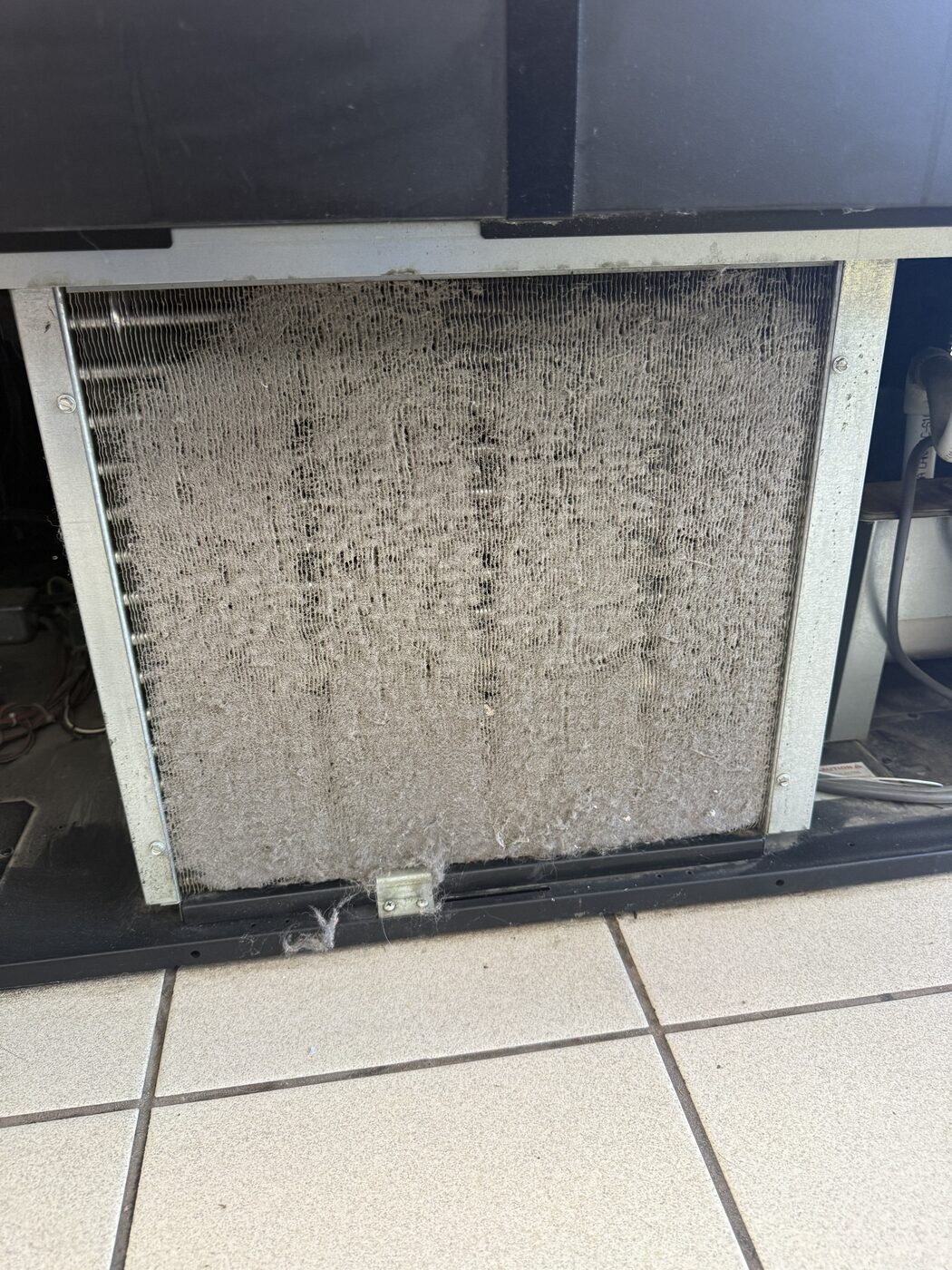
Salt air is the part most owners underestimate. Condensing units on back pads and flat roofs anywhere near the water take a constant load of salt-laden air, and it goes after the coil first — aluminum fins degrade, the copper tube-to-fin bond loosens, and cabinet fasteners give up years earlier than the same unit would inland. A coil that looks clean from the front can be packed solid a half inch back. Coastal machines need their condensers cleaned on a tighter interval than the manual assumes, and when a unit is due for replacement, a coated coil is worth the small upcharge on this side of the canal.
Then there’s the season. A walk-in door that opens forty times an hour in February barely stops swinging in July, and the condenser fighting that load is often sitting on a hot flat roof in full sun. Equipment specified around shoulder-season volume is the equipment that fails in the first real heat wave. Ice machines show it earliest — a machine that comfortably keeps up in May can run the bin empty by mid-afternoon in August, and that is usually a capacity problem rather than a fault.
Access matters too, and we plan around it. Everything reaching the Cape crosses the Bourne or the Sagamore, and summer traffic is what it is. We stage the parts that account for most no-cool calls — start components, contactors, condenser fan motors, water inlet valves, door gaskets — on the truck, so a Cape call has the best possible chance of being solved on the first visit instead of turning into two trips across the bridge.
Opening in Spring, Closing in Fall
Plenty of Cape kitchens run a season rather than a year, and equipment that sits idle for five months fails in its own particular ways. Door gaskets dry out and take a set. Condenser fan motors seize in their bearings. Slow refrigerant leaks stay invisible until something runs under load again. Drain lines that were left damp grow a biofilm that shows up as an odor the week you reopen.
A spring startup is worth booking before the first weekend of real volume: pull the boxes down and confirm they hold, check superheat and subcooling against spec, verify the defrost cycle actually terminates, clean the condensers after a winter of grit, and clean and sanitize the ice machine before the first drink goes out the window. Finding a weak compressor in April is a scheduling problem. Finding it on the Fourth of July is a very expensive weekend.
Shutting down properly in the fall is the cheaper half of the same job — interiors cleaned and dried, doors propped so gaskets don’t mold shut, drains cleared, and power handled correctly rather than simply thrown. Operators who close their kitchens this way tend to open the following spring with a punch list instead of an emergency.
Cape Cod Towns We Serve — Local Pages
Also Serving These Cape Cod Towns
Barnstable
The Cape’s largest town and the one with the most year-round commercial kitchens, Hyannis included. That mix means we see both ends of the problem here: equipment that never gets a quiet month, and seasonal rooms that sit idle half the year. Call 508-521-9477 for Barnstable service.
Bourne
First town over the canal, so it is often the first stop of a Cape run. Kitchens along the canal and the Route 28 approach get a long shoulder season, which tends to mean higher annual runtime on the same equipment than a purely summer town. Call 508-521-9477 for Bourne service.
Brewster
Route 6A on the bay side, where a lot of the kitchens are small, older rooms in older buildings. Tight mechanical spaces and remote condensers are common, and both make routine condenser cleaning the thing that actually keeps a box alive. Call 508-521-9477 for Brewster service.
Chatham
Fish comes off the pier here, and the refrigeration that handles it works to a different standard than a bar cooler. Seafood cases, ice for display, and walk-ins that have to hold temperature through repeated door traffic are the calls we get. Call 508-521-9477 for Chatham service.
Dennis
Split between the Route 28 and 6A corridors, with a restaurant mix that swings hard between June and October. Sizing an ice machine for August rather than for May is the conversation we have most often in this part of the mid-Cape. Call 508-521-9477 for Dennis service.
Falmouth
Upper Cape, with the Woods Hole ferry terminal and the research campuses adding institutional and year-round kitchens to the seasonal restaurant trade. Institutional work usually means scheduled maintenance rather than emergency calls, which is the cheaper way to run equipment. Call 508-521-9477 for Falmouth service.
Mashpee
The Mashpee Commons cluster puts a lot of kitchens close together, much of it newer equipment on newer infrastructure. Newer does not mean immune — salt air and summer load do not care how old the condenser is. Call 508-521-9477 for Mashpee service.
Provincetown
The far tip, and the most concentrated season anywhere on the Cape. Kitchens are small, storage is tight, and the equipment often runs flat out for a short window. Pre-season service matters more here than almost anywhere we work. Call 508-521-9477 for Provincetown service.
Yarmouth
The Route 28 motel and restaurant corridor, plus 6A on the north side. High-volume summer kitchens with equipment that frequently predates the current owner — we spend a lot of time here on gaskets, defrost faults, and tired condensers. Call 508-521-9477 for Yarmouth service.
Service Areas
See every region we cover on our Service Areas page.
Frequently Asked Questions
Should we have refrigeration serviced before we open for the season?
Yes, and April is the month to do it. A box that sat closed all winter comes back with compressed or cracked door gaskets, a condenser full of leaf litter and salt, low refrigerant from a slow leak nobody was watching, and sometimes a defrost heater that quietly failed in November. A spring startup visit catches all of that while a part can still be ordered. The same failure found in July costs you a weekend of covers.
What should we do with the walk-in when we close in the fall?
Empty it, clean it, and prop the door open so it dries out rather than growing mold on the panel seams all winter. Shut it down at the disconnect rather than leaving it cycling on an empty box. Take the opportunity to note anything that was marginal all season, because that is the list that turns into your spring service visit instead of your July emergency.
Does salt air actually shorten equipment life on the Cape?
It genuinely does, and it shows up first on the condenser. Salt aerosol accelerates corrosion on the aluminum fins and copper tubing, so a coil that would last a decade inland can start losing heat-transfer capacity in a few seasons here. The practical defenses are regular coil washing, keeping the unit out of direct salt spray where siting allows, and coil coatings on replacement condensers in the most exposed locations.
How quickly can you get over the bridge in July?
We will give you a real answer rather than an optimistic one. Summer bridge traffic is the single biggest variable in Cape scheduling, and a call that takes 50 minutes in March can take two hours on a Friday afternoon in July. We route Cape work to build the day around the bridge rather than fighting it, and we tell you the window we can actually hit.