Commercial AC and refrigeration are the same trade
The rooftop unit quit at 11 AM, the dining room is at 84 degrees by noon, and you have a full book for dinner.
Here is the part most owners do not know. A commercial air conditioner is a refrigeration system. Compressor, condenser, metering device, evaporator coil, refrigerant carrying heat out of the building. It is the same sealed system we work on every day in walk-in coolers and remote condensing units. Same gauges, same superheat and subcooling math, same recovery machine, same nitrogen pressure test, same federal rules on every ounce of refrigerant that moves. The difference is the air side: ductwork, blower motors, filters, economizer dampers, and a thermostat instead of a box full of food.
That is why a refrigeration crew is genuinely qualified on commercial AC. Armus Refrigeration has run commercial cold-side service across Southeastern Massachusetts and Rhode Island for years out of New Bedford, licensed and insured, with EPA Section 608 certified technicians and 24/7 dispatch. Section 608 is the federal certification required to handle refrigerant, and it covers the high-pressure systems commercial AC runs on.
One clear limit: this is commercial and light-commercial work only. We do not service residential home air conditioning, window units, or home appliances.
Commercial AC equipment we service
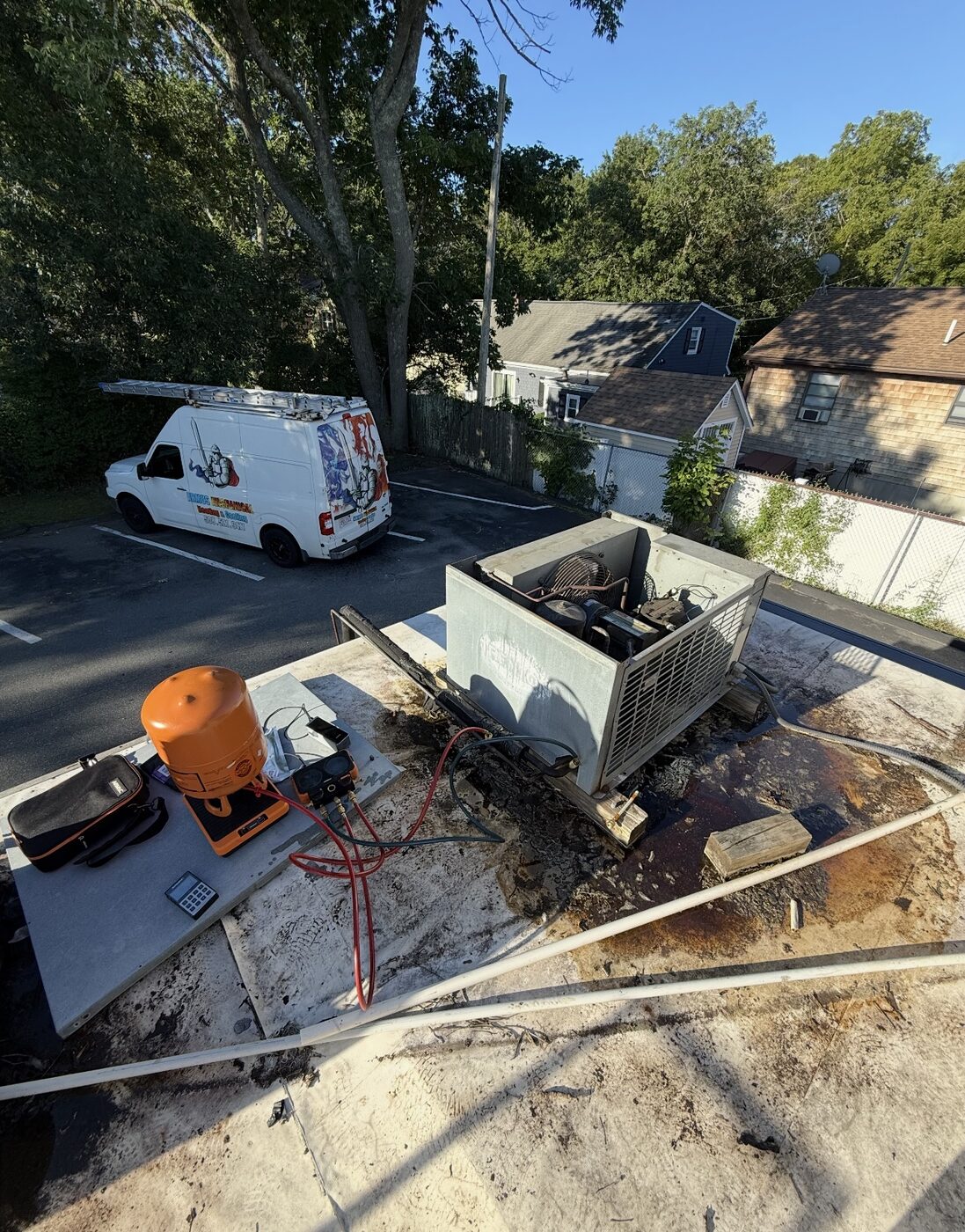
- Rooftop package units (RTUs). The workhorse of every strip plaza, restaurant, and retail box around here. Compressor, condenser, evaporator, and blower in one curbed cabinet. We service the sealed side and the air side.
- Split systems. Indoor air handler with an outdoor condensing unit on a pad or roof rail, joined by a line set. Common in older downtown buildings where a roof curb was never an option.
- Ductless mini-splits and multi-splits in commercial spaces. Dining rooms in mill buildings with no duct chase, bar backs, offices carved out of warehouse space, server closets that need cooling year round.
- Air-cooled condensing units and remote condensers. Often sharing roof space with your refrigeration condensers, which is how we end up looking at both on one visit.
- Make-up air units and kitchen cooling. The MUA replacing everything the hood exhaust pulls out, plus tempered supply and spot cooling over the line.
If it moves refrigerant and it belongs to a business, we work on it. Same number that handles your commercial refrigeration repair, same crew, one truck roll when the walk-in and the rooftop unit both pick the same August morning to quit.
Why restaurant and retail AC fails differently
Kitchen heat load. A char broiler, a fryer bank, a six-burner range, and a pizza oven throw off heat no ordinary load calculation contemplates. Meanwhile the hood exhaust pulls thousands of cubic feet a minute of conditioned air out of the building. If the make-up air unit is undersized, shut off to save money, or has a failed motor, the building goes negative. Doors get hard to pull open, the front entrance leaks hot air every time a guest walks in, and the dining room never catches up no matter how low the thermostat goes. We check the air balance before condemning a compressor.
Grease-laden air on the condenser. On a lot of restaurant roofs the AC condenser sits downwind of the kitchen exhaust fan. Airborne grease lands on the fins, dust sticks to it, and you get an insulating blanket on the one surface whose entire job is rejecting heat. Head pressure climbs, amp draw climbs, and the unit trips its high-pressure cutout on the hottest afternoon of the year, which is also the busiest. We have seen a filthy condenser alone drive the high-pressure trips, with nothing else wrong on the unit.
Coastal salt corrosion. From Fairhaven and Mattapoisett down through Newport, Narragansett, and Westerly, salt air gets pulled through the condenser every hour the fan runs. Aluminum fins corrode and crumble, copper pits and eventually weeps refrigerant, contactors and boards corrode. A condenser 200 feet off the water needs chemical coil cleaning twice a year, not once every few years.
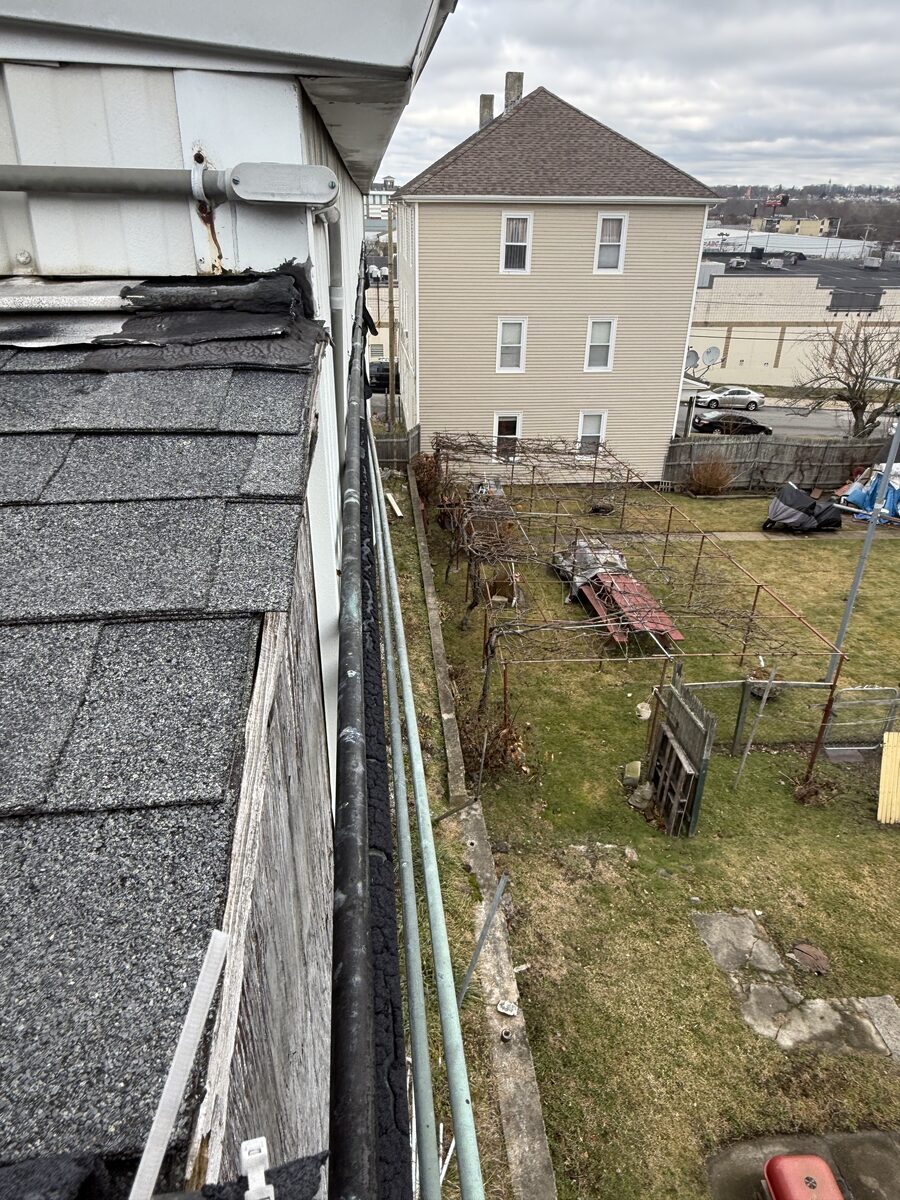
Rooftop units nobody looks at. An RTU on a flat roof stays out of sight until it quits. Belts glaze and snap. Filters load until airflow drops far enough to freeze the evaporator coil. Condensate pans clog and rust through, and if the float switch does not trip the unit, the dining room ceiling tiles tell you instead. Cottonwood fluff blankets the coil every June. Economizer actuators seize, and a stuck-open economizer pulls 90 degree outdoor air in all afternoon while the compressor fights it.
Common failures and what a diagnostic visit covers
Most commercial AC calls land on a short list: failed run or start capacitor, pitted contactor, seized condenser fan motor, blower motor or belt, blocked airflow, low charge from a leak, a metering valve out of adjustment, a stuck economizer, a clogged condensate drain, or a control and sensor fault. Compressors do fail, but far less often than they get blamed.
- Air side first. Filters, blower wheel and belt, evaporator coil face, return path, and the temperature split across the coil. A large share of no-cooling calls are airflow problems wearing a refrigerant costume, and gauging up first gives you a false answer.
- The numbers that matter. Superheat and subcooling measured at the right points, not guessed. On a TXV or EEV system we read evaporator superheat and use subcooling to judge charge. On a fixed-orifice rooftop we charge to the manufacturer’s target superheat off the wet-bulb chart, where subcooling is not the target at all. Inverter mini-splits get charged by weight and line length. The numbers tell us whether we are chasing charge, a metering device, or a restriction, before anyone touches a cylinder.
- Electrical. Compressor and fan amp draw against nameplate full-load amps, capacitors checked for capacitance and bulging, contactors checked for pitting and chatter, all under lockout and tagout with the disconnect verified dead.
- Leak search when charge is low. A system low on refrigerant is leaking. Adding gas and driving away is not a repair, it is a subscription. We find it with an electronic detector and a nitrogen pressure test, repair it, evacuate to a proper micron level, replace the filter-drier and Schrader cores, and weigh in the correct charge.
- A straight report. What failed, what it costs, what happens if you wait, and whether the unit is worth the repair at its age. If a 17 year old rooftop needs a compressor and a coil, we say so.
The refrigerant reality on commercial AC
Most commercial AC in the field runs R-410A. Under the AIM Act, the federal HFC phase-down has been squeezing production and import of higher-GWP refrigerants, which is why R-410A pricing has moved the way it has. The specific rules and dates have been under active EPA reconsideration, so treat any hard deadline you hear as subject to change. The direction of travel is not changing.
New commercial equipment ships on lower-GWP replacements, mainly R-32 and R-454B. Both are A2L class, meaning mildly flammable, and that changes service practice: leak detectors calibrated for the actual refrigerant, dedicated recovery gear, different handling and storage, and sensor and shutoff hardware that has to be tested rather than bypassed. If your building takes new rooftop units soon, that is what will be in them.
We still find R-22 on older rooftops and splits around here. It has not been produced or imported for years and is reclaimed-only, so any meaningful charge on an R-22 unit gets expensive enough that replacement math usually wins. We will run those numbers with you.
None of it is optional: anyone opening a refrigerant circuit must hold EPA Section 608 certification, and venting refrigerant is a federal violation. Every ounce we pull goes into a recovery cylinder and gets documented. Massachusetts operators with 50 pounds or more of charge also fall under the state Refrigerant Management Program, with annual leak inspection and record-keeping, and we keep that paperwork.
Emergency and same-day AC service for businesses that cannot close
A restaurant that loses cooling on a 92 degree Saturday is not inconvenienced, it is closed. So is a market with product on open cases or a medical office with a full waiting room. That is why we run 24/7 dispatch instead of business hours and an answering service.
Our trucks carry what accounts for most emergency AC failures: capacitors, contactors, condenser fan motors, belts, common controls, plus full recovery, nitrogen, and leak detection gear. Most calls get fixed on the first visit instead of turning into a two-day wait. When a part has to be ordered, you get a realistic timeline on the spot, not a hopeful one.
Call 508-521-9477. We answer.
Maintenance keeps the rooftop unit off the emergency list
Nearly every commercial AC emergency we get was preventable, and cheap while it was still small. A capacitor found bulging in April is a small part. The same capacitor in July is a closed dining room.
A real maintenance visit means chemical condenser coil cleaning, evaporator and blower cleaning, filters on a schedule, belt inspection and tensioning, condensate pan and drain flush with the float switch tested, economizer damper and actuator verified, electrical connections inspected, and charge confirmed against measured superheat and subcooling. We schedule cooling in spring, before the first heat wave finds the weak unit for you, and check it again in fall.
Most customers put AC on the same schedule and paperwork as their cold equipment. That is what our refrigeration maintenance services cover, and for a fixed schedule with priority dispatch and a documented equipment list, see our commercial refrigeration maintenance plans. One visit, one crew, both systems, one invoice.
Commercial AC questions we get
Do you service residential or home air conditioning?
No. Armus Refrigeration is commercial and light-commercial only. We do not service home central air, window units, residential refrigerators, or home appliances. Restaurants, bars, markets, retail spaces, offices, schools, and light industrial buildings across Southeastern Massachusetts and Rhode Island are our work.
Can a refrigeration company really work on commercial air conditioning?
Yes, because it is the same sealed-system trade. Compressors, condensers, metering devices, refrigerant charge, superheat and subcooling, leak detection, recovery, and EPA Section 608 certification apply identically to a rooftop AC unit and a walk-in cooler. Our technicians are 608 certified and have spent years diagnosing these systems. The air side adds blowers, filters, ductwork, and economizers, which we service too.
My rooftop unit runs but the building is not cooling. What is wrong?
Usually airflow before anything else: loaded filters, a slipping or broken blower belt, a dirty evaporator coil, or a stuck economizer pulling in hot outdoor air. After that, low charge from a leak, a grease-fouled or corroded condenser that cannot reject heat, a failed condenser fan motor, or a compressor running but not pumping. A proper diagnostic checks airflow first, then measures superheat, subcooling, and amp draw before anyone opens the system.
Is R-410A being phased out, and should I replace my rooftop unit now?
The AIM Act HFC phase-down is reducing supply of higher-GWP refrigerants including R-410A, and new commercial equipment ships on R-32 and R-454B instead. The specific rules and timing have been under active EPA reconsideration, so nobody should be selling you a hard deadline. Practically: a healthy R-410A unit is fine to keep running and service. If yours is well past a decade old and facing a major repair, run the replacement math now rather than after it fails in August. We will give you honest numbers either way.