Commercial Refrigerator Repair Fall River, MA: Reach-Ins, Prep Tables & Merchandisers Fixed Fast
Fall River runs on its kitchens. The Portuguese bakeries on Columbia Street, the seafood distributors near the waterfront, the lunch counters tucked into the old mill blocks — every one of them lives or dies by a reach-in that holds temperature. When a commercial refrigerator quits in this city, you’re not just looking at a repair bill; you’re looking at a cooler full of bacalhau, chouriço and fresh dough sliding toward the trash. We get a tech on it fast, with MA & RI coverage and 20+ years of refrigeration behind every call. This page covers reach-ins, prep tables and merchandisers specifically — for walk-ins, ice machines, and whole-kitchen commercial refrigeration repair in Fall River, MA, see our main Fall River page.
Reach-In Running Warm in Fall River? Start Here
For more on refrigerant handling rules, see EPA Section 608 certification.
Fall River is a former mill city with a food culture all its own — a deep Portuguese restaurant and bakery scene, a working seafood processing and distribution trade, and a working-class base of diners, markets and corner spots that have run the same equipment for years. That mix means the refrigeration here skews toward hard-used reach-ins, prep-table boxes and glass-door merchandisers that have been earning their keep since before half the chains in town existed. When one of them starts running warm, it rarely announces itself politely.
The first sign is almost never a dead box. It’s a reach-in that used to hold 36°F sitting at 44°F by mid-shift, or a prep table whose top wells feel cool but whose lower cabinet has crept up overnight. That’s the dangerous zone — cold enough to fool a busy line cook, warm enough to push product out of the food-safe holding range Fall River Health & Human Services inspects against under 105 CMR 590. Don’t wait for it to fully fail. Call 508-521-9477 and we’ll triage it on the phone: what unit, what it’s doing, and how much product is at risk.
Based minutes down I-195 in New Bedford, we know Fall River’s blocks and its equipment. We’d rather walk you through a fast diagnosis today than meet you at 2 a.m. over a thawed cooler.
Why Fall River’s Mill-Block Kitchens Are Hard on Refrigerators
For more on the refrigerant phase-down, see EPA SNAP-listed refrigerants.
There’s a one-two punch in this city that wears commercial refrigeration down faster than the spec sheet predicts. First, the geography: Fall River sits right on Mount Hope Bay, so the salt-influenced coastal air rolling up the Taunton River basin pits condenser coils and corrodes outdoor and rooftop condensing units — the same corrosion story you get anywhere on the South Coast water. Humid summers stack on top of that, driving condenser head pressure up exactly when your boxes are working hardest.
Second, and this one is distinctly Fall River: the buildings. A lot of the city’s restaurants, bakeries and markets operate inside repurposed mill structures and century-old downtown blocks, and the electrical in those buildings is frequently dated. Marginal voltage, tired wiring and overloaded panels are murder on compressors and start components — a reach-in compressor fed by sagging voltage runs hot, trips, and dies young. When we get a “it just stopped cooling” call from one of the old Flint or mill-district blocks, the electrical supply is one of the first things we verify, because fixing the compressor without fixing the cause means we’ll be back.
We don’t guess at any of this. We read the actual numbers — compressor amp draw, superheat at the evaporator, subcooling at the condenser — so we can tell whether you’ve got a corroded coil strangling heat rejection, a low charge from a leak, or a voltage problem the building is creating. That’s a real fix, not a parts-cannon.
Reach-Ins, Prep Tables & Merchandisers: The Boxes We Live In
For more on Massachusetts compliance, see EPA Section 608 refrigerant rules.
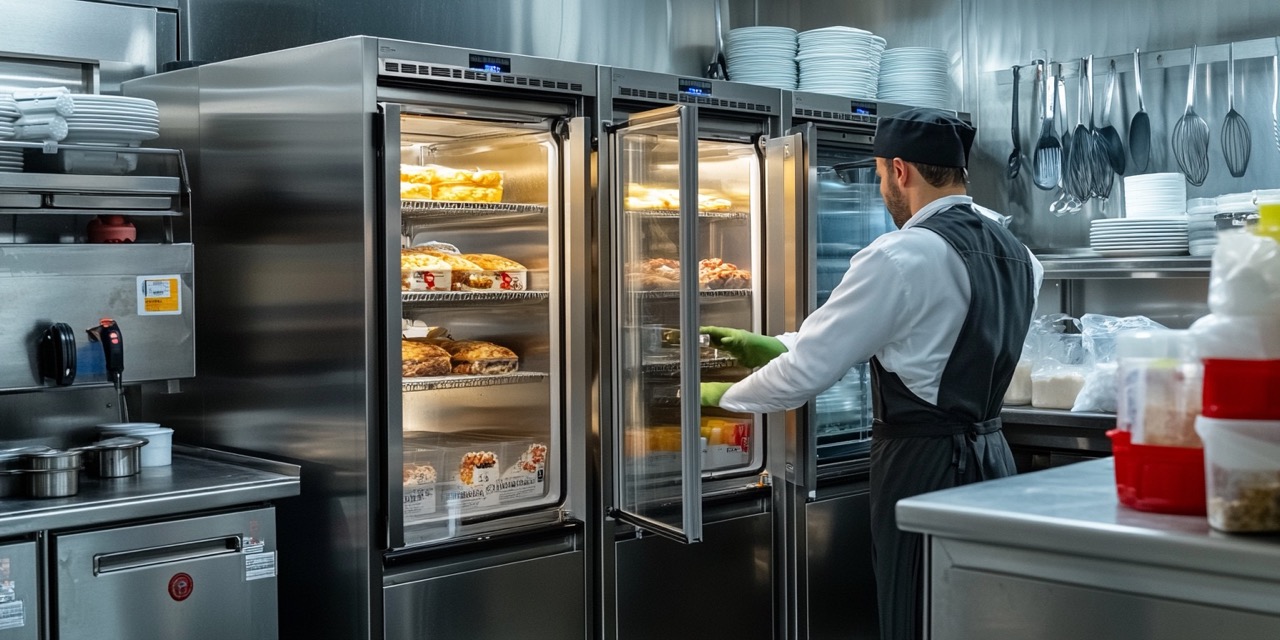
Commercial refrigerators aren’t one machine, and Fall River runs the full spread. We spend our days inside three types in particular. Reach-ins — the upright one-, two- and three-door cabinets behind every line and in every back room — are the workhorses, and they fail in predictable ways: failed evaporator fan motors, iced coils from a defrost that won’t terminate, tired door gaskets bleeding cold, and condensers choked with grease and coastal grime.
Prep-table refrigerators — the sandwich and pizza units with the chilled rail of pans on top and storage below — are their own animal. The top wells and the lower cabinet are a single refrigeration system that has to hold two jobs at once, and when the airflow balance drifts, the rail stays cold while the cabinet creeps warm, or vice versa. We see this constantly in the city’s busy lunch spots and pizzerias, and we know how to rebalance it instead of just dropping in a thermostat and hoping.
Merchandisers — the glass-door display coolers in markets, bakeries and convenience stores — get hammered by customer traffic. Every door pull dumps the cold and pulls in humid room air, so the evaporators ice up, the anti-sweat door heaters fail, and the condensate management gets overwhelmed. For the Portuguese bakeries and neighborhood markets that depend on a display case to sell, a merchandiser that’s fogged over or warm is lost revenue every hour it’s down. We carry the right parts and the experience to get the glass clear and the holding temp back on spec the same visit when we can.
Holding Temps & Food Safety: The Number That Actually Matters
Here’s the honest framing, because this is what gets Fall River operators into trouble. A commercial refrigerator’s only real job is to hold product at a food-safe temperature — at or below 41°F for cold holding under the Massachusetts food code. Everything else is mechanical detail in service of that one number. When a reach-in or prep table can’t hold 41°F, you’re not just risking spoilage; you’re risking a failed inspection from Fall River Health & Human Services and, worse, making someone sick.
That’s why we don’t chase symptoms — we chase the holding temperature and the reason it’s slipping. A box that won’t pull below 45°F could be a low charge, a coil glazed with ice, a dying evaporator fan, a gasket that’s letting warm air leak past, or a compressor that’s lost capacity. The display on the door tells you the box is warm; it tells you nothing about why. We put gauges on it, read the system, and tell you in plain English which of those it is.
We also document the visit so your temperature logs and corrective-action record hold up. For Fall River food establishments, an intact paper trail is the difference between a clean re-inspection and a write-up.
From Your Call to a Cold Box: How a Fall River Job Runs
When you ring 508-521-9477, we don’t waste your time. We triage on the phone first: which unit is down — reach-in, prep table, merchandiser, or walk-in — what it’s actually doing, and how much product is on the line right now. That tells us which tech and which parts to roll so we’re not making a second trip across town.
When our tech reaches your Fall River location — a Columbia Street bakery, a downtown lunch counter, a Flint market or a waterfront distributor — we go straight at it in a fixed order. We check the electrical supply (which, in this city’s older buildings, matters more than most), verify the refrigerant charge and line connections, read the operating pressures, and inspect the coils, fans, defrost and door seals. Then we tell you exactly what’s wrong and give you a clear path: repair now, plan a replacement, or set up maintenance.
We’re fully licensed and insured, and our techs are EPA 608 certified, so refrigerant is recovered and charged by the book every time. With Fall River Health & Human Services holding you to 105 CMR 590, doing it correctly isn’t optional — and it’s simply how we work.
Repair or Replace? Straight Math for Fall River Operators
I won’t burn your money, so here’s the straight version. We’re very good at fixing things, and most of the time a targeted repair on a reach-in or prep table is the smart call — a fan motor, a gasket set, a control board, a coil cleaning, and you’ve bought years. But in a coastal mill city, two things shorten the math more often than people expect: salt-influenced corrosion on the condenser, and the dated electrical in a lot of these buildings quietly killing compressors.
If we open up a fifteen-year-old merchandiser and find a struggling compressor, a corroded coil, failed door heaters and a cabinet that’s been fighting bad voltage for years, I’m going to tell you straight. Sometimes the cumulative repair cost plus the downtime risk to your inventory says a new box — ideally one specced for this climate and properly fed — is the cheaper decision over two years. We’ll lay it out side by side: repair quote, expected remaining life, and the efficiency you’d gain on a replacement. No upsell theater, just the numbers.
What an out-of-town outfit won’t factor in is how hard Fall River’s conditions are on whatever you keep or buy. If we patch one component but the building’s wiring is still starving the compressor, you’ll see us again soon — and we’d rather tell you that now than after you’ve paid twice.
Beating the Next Breakdown: Maintenance Built for This City
The cheapest repair is the one that never happens. In Fall River, prevention is mostly about three things: staying ahead of coil corrosion and grease, catching worn door gaskets before they wreck your holding temp, and keeping an eye on the electrical that feeds your boxes. We build maintenance around this city’s reality, not a generic checklist.
On a scheduled visit we wash and treat the condenser coils — out here that’s salt film plus kitchen grease choking the fins — check the refrigerant charge and hunt for the slow leaks that corrosion starts, and test the defrost cycle so the evaporator actually clears. We inspect and replace tired door gaskets, because on a high-traffic reach-in or merchandiser a leaking seal is the quietest way to lose your 41°F. And we check the electrical supply and start components, the failure that the old mill-block wiring loves to cause.
Catching a $40 gasket or a $200 fan motor on a planned visit is the difference between that and a midnight call over a thawing cooler full of product. Let’s get a plan on the calendar while everything’s still running right — call us anytime.
Reading the Symptoms: What a Failing Fall River Refrigerator Is Telling You
When a commercial refrigerator quits, “it’s not cold” tells us almost nothing — the symptom pattern tells us nearly everything. After years of pulling up to Fall River bakeries, lunch counters and markets, we know the tells. A reach-in that short-cycles and labors usually points to a charge or capacity problem, not a thermostat glitch — and here a low charge often traces back to a corroded, pinholed coil. Other times the compressor runs, the fans spin, and the box temperature still creeps up. That’s a heat-transfer failure — an evaporator coil glazed with ice or a condenser smothered by grease and coastal grime that’s choking airflow. On a prep table it shows up as a warm lower cabinet while the top rail still feels cold. We diagnose it by reading the pressure differential across the coil, not by trusting the number on the display. The other classic, especially on glass-door merchandisers taking constant customer traffic, is condensate and defrost trouble: a fogged-over door, water pooling at the bottom, ice on the evaporator. A dead defrost heater or failed door heater turns frost into insulation, cold air stops moving, and the holding temp climbs whether the compressor runs or not. We isolate it fast and get the box pulling temperature again.A Practical Maintenance Checklist for High-Volume Fall River Kitchens
Don’t wait for spoilage to dial us. If you’re running a busy Fall River operation — a slammed Columbia Street bakery, a downtown diner, or a market with a wall of merchandisers — treat the refrigerators like the mission-critical assets they are. Prevention here isn’t a sales pitch; it’s how you keep a food-cost-tight operation cold and out of the loss column. A monthly habit worth building: clean the condenser coil. Near Mount Hope Bay those fins pack with salt film and kitchen grease, and a choked coil forces the unit to work far harder to reject heat — pushing a struggling compressor closer to the edge in a building that may already feed it marginal voltage. We blow and treat it, and efficiency usually jumps back the same day. Twice a year, go deeper. We check the sight glass for proper liquid flow, test voltage drop across the starters and contactors — which matters more in Fall River’s older blocks than almost anywhere — and replace door gaskets before a worn seal quietly ruins your holding temperature. That’s where the next failure is hiding.The Equipment We Meet Across Fall River
When you call, we don’t care what the badge says — we care about the make, model, and what the system is actually doing. That said, we see the same gear across Fall River constantly. On the restaurant, bakery and market side we work a lot of True, Beverage-Air, Continental and Traulsen reach-ins and prep tables, plus glass-door merchandisers and display cases in the Portuguese bakeries and neighborhood markets, many of them ten to fifteen years old and running a mix of original and replacement parts. On the seafood processing and distribution side, the boxes get bigger and the duty cycles get harder, with Heatcraft and Bohn evaporators and Copeland compressors built for sustained cold — all of it taking the same coastal corrosion as everything else near the water. Ice machines from Hoshizaki and Manitowoc round out the mix in just about every kitchen in town. The point is simple: because we see Fall River’s specific equipment and failure modes — corrosion off the bay, dated building electrical, hard-used reach-ins and merchandisers — day in and day out, we usually know what to check before the tools come out of the truck. That’s local experience, not a guess.Neighborhood by Neighborhood: Where We Work in Fall River
Fall River isn’t one place — it’s a string of different refrigeration worlds, and we know each one. Downtown and the historic mill district run on restaurants, bakeries and lunch counters tucked into old commercial blocks and repurposed mill buildings, where the recurring story is hard-used reach-ins and prep tables fighting tight space and dated electrical. These are the calls where a fast, accurate diagnosis keeps a tight-margin kitchen in business.
Flint and the surrounding neighborhood commercial strips bring the deep Portuguese food culture this city is known for — bakeries running display merchandisers full of malassadas and bread, markets and restaurants leaning on older refrigeration that needs to be kept alive, not just replaced. We’re used to working clean and fast in those cramped back rooms without shutting down your service.
Down by the waterfront, the picture shifts to the seafood processing and distribution trade — larger walk-ins and heavy-duty refrigeration where a failure spoils inventory fast. Wherever you are in the city, from a downtown café to a Flint bakery to a bayside distributor, we already know the access quirks and the equipment we’re likely to find before we knock.
What a Commercial Refrigerator Service Call Actually Covers
When we arrive, we work the system in a fixed order so nothing gets skipped. Refrigerant pressures on both the suction and discharge sides. Compressor amp draw at start and during steady-state run — with extra attention in Fall River’s older buildings to the voltage actually reaching the unit. Superheat at the evaporator and subcooling at the condenser. Coil condition on both the evaporator and condenser, with extra scrutiny on corrosion for anything near the bay. Evaporator and condenser fan motor amp draw and bearing condition. Defrost cycle timing and termination. Drain-line and condensate clearance. Door gasket seal and alignment — critical on high-traffic reach-ins and merchandisers. Controls and contactors. The diagnostic typically runs 30 to 60 minutes; repair time depends on what we find.
For commercial systems above 50 pounds of refrigerant charge in Massachusetts, we document the visit for the operator’s MassDEP Refrigerant Management Program file. Fall River food establishments need temperature logs intact and corrective action documented for 105 CMR 590 inspections by Fall River Health & Human Services, and our tickets are built to fit that record set.
Service Area and Response Times Around Fall River, MA
Fall River, MA sits squarely on our dispatch map — we’re based minutes east on I-195 in New Bedford, at 88 Mill Street, so the run into the city is a short one. Downtown, the mill district, Flint and the waterfront are routinely same-day for weekday calls placed before noon. Getting around town we know the bottlenecks: I-195 and Route 24 along the eastern edge, Route 79 and Davol Street down the waterfront, and the surface routes through downtown and up the hill.
From Fall River we reach the neighboring South Coast and East Bay towns fast — Somerset and Swansea right across the river, Westport to the east, and Tiverton just over the Rhode Island line are routinely same-day. Deeper into Rhode Island — Providence, Warwick, Newport — we’re commonly there inside two hours. Overnight and weekend emergencies are triaged by what’s losing product fastest: a seafood distributor’s freezer climbing past spec at midnight goes straight to the front of the line. We’ll tell you on the phone what realistic arrival looks like before you commit.