You open the door to restock, and thick ice coats the walls. Your compressor is running hard, but temps are climbing. That panic is real for every kitchen manager in New Bedford or Rhode Island. If you’re asking why is my walk-in cooler freezing up, you aren’t alone. This isn’t just a minor glitch; it’s a threat to your inventory. We see this daily across the South Coast. Let’s cut through the noise and find the root cause before your food spoils.
Understanding Why Is My Walk-In Cooler Freezing Up
First, let’s get the definition straight. Federal law defines a walk-in cooler as storage kept above 32°F. If you see significant ice buildup, your system is out of balance. It shouldn’t be freezing solid. That excess frost points to mechanical issues or simple human error. We need to find that root cause fast.
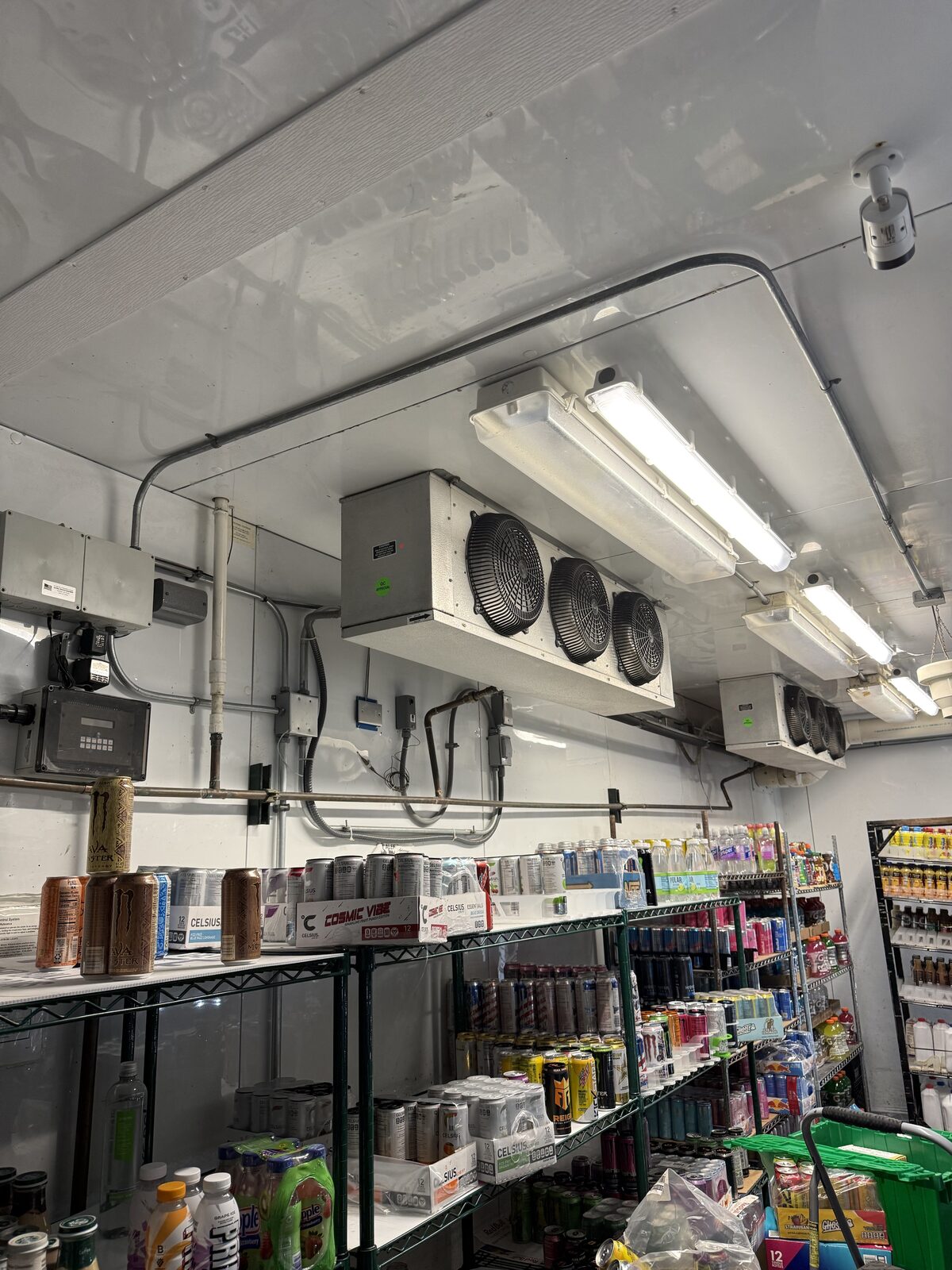
Think about how often staff open the door. Frequent openings let warm, moist air rush in. When that humidity hits the cold evaporator coils, it turns to ice instantly. Damaged gaskets do the same thing. They leak air even when closed. This constant moisture load overwhelms the defrost cycle.
Danfoss troubleshooting guides list frequent door openings and bad seals as top causes for evaporator icing. It’s not just a leak; it’s an airflow problem. If warm air infiltrates too fast, the unit can’t keep up. You might also have temperature settings that are too low. Check your thermostat.
The FDA Food Code requires holding temps at 41°F or below for safety. Most coolers run in the mid-30s to stay safe without freezing food. If yours is set lower, you’re inviting trouble. Understanding why is my walk in cooler freezing up starts with checking these basics before calling for a major repair.
What Temperature Should a Walk-In Cooler Be?
Many owners ask what temperature should a walk in cooler be. The answer isn’t just about keeping food safe; it’s about system balance. The FDA Food Code requires holding time/temperature control for safety foods at 41°F or below. That’s why we typically set commercial refrigeration units in the mid-to-high 30s. This buffer keeps you compliant while giving the system room to breathe.
Setting the thermostat too low is a common mistake. It forces the compressor to run longer cycles than necessary. This extended runtime disrupts the evaporator’s ability to defrost properly. Instead of cycling off to let ice melt, the unit stays on. Frost builds up on the coils. Eventually, that frost blocks airflow and causes the freeze-up you’re seeing.
Efficiency depends on maintaining specific temperature differences (TD). Heatcraft recommends a TD of 10°F for general storage units. This allows for an evaporator superheat of 6°F to 10°F. If your settings are off, you throw this balance out the window. The system works harder to maintain an incorrect delta. That extra strain leads to moisture accumulation and ice formation.
To prevent these issues, check your current set point against the manufacturer’s specs. Don’t guess. A few degrees matter. If you’re unsure if your thermostat is calibrated correctly, call us. We’ve been servicing commercial kitchens in New Bedford and beyond for years. Let’s get your temps right before they ruin your inventory.
Airflow, Coils, and System Maintenance
Airflow is the lifeblood of your walk-in cooler. When it gets restricted, the whole system suffers. Heatcraft warns that placing a unit too close to a door invites infiltration. This warm air rush causes fan icing and hoar-frost buildup on the evaporator. It’s a common mistake we see in tight kitchen layouts. Keep units away from direct drafts.
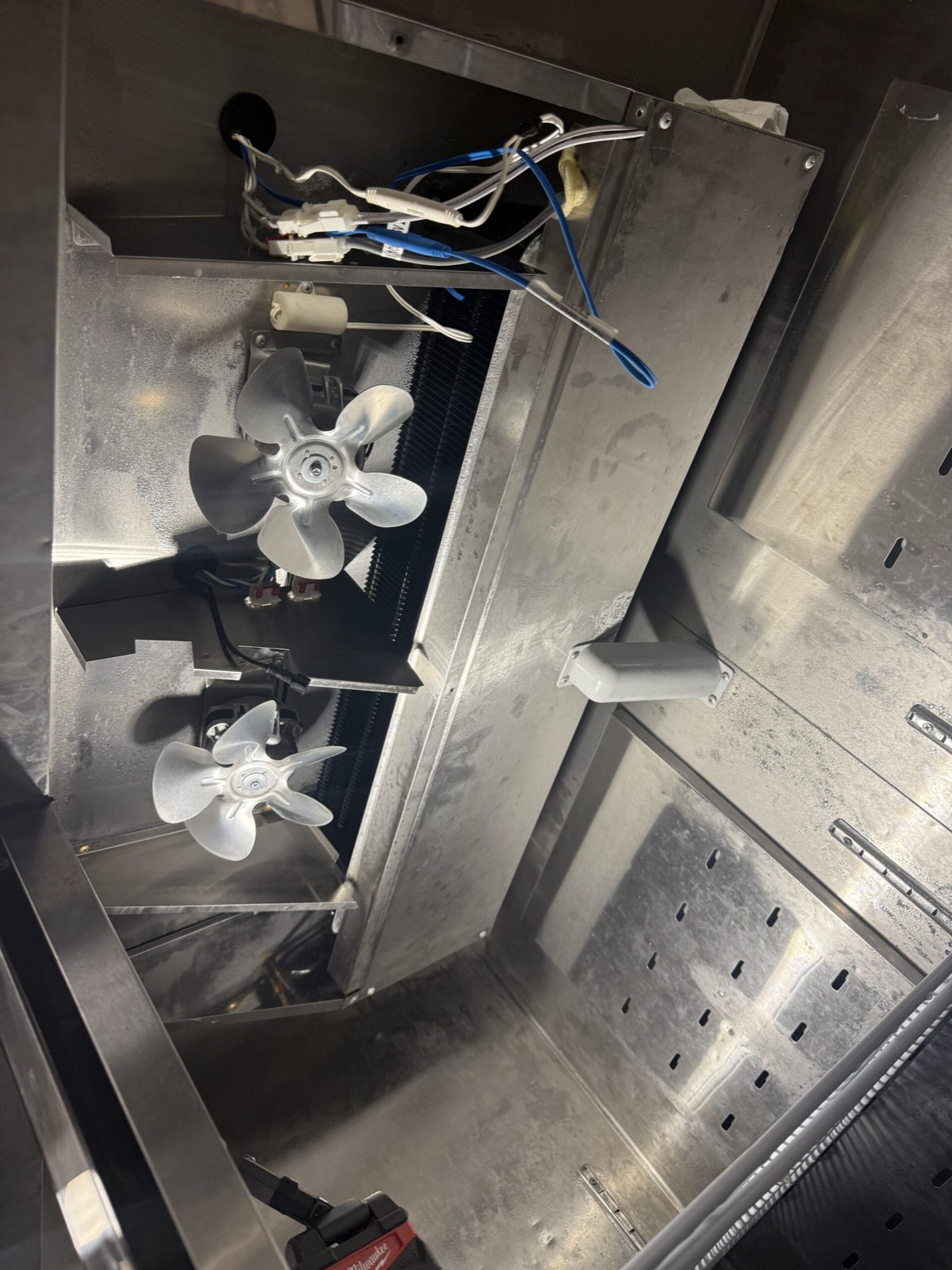
Dirt is just as dangerous as bad placement. Clogged coils can’t transfer heat efficiently. If the coils are dirty, the defrost cycle might not clear frost properly. Heatcraft notes that insufficient defrost time or frequency leads to this exact problem. You need clean surfaces for the system to work right.
Danfoss identifies fan problems and drain issues as primary causes of evaporator icing. A blocked drain pan traps water, which then freezes solid during operation. This ice blocks airflow further, creating a vicious cycle. Regular maintenance prevents these small issues from becoming costly breakdowns.
We check the system integrity on every service call. Proper defrost cycles are critical for efficiency. If your cooler is freezing up, it’s rarely just one thing. It’s usually a combination of poor airflow, dirty components, and neglected upkeep. Fixing these basics keeps your inventory safe and your bills lower.
Head Pressure and Ambient Temperature Impacts
New Bedford’s weather swings hard. When outdoor temps drop, your condenser works differently. Cold air boosts condenser capacity too much. This drops system head pressure dangerously low. If pressure falls below the expansion valve’s operating range, it can’t feed the evaporator right. Russell’s catalog notes this leads to inefficient operation. The system struggles to maintain proper refrigerant flow.
Copeland guidelines are clear on this risk. They state systems need adequate head pressure controls for ambient temps below 50°F. Without these controls, your commercial hvac setup fights itself. The expansion valve starves the coil or floods it incorrectly. Either way, you get uneven cooling. This imbalance often causes parts of the evaporator to freeze solid. You might see excessive frost buildup where there shouldn’t be any.
These inefficiencies hit your wallet fast. Your compressor runs longer trying to compensate for poor refrigerant feed. Energy bills spike because the system is working harder for less result. We see this often in our service calls across Southeastern Massachusetts. Proper low-ambient controls keep pressure stable. They ensure the expansion valve functions as designed. Don’t ignore these seasonal shifts. A simple control fix prevents costly freeze-ups and keeps your inventory safe from temperature abuse.
What Our Techs Check First (From the Field)
When we arrive on site, we follow a strict diagnostic order to pinpoint the root cause. First, we verify thermostat settings against FDA Food Code guidelines. Incorrect calibration is a common culprit behind unexpected cooler freeze events.
Next, we inspect door gaskets for tears and check anti-condensate heaters. On Kolpak units, frost around the jamb or heated pressure relief vent signals an inoperable heater. This moisture intrusion leads to rapid ice buildup on evaporator coils.
We then examine those coils for blockages and restricted airflow. If defrost water cannot escape, drain lines become clogged. We clear these obstructions immediately to restore proper drainage and prevent further icing issues.
Finally, we assess head pressure controls if ambient temperatures are low. Copeland manuals note that systems need adequate control below 50°F to maintain efficient operation. Addressing these points helps prevent costly downtime and keeps your inventory safe from temperature abuse.
Frequently Asked Questions
How often should I clean my evaporator coils?
Regular maintenance is key to keeping your commercial refrigeration system running smoothly. While specific intervals vary by environment, we generally recommend inspecting and cleaning coils at least twice a year. Dirty fins restrict airflow, which strains the compressor and leads to inefficient cooling. Proper care prevents ice buildup and keeps your walk-in cooler operating within safe temperature ranges.
Can a broken door seal cause freezing?
Yes, damaged gaskets are a major culprit. When seals fail, warm, moist air infiltrates the unit. This moisture condenses on cold surfaces, creating rapid frost accumulation on evaporator coils. Danfoss troubleshooting guides list frequent door openings and damaged gaskets as primary causes of evaporator icing. Replacing worn seals stops this moisture intrusion and helps maintain consistent internal temperatures.
Why is my cooler running constantly?
Constant compressor operation usually signals an underlying issue. It often indicates low refrigerant levels, dirty coils restricting airflow, or incorrect thermostat settings. These problems force the system to work harder to reach target temperatures. Since commercial units operate under strict efficiency standards, persistent overrun requires professional diagnosis. We can identify whether it’s a simple fix or a complex mechanical failure.
Related Services
- Walk-In Cooler Repair in Sandwich, MA
- Walk-In Cooler Repair in New Bedford, MA
- Walk-In Cooler Repair in MA & RI
Sources We Work From
The standards and manufacturer service requirements behind this page:
- 42 U.S.C. 6311(20), Definitions
- Kolpak Walk-In Installation & Operation Manual
- 10 CFR 431.306, Energy conservation standards for walk-in coolers and walk-in freezers
- FDA Food Code, section 3-501.16
- Cornell LII — 40 CFR 82.152 Definitions
- Heatcraft Unit Coolers Installation and Operations Manual (H-IM-UC)
For the rules and standards behind this work, see the FDA Food Code and ENERGY STAR commercial food service guidelines from the federal agencies that govern commercial refrigeration.
How we write these: every procedure, temperature and interval on this page is taken from manufacturer service literature or federal food and refrigerant code, listed in Sources above, and reviewed by our own technicians against what we see in the field. We revise the page when a standard or a manufacturer procedure changes.