Ice Machine Leaking Water Repair
Ice Machine Leaking Water in Southeastern Massachusetts and Rhode Island
The drip, drip, drip from your ice machine isn’t just annoying—it’s a mess that can shut down prep stations before the lunch rush even hits. When you see standing water around your Manitowoc or Hoshizaki unit, you need it fixed today.
Why Is My Ice Machine Leaking Water? (It’s Usually Not One Thing)
For more on refrigerant handling regulations, see EPA Section 608 certification.
When people call us about an ice machine leaking water, they usually just point and say, “It’s dripping.” But what we find underneath—whether we’re pulling up to a spot in Plymouth or down near the waterfront in New Bedford—is usually a specific failure. It’s rarely just one simple fix.
A leak can come from anywhere: the drain line connection, the water inlet valve itself, the internal plumbing where the cooling elements connect, or even worse, it could be condensate overflow mixing with something else. If we don’t know *where* the pressure is building up, just patching the visible drip won’t cut it. We need to trace the whole system back to its source.
We’ve seen this dozens of times over our 15 years here. Sometimes it’s a hairline crack in plastic that only shows when the machine cycles down and cools everything up. Other times, it’s just mineral buildup—scale inside the lines—that is restricting flow and causing pressure spikes somewhere out of sight.
The Quick Fix vs. The Real Repair: What Edward Looks For
For more on AIM Act phase-down, see EPA SNAP-listed refrigerants.
When you call us, especially after hours when I’m answering because your walk-in cooler is down, my first thought isn’t about the drip; it’s about what’s *causing* the excess water. A quick patch job might get you running for an hour or two, but if the underlying issue—like a failing capillary tube connection or a bad drain trap—isn’t addressed, that leak will start up again next week.
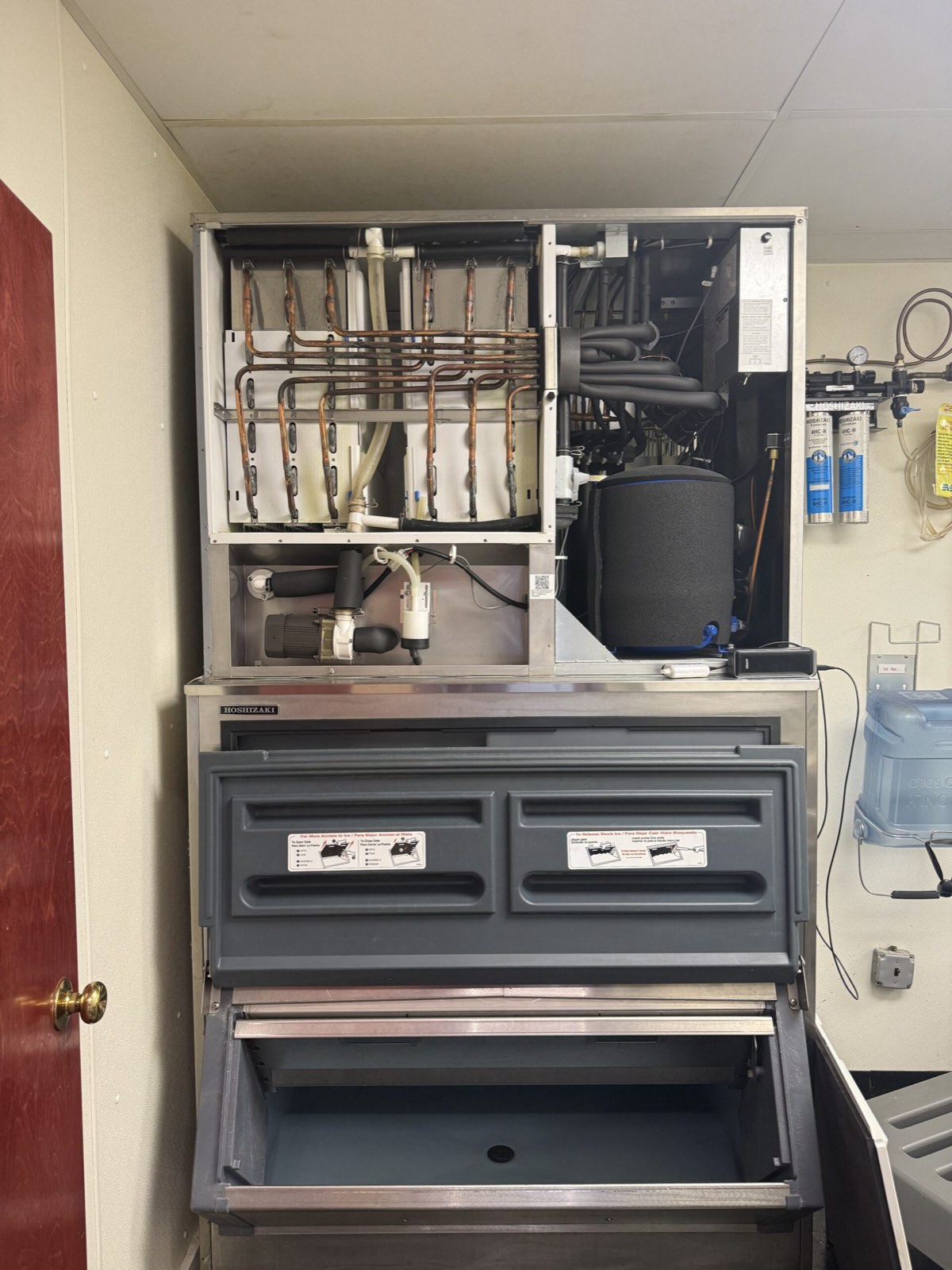
We focus on the actual components. Is it related to the defrost cycle? Sometimes the heater element kicks in and creates more condensation than the basic drip pan can handle. We check the plumbing connections leading from the evaporator section back to the main drain line. These joints are under constant vibration and temperature change, so they wear out.
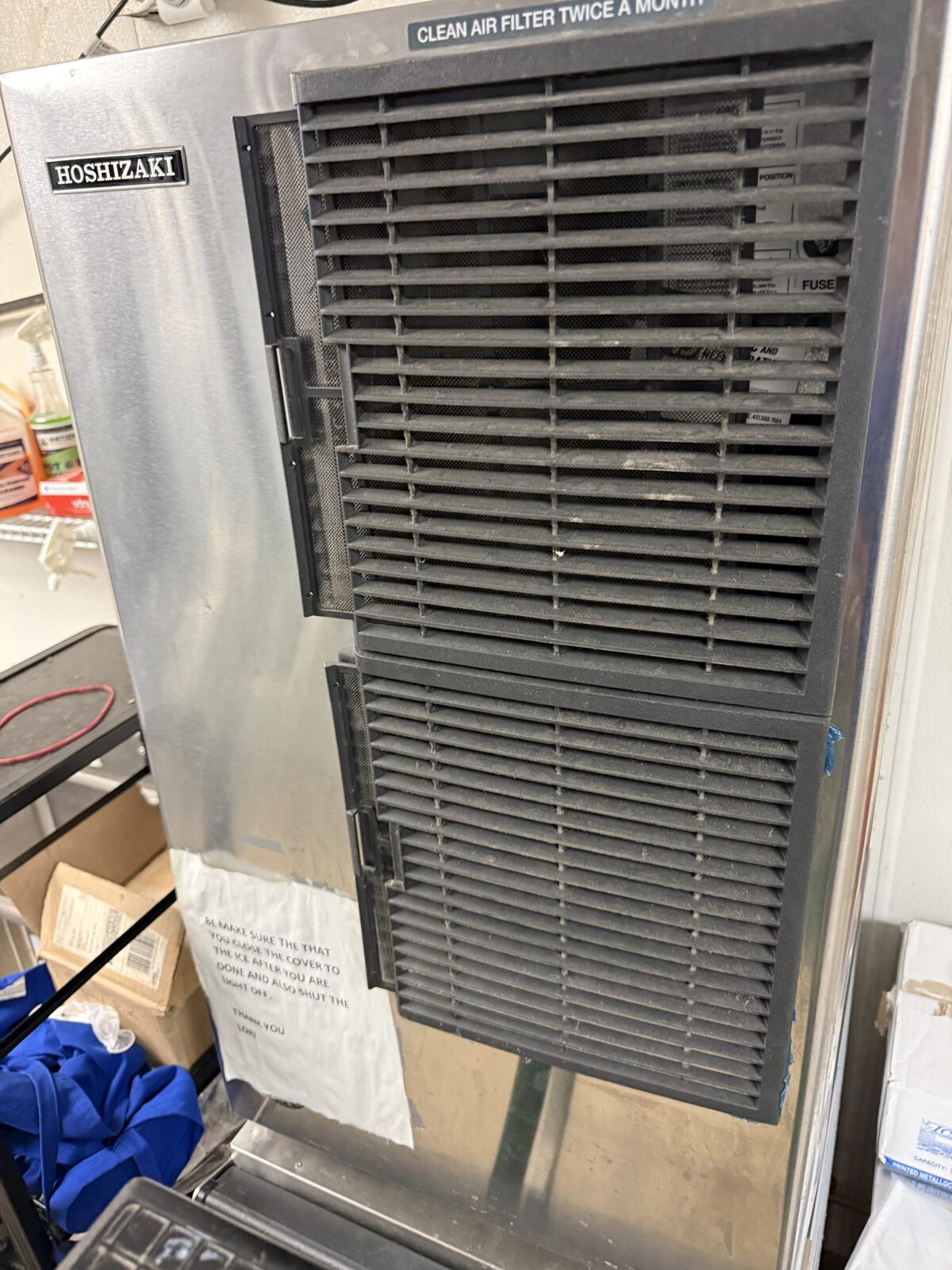
If we’re looking at a large commercial unit—say, one in a busy market down by Fall River—I’m checking the water quality feeding it too. Hard water is our enemy; scale buildup clogs valves and creates localized pressure points that force leaks.
Understanding Ice Machine Plumbing: Beyond the Visible Drip
For more on Massachusetts compliance, see EPA Section 608 refrigerant rules.
People assume it’s just about the machine dripping onto the floor. Nope. The plumbing inside these units—the lines carrying fresh water in, and the waste condensate out—is complex. You’ve got connections to the main drain, sometimes a feed line that needs filtration, and the internal components doing the freezing cycle.
If you have a leak near where the ice is coming out (the dispenser area), it could be anything from a poor seal on the dispensing mechanism itself to an issue with how the water tank drains its excess. We check all those gaskets. They fail, and they cost less than losing sales during peak hours.
I remember last month at a seafood spot in Dartmouth. Their Manitowoc unit was leaking pretty badly from under the base. Everyone thought it was just condensation dripping off the drip tray. Nope. We traced it back to a corroded copper coupling right where the main drain line entered the machine housing. That connection had failed due to mineral erosion over time. A simple solder job fixed it for good.
When Should I Worry About the Water Leak? (Knowing When to Call)
You should call us immediately if you notice any of these things: first, a steady stream that won’t slow down; second, if the leak seems related to other equipment failing nearby (like an adjacent reach-in cooler starting to act funny); or third, if you can’t figure out why it’s leaking after a basic visual inspection.
We handle everything from small glass-door merchandisers that need ice for display purposes to massive walk-in freezers that use dedicated ice makers as part of their cooling system. The emergency response level is different depending on the scale, but the urgency is always the same: get it fixed before you lose revenue.
We’re licensed and insured, and we carry the EPA 608 certification—that’s non-negotiable when we’re working with refrigerants or any water/cooling cycle. You don’t want a random tech messing with your plumbing who doesn’t know what they’re doing.
What to Expect When We Show Up (No Guesswork)
When you call us—and I mean calling, not emailing—you get straight talk. No fluff. If we pull up near the South Coast, whether it’s in Westport or just past Fall River, my tech will assess it right there. We’ll ask what machine brand it is (True? Beverage-Air?) and how long it’s been running without issue.
We won’t just slap on a temporary patch if we think the whole drainage manifold might be suspect. We’re upfront with you about what needs replacing versus what can be repaired. If that ice machine is 20 years old, and the leak is in the main housing structure, I’ll tell you straight: sometimes replacement makes more sense than chasing a leak in ancient metal.
But if it’s a known failure point—a bad O-ring on the water inlet valve or scale buildup clogging the condensate trap—we fix that right then. We get the job done, and we leave you with a dry machine running reliably for your next rush.
Our Service Area Coverage in MA & RI
If you’re operating anywhere from Providence down through New Bedford, or if you’ve got spots way up towards Cape Cod, we work that ground. We know the routes, and we know when things break—usually right before a busy weekend or holiday service period.
We focus on commercial equipment: walk-in coolers, prep tables needing ice bins, glass-door merchandisers, and those heavy-duty ice machines. If it’s part of your food service operation in Southeastern Massachusetts or Rhode Island, we’ve fixed it. We’re here 24/7 for emergency response.
Diagnosing That Leak: Ice Machine Water Issues
Seeing water pooling under your ice machine—especially when you’re running a busy breakfast service in Plymouth or Cape Cod—is a headache. Most folks just see the puddle and call it “a leak.” We know better. A leak can be anything from a clogged drain line to an issue with the defrost cycle, and treating it wrong wastes time and money.
When we pull up, we check the condensate pan trap first. Sometimes that simple PVC connection gets gummed up with scale or debris—it’s common around spots like the Old Port in Providence where plumbing ages out. If the drain line is clear but water’s still running when it shouldn’t, we look at the primary components: the water inlet valve or the drain pan itself. It’s usually one small part failing that sends a cascade of wet mess under your counter.
Don’t let it sit for days just because it’s “minor.” That standing water can breed bacteria, which isn’t good for anything kept in your coolers or prep tables. Call us at 508-521-9477. We’ll get a tech out to take a look and tell you exactly what the issue is—and how fast we can fix it.
Keeping Things Running: Preventative Maintenance Checks
I’ve seen enough equipment fail during peak season in Fall River to know that waiting for something to break is just asking for trouble. A little preventative maintenance upfront saves you losing hundreds on a slow Tuesday morning when the storm rolls through from the Sound.
When we service a run of restaurants near Downtown Providence, I always go over three things: cleaning the condenser coils—dust buildup acts like an extra blanket on your unit and makes the compressor work overtime; checking refrigerant levels visually (and testing the pressure if needed); and running through the defrost cycle sequence. If that cycle is cycling too often or not enough, it stresses the system needlessly.
We don’t just show up to fix the immediate problem; we look at what’s coming next. We give you a checklist of things to watch for—things like unusual noises from the compressor or erratic temperature swings in your walk-in freezer. It’s cheap peace of mind compared to having to shut down service because something unexpectedly blew out near Narragansett Pier.
What Equipment We See Every Day
We touch every brand, sure. From Manitowoc ice makers popping up at seafood joints in New Bedford to True and Beverage-Air coolers in little cafes wandering through the Blackstone area, we know their guts. We’ve done it all: swapping out a failed evaporator coil on a Hoshizaki display case; troubleshooting low refrigerant pressure on an old Continental unit; or just clearing scale buildup off the drain pan on a high-volume prep table.
The core problem is often universal, though—it’s almost always related to airflow or liquid flow. If the condenser fan isn’t moving air properly across those coils, the whole system overheats fast. If the capillary tube gets partially blocked, the evaporator unit starves for coolant and struggles to pull down that temperature.
Our techs are experts on what’s actually in your kitchen right now—whether it’s a line of Traulsen refrigeration units or just three walk-in coolers running off one service connection. We know the machinery on the ground in Dartmouth and Mattapoisett, and we bring the right tools and parts with us to get you back to business fast.