
Moldy or Dirty Ice Machine? Deep Cleaning & Sanitizing Service
A moldy or dirty ice machine is one of the most common and most serious problems we see in commercial kitchens, bars, and convenience stores across Southeastern Massachusetts and Rhode Island. It shows up as black or pink slime in the water path, a musty smell, slimy or cloudy cubes, and visible mold on the bin door gasket or evaporator. Every style of equipment is at risk, from undercounter Hoshizaki and Manitowoc cubers to modular Scotsman flakers, Ice-O-Matic nugget machines, and the dispensers behind soda fountains. Armus Refrigeration handles moldy or dirty ice machine deep cleaning and EPA-608 certified sanitizing throughout New Bedford, Fall River, Cape Cod, Greater Boston, Providence, and the surrounding South Coast and Rhode Island region, 24/7.
What’s likely happening
- The machine is overdue for a deep cleaning, so mineral scale and organic film have built up on the evaporator plate, water trough, distribution tube, and pump where you can’t see them.
- Biofilm and mold have colonized the water path because ice machines run a warm, wet, sugar-and-airborne-yeast environment that is ideal for slime growth between cleanings.
- A clogged or missing air filter is letting the condenser pull dust, grease, flour, and airborne mold spores straight into the cabinet, seeding contamination on the cold surfaces inside.
- Pink or black slime (often Serratia and Aureobasidium) is forming on the bin door, splash zone, and water-pump intake, then sloughing off into finished cubes.
- There is no preventive-maintenance schedule in place, so cleanings only happen after staff or a customer notices slimy, cloudy, or off-tasting ice.
- Hard local water has left scale deposits that trap organics and shield mold from light cleaning, so a quick wipe-down never actually reaches the colony.
- The bin and scoop are being cross-contaminated by hands, dirty scoops, or storage on the floor, reseeding the clean machine within days.
What Armus checks & fixes
- We perform a full ice machine deep cleaning: disassemble the water distribution tube, spray bar, trough, float/water level sensor, and pump, then circulate a nickel-safe ice machine cleaner to dissolve scale and biofilm.
- We follow the descale step with a separate ice machine sanitizing pass on every food-contact surface, the bin interior, the door gasket, and the scoop holder, using an approved sanitizer at the correct dilution.
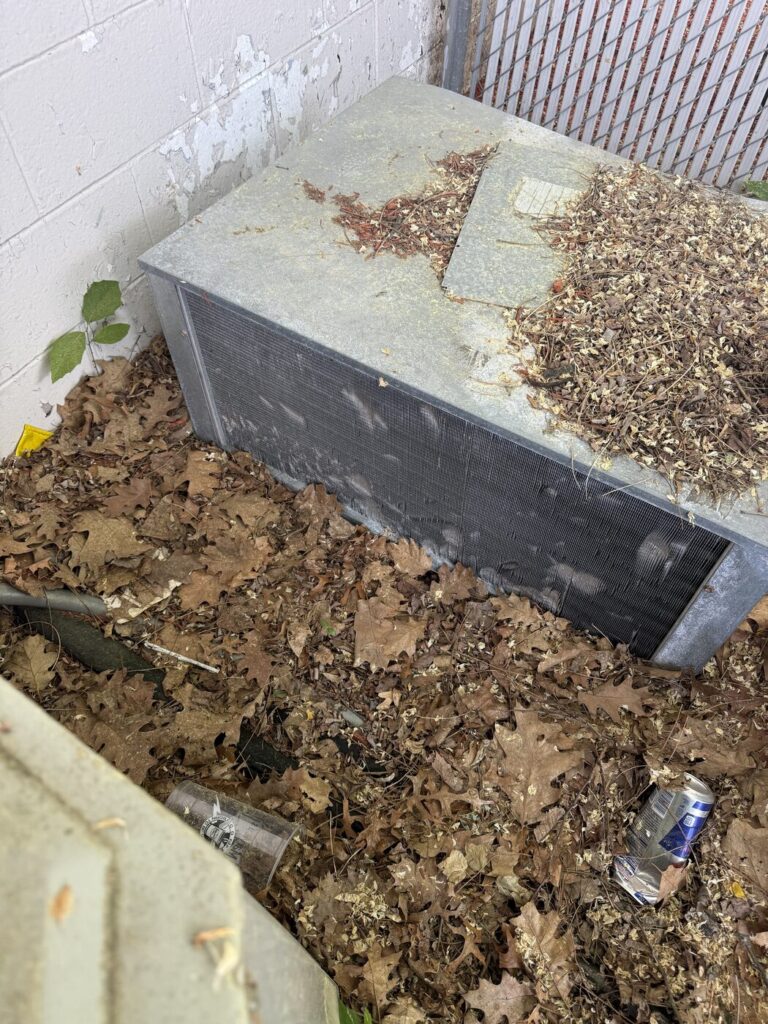
- We clean or replace the air filter and vacuum the condenser coil so the unit stops pulling contaminants and dust into the cabinet and stops running hot.
- We remove and scrub the bin door gasket and splash curtain, the single most common spot where black and pink ice machine slime hides and reseeds.
- We inspect and flush the water inlet valve, water filter cartridge, and supply line, and replace a spent carbon/scale filter so you’re not re-feeding minerals and chlorine taste into clean ice.
- We check the evaporator plate and harvest assist for nickel pitting or rough spots that let film cling, and verify the harvest cycle is fully sheeting water so cubes release clean and clear.
- We set you up on a recurring ice machine deep cleaning and sanitizing schedule, typically every 6 months, so mold and scale never get a foothold again.
Why this happens
A commercial ice machine is, by design, a near-perfect incubator for mold and bacteria. Water is repeatedly recirculated over the evaporator at a temperature just above freezing, the cabinet stays damp, and airborne yeast and mold spores from a working kitchen settle on every wet surface. During the freeze cycle, water sheets across the evaporator plate; during the harvest cycle, a hot-gas valve warms the plate so the slab releases into the bin. That warm, wet harvest moment, repeated hundreds of times a day, is exactly the cycle that biofilm and slime exploit, anchoring in the distribution tube, water trough, and pump where light and routine wiping never reach.
Water quality is the accelerant. Southeastern Massachusetts and Rhode Island supplies carry enough dissolved minerals to lay down scale on the evaporator and in the water path within months. That scale is not just an efficiency problem: its rough, porous surface gives biofilm something to grip and physically shields mold colonies from sanitizer. A machine that looks ‘clean’ on the surface can be packed with scale-anchored film underneath, which is why a real fix requires descaling first, then sanitizing, not one or the other.
The air side matters just as much as the water side. The condenser fan pulls cabinet air across the coil to reject heat, and on an air-cooled unit it pulls in whatever is floating in the room: grease aerosol, flour, dust, and mold spores. A clogged air filter both starves the condenser (driving up head pressure and weakening the harvest cycle) and, once it’s bypassed or missing, lets contaminants land directly on cold internal surfaces. So a dirty air filter doesn’t just shorten compressor life, it actively seeds the mold you find in the ice.
Finally, the controls and the schedule decide whether all of this stays under control. The float or bin-control sensor governs water level and tells the machine when the bin is full; if its probe or the water trough is fouled with slime, level and cycle timing drift, leaving standing water that breeds more growth. Without a preventive-maintenance schedule, none of this gets caught until ice is visibly slimy or a health inspector flags it. A planned cleaning interval is the only thing that breaks the cycle before it becomes a contamination event.
Equipment we service
We repair this on every type of commercial refrigeration:
How we fix it — our process
- Inspect and document the contamination: we open the cabinet, photograph the evaporator, water trough, distribution tube, bin gasket, and air filter, and note slime color and location so you know exactly what was found.
- Power down and drain: we isolate power and water, dump the bin, and drain the reservoir so we can safely disassemble the water-path components.
- Descale: we disassemble the distribution tube, spray bar, trough, float sensor, and pump, then circulate a nickel-safe ice machine cleaner to dissolve scale and biofilm from every wetted surface.
- Sanitize: after a thorough rinse, we run a separate sanitizing solution across all food-contact surfaces, the bin interior, door gasket, splash curtain, and scoop, at the correct concentration and dwell time.
- Service the air and water sides: we clean or replace the air filter, vacuum the condenser coil, change the inline water filter, and flush the inlet valve and supply line.
- Reassemble, test, and verify: we rebuild the unit, run a full freeze and harvest cycle, confirm cubes release clean and clear, sanitize the first batch of ice to the bin, and book your recurring cleaning schedule before we leave.
Service area
Armus Refrigeration handles moldy or dirty ice machine? deep cleaning & sanitizing service for restaurants, markets, c-stores, schools, and commercial kitchens across New Bedford, the South Coast, the South Shore, Cape Cod, Greater Boston, and Rhode Island — including:
Frequently asked questions
Is moldy ice a health-code violation?
How often should a commercial ice machine be cleaned?
Can you set up a recurring cleaning schedule?
Will a quick wipe-down fix slimy ice?
Is the mold in my ice machine dangerous?
Do you service my brand of ice machine?
Brands We Service
We repair and maintain every major commercial refrigeration & ice brand.