Walk-In Freezer Repair in Brockton, MA: Keeping Your Product Frozen and Your Business Running
Your walk-in freezer stopped pulling cold air before the morning prep rush. Every minute it sits up there is inventory losing its edge—and your business loses money fast.
When You Need Emergency Walk-In Freezer Repair in Brockton
For more on refrigerant handling regulations, see EPA Section 608 certification.
Listen, when a commercial unit goes down, you don’t need marketing fluff. You need a tech on site now. When your walk-in freezer stops cooling, every hour matters. That’s not theory; that’s product spoiling right there.
We’ve been servicing kitchens across Southeastern MA and Rhode Island for over 15 years. We know the rhythm of food service. When a local restaurant in Brockton calls us up because their primary walk-in freezer is acting weird—maybe it’s cycling too hard, or maybe nothing at all—we treat it like an emergency. That’s why we’re here: for same-day, 24/7 response.
If you’re in Brockton, or anywhere down through Fall River, Dartmouth, or over on the South Coast, give us a call right away at 508-521-9477. Don’t wait for it to get worse. We get techs rolling to your location fast.
Diagnosing Freezer Issues: What’s Actually Going Wrong?
For more on AIM Act phase-down, see EPA SNAP-listed refrigerants.
People often think the problem is just “the freezer is hot.” It’s rarely that simple. The issue could be anything from a tripped breaker in the disconnect box to a failing condenser coil, or maybe the refrigerant charge dropped somewhere.
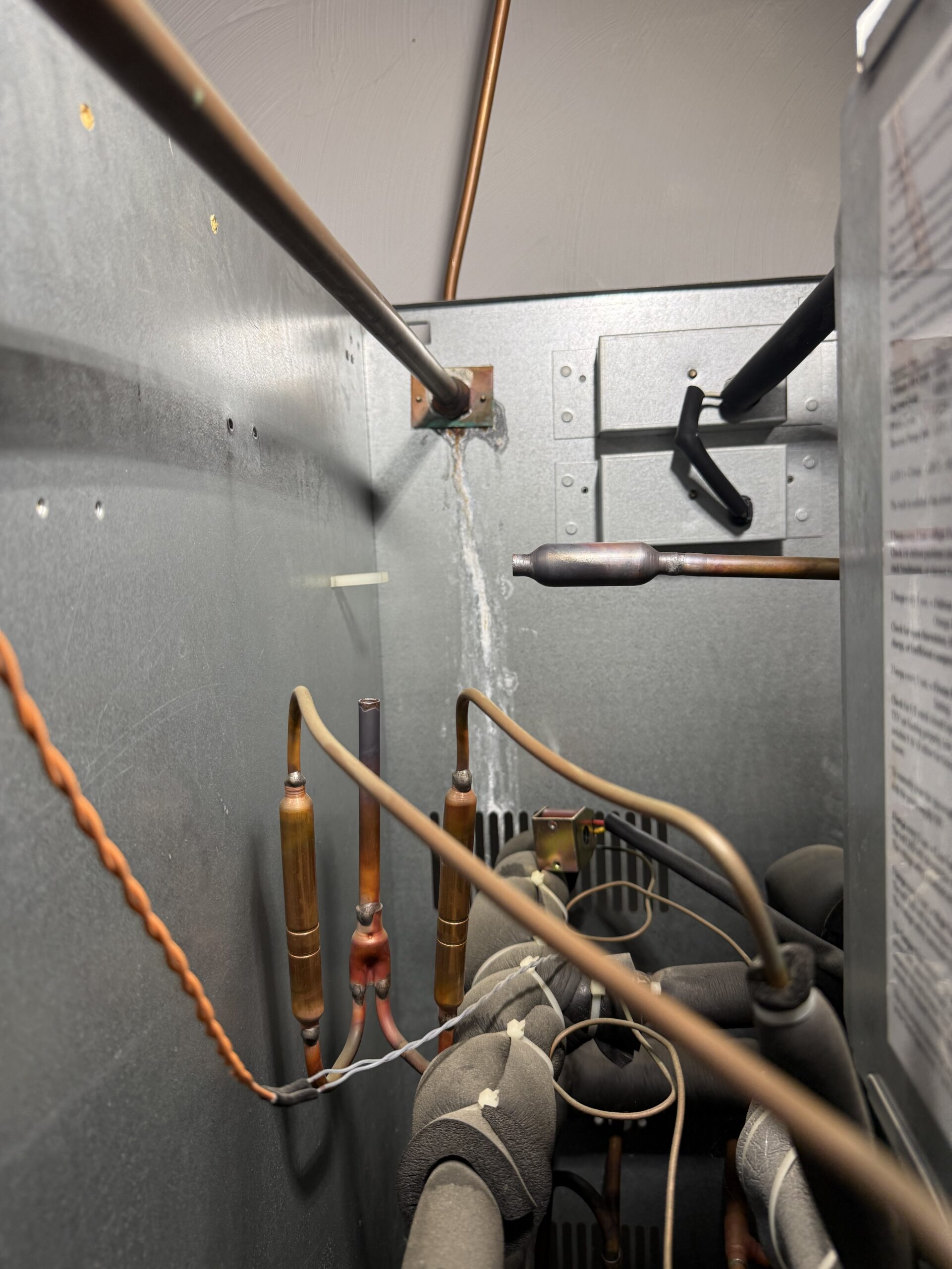
When we get the unit open, we check the whole system. We look at the compressor—is it running right under load? We measure the head pressure and suction pressure across the evaporator and capillary tube. A simple gauge reading can tell us if the expansion valve is sticking or if we’re fighting a blockage.
We’ve seen this dozens of times. Sometimes it’s dirty condenser coils clogging up airflow, which makes the compressor work overtime until it overheats and trips on overload protection. Other times, especially with older units, it might be an issue with the defrost cycle timer or a faulty thermostat signal.
Compressor Failure vs. System Overhaul: Knowing When to Call It Quits
This is where we have to be straight with you. We fix equipment, not just parts. A 15-year-old compressor giving out isn’t surprising when the unit is already running on borrowed time.
Our job isn’t to sell you a new machine if it doesn’t need one. We assess viability. If we pull an old compressor and find significant wear, or if other components like the motor windings are fatigued, sometimes replacing just the compressor isn’t enough to guarantee reliable service for another few years.
We’ll walk you through it: “Boss, this unit is solid, but because of X and Y parts being near end-of-life, swapping out the whole freezer box might save you headaches down the road.” We tell you straight which path—repair or replacement—makes the most sense for your bottom line.
Beyond the Compressor: Key Components We Service Regularly
For more on Massachusetts compliance, see EPA Section 608 refrigerant rules.
A walk-in freezer is a complex piece of machinery. Knowing the parts helps when talking to your supplier or insurance guy later on. Let’s talk components:
- The Evaporator Coil: This is where the cold happens, usually inside the actual freezer box. We check for scaling, blockages, and refrigerant leaks here.
- The Condenser Coils: These sit outside, usually near the machine’s back end. If these get coated in dirt from the kitchen exhaust or just general grime, they can’t dump heat properly, making the whole system struggle. Cleaning them is often step one.
- The Refrigerant Line Work: Capillary tubes and liquid lines need to be checked for proper flow. We verify that the correct type of refrigerant is circulating under appropriate pressure.
- Defrost System Components: If your unit keeps building up ice on the evaporator, it’s usually a timer or heater element failing, not necessarily the main cooling circuit itself.
A Look at Local Service Calls in Southeastern MA
We aren’t just some faceless national service line. We live and work around this area. Last month at a diner on Route 6 near Mattapoisett, I pulled up to their walk-in cooler because the temperature gauge was wildly fluctuating—swinging between 30 degrees and 45. It turned out the primary issue wasn’t the compressor; it was a loose electrical connection in the main control board that had been vibrating itself apart over time.
It’s those small, overlooked connections that cost restaurants hundreds of dollars when they fail during busy hours. Whether you’re running a market near Plymouth or a restaurant right downtown in Brockton proper, we know the local infrastructure and what stresses out commercial equipment here.
We handle everything from small glass-door merchandisers—the ones holding your drinks display—to massive walk-in freezers that hold weeks of product. We service True, Beverage-Air, Hoshizaki, Manitowoc, Continental, Traulsen units, and whatever brand you’re running.
What to Do When You Call Us (The Quick Checklist)
When you call 508-521-9477, the faster we can get a clear picture, the faster we can get it fixed. Here’s what helps us prepare:
- What is down? Be specific: “The walk-in freezer” or “The reach-in prep table.”
- When did you notice it? Give us a time frame, even if it was gradual.
- Any unusual noises? Is the compressor humming loudly? Is there a loud clanking sound when it cycles off?
- What’s the visible symptom? “The temp gauge reads 40 degrees,” or “It smells sweet/sour coming from the condenser.”
Don’t worry about guessing the technical terms. Just tell us what you see, and we’ll handle the rest of the diagnosis using our 15+ years experience.
Spotting the Trouble Before It Stops You Cold
You don’t need a degree to know when something’s wrong in your kitchen—you just know when the walk-in freezer isn’t doing its job. But if you’re waiting for it to fail, you’ve already lost money on spoiled product.
When I get called out near the South Coast—say, a restaurant down in Plymouth or someone over by the docks in New Bedford—the problem is rarely obvious until it’s too late. We look for signs: Is the temperature climbing slowly? That’s often an issue with the condenser coils getting dirty, letting the system run inefficiently. Or maybe you notice the evaporator fan sounds sluggish when you open the door?
Those little tells matter. A slight increase in frost buildup on the freezer walls could point to a failing defrost heater or a blockage somewhere in the drip pan drain line. Don’t ignore those things just because it’s inconvenient. Call us at 508-521-9477 before that small issue turns into a full shutdown.
The Proactive Way: Keeping Your Freezer Running Years Out
Look, nobody *wants* to call a tech for maintenance. It feels like an expense when the unit is working fine. But trust me, preventive service saves you headaches—and cash—when things go south. Especially with commercial gear dealing with the humidity swings we get between the Cape and downtown Providence.
When we do a routine check on a walk-in freezer in Brockton, we’re checking more than just the temperature gauge. We’re checking refrigerant pressure across the high side and low side to make sure the compressor isn’t fighting an uphill battle. We’ll clean out that condenser coil—the dirt buildup there is killer for efficiency.
A good tune-up means we catch things before they blow. It’s about keeping your whole refrigeration cycle running smoothly so you aren’t sweating through a busy Saturday night because some tiny part gave out on a Monday morning. That’s smart money, plain and simple.
Brands We Work With Daily Across the Region
I’ve seen everything in this business over fifteen years. I’ve pulled units apart from every make you can think of—True, Beverage-Air, Manitowoc, Continental, Hoshizaki. Honestly, it’s less about which brand is “better” and more about what gear you actually have working right now.
If your restaurant in downtown Brockton has a massive glass-door merchandiser from Traulsen that’s acting up, or if the prep table needs its evaporator checked, we know the guts of it. We stick to fixing what’s installed, using parts that match the job specs. Nobody likes paying extra for an unproven swap.
The important thing is this: when you call 508-521-9477, whether it’s a tricky compressor issue on a walk-in freezer or just a busted ice machine at your market location, the tech rolling up knows that specific brand and model inside out. We show up ready to work.
What a walk in freezer repair brockton ma service call actually covers
When we arrive on a service call, we work through the system in a fixed order so nothing gets skipped. Refrigerant pressures on both the suction and discharge sides. Amp draw on the compressor at start and during steady-state run. Superheat at the evaporator and sub-cooling at the condenser. Evaporator and condenser coil condition, fan motor amp draw and bearing condition, defrost cycle timing and termination, drain line clearance, door gasket seal and door alignment, controls and contactors. The diagnostic is usually 30 to 60 minutes; the repair time depends on what we find.
For commercial walk-ins above 50 pounds of refrigerant charge in Massachusetts, we also document the visit for the operator’s MassDEP Refrigerant Management Program file. RI commercial food establishments need their temperature logs intact and corrective action documented for RIDOH inspections, and our service tickets fit that record set.
Ready to get walk in freezer repair in Brockton, MA?
- south shore walk in cooler and freezer repair
- emergency freezer repair new bedford ri
- how to defrost a walk in freezer
- reach in freezer repair
- the restaurant owners walk in freezer cooler survival guide 2025
- walk in cooler freezer downtime cost calculator
- walk in cooler repair boston ma
- Walk-In Cooler Repair in Brockton, MA
- walk in cooler repair cambridge ma
- walk in cooler repair coventry ri
- walk in cooler repair east providence ri
- walk in cooler repair hyannis ma
- walk in cooler repair marion ma
- walk in cooler repair newport ri
- walk in cooler repair north providence ri
- walk in cooler repair providence ri
- walk in cooler repair quincy ma
- walk in cooler repair raynham ma
- walk in cooler repair sandwich ma
- walk in cooler repair taunton ma
- walk in cooler repair worcester ma
- walk in cooler repair lincoln ri
- walk in freezer icing up
- walk in freezer repair fall river ma
- Walk-In Freezer Repair in New Bedford, MA