Ice Machine Repair Fall River MA – Keeping Your Cool Running
The ice machine is down before the lunch rush hits. When that happens in a busy spot downtown—whether you’re near Water Street or out by the harbor—it’s not just an inconvenience; it’s a cash flow problem.
Why Your Ice Machine Stopped Working (It’s Usually Not What You Think)
For more on refrigerant handling regulations, see EPA Section 608 certification.
Look, I’ve seen this play out more times than I can count. People call us thinking it’s the biggest thing—a tripped breaker or something obvious. Sometimes it is. But often? It’s a deeper mechanical issue.
If your ice machine is making weird noises—grinding, buzzing, nothing at all—you need an experienced tech on site fast. We check everything: the electrical draw, the refrigerant pressure across the evaporator coil, and if the compressor is cycling right. A simple blockage in the condensate drain line can shut a whole unit down just as fast as a bad solenoid valve.
We don’t guess. We diagnose. When we get to your Fall River kitchen, we want you to know what’s actually wrong so you aren’t paying for fixes that won’t last a week or two. If it’s just a clogged filter or a bad water connection, we change it and get you running.
Emergency Response: When Every Hour Costs You Money
For more on AIM Act phase-down, see EPA SNAP-listed refrigerants.
I remember pulling up to a deli near the North End of Fall River last month. They were completely out of ice for their sandwiches. The owner was sweating—not because it was hot in the shop, but because he knew every hour meant lost sales. He needed us before his lunch service started.
That’s our reality here: 24/7 emergency response for commercial needs. When your walk-in cooler, prep table, or ice machine goes down, time isn’t money; it’s inventory getting spoiled and customers walking to the next place over. We treat these calls like they are—immediate.
We keep our crews local because we know this area. If you’re in Fall River, or if you’ve got a spot over near Plymouth or even dipping into New Bedford, we can get a licensed, insured tech to your location quickly. We answer the phone because your business is counting on us.
The Components: What We Actually Fix Inside Those Machines
For more on Massachusetts compliance, see EPA Section 608 refrigerant rules.
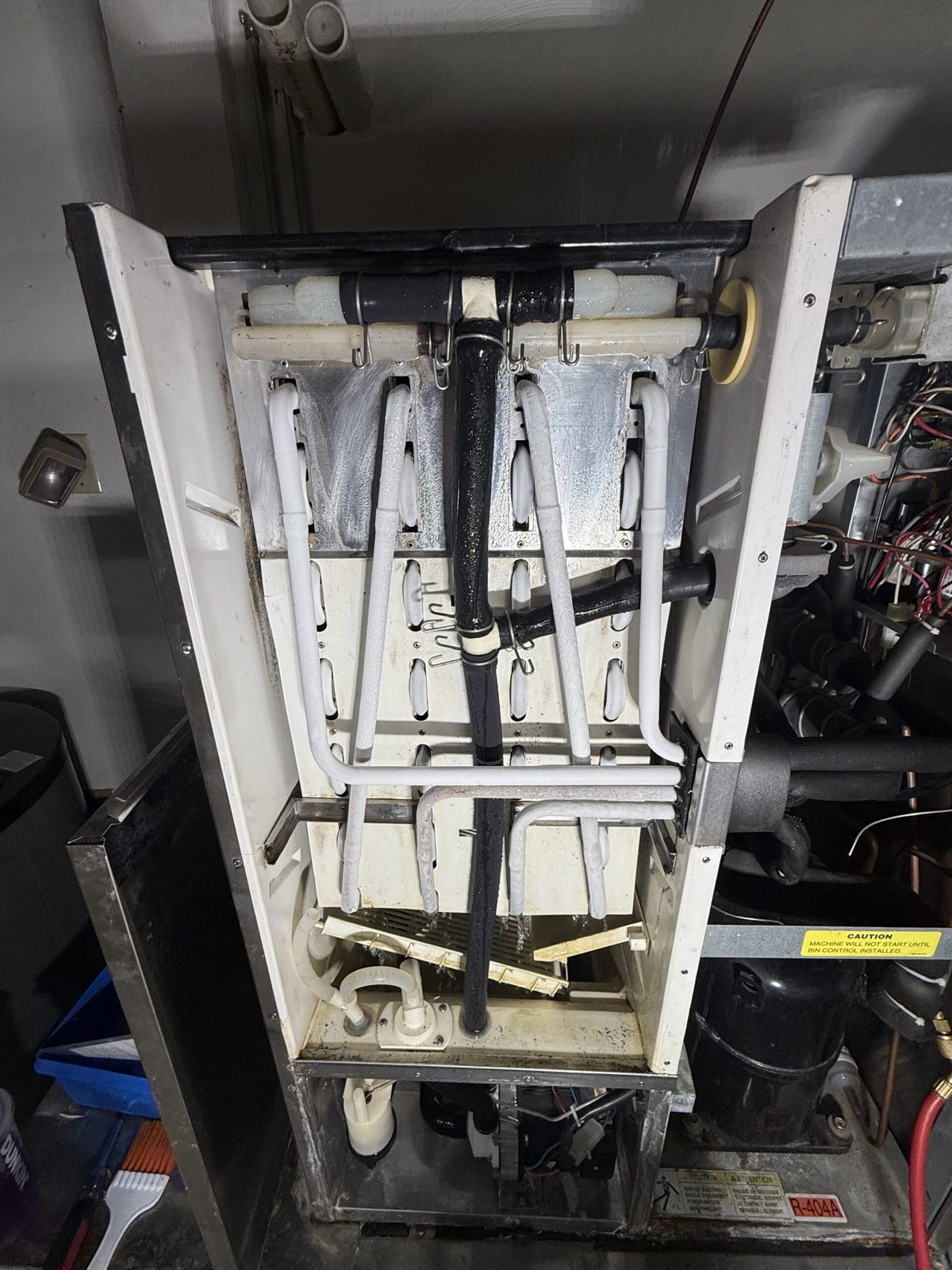
If you want to talk shop, we can talk shop. Understanding what’s going on under the hood helps when you’re paying for service. An ice machine uses a refrigeration cycle—it needs a clean evaporator coil absorbing heat, a functioning compressor doing the heavy lifting, and proper flow through the expansion valve.
If the unit is running but producing little to no ice, we look at refrigerant levels first. Sometimes it’s low charge, sometimes it’s an issue with the condensate pump keeping up with the defrost cycle drainage. We check pressures—suction line and liquid line—to make sure everything is balanced.
We service all the major brands you see in commercial kitchens: Manitowoc, Hoshizaki, True, Beverage-Air. Whether it’s a glass-door merchandiser on Main Street or an ice machine tucked away in the back of a restaurant near Downtown Fall River, we know how these specific units are built and where they tend to fail.
Knowing When to Repair vs. Replace (The Straight Talk)
This is important—and it’s not something you want marketing guys telling you. If your ice machine is 15 years old, or maybe older, we need an honest look. We can fix a bad motor, sure thing. But if the main compressor is shot and the unit has seen too many cycles over the decades, chasing small repairs isn’t smart for your bottom line.
We’ll give you the straight rundown: “This part will cost $X to replace, but because the shell casing is showing stress cracks from years of vibration, I’d advise talking to a supplier about a modern replacement model instead.” We make sure the money you spend today keeps you running reliably for years to come.
Beyond Ice Machines: Keeping Your Whole Operation Cold
Don’t forget the rest of your setup. A breakdown in one area can cascade through everything else. If your walk-in freezer isn’t holding temperature, your prep table contents are at risk. We do more than just ice machines.
We handle all commercial refrigeration needs for restaurants across Southeastern MA and Rhode Island. From condenser cleanouts on large walk-ins to servicing those difficult reach-in coolers in a busy market setting near the Cape—we’ve seen it all. Our techs are licensed, insured, and know how to work around active kitchen traffic without shutting down your entire operation.
We pull up at places from Providence all the way south of here; we know the rhythm of food service during a busy season. We treat every call in Fall River like it’s the most critical one of the day.
Diagnosing the Problem: What’s Actually Happening Underneath
You call us because your ice machine isn’t spitting out cubes—maybe it’s dripping water, or maybe nothing is coming at all. When we pull up to a spot downtown in Fall River, especially near those dense restaurant districts, you can tell immediately if the issue is simple or complicated. It ain’t always just “broken.” Sometimes it’s a blockage in the drain line that needs clearing out, and sometimes it’s the brine tank sensor that’s sending bad readings to the main control board.
A lot of folks think an ice machine fails because the compressor died. Nah. We check everything first. We look at refrigerant pressure—is the system cycling right? Is the expansion valve getting enough flow? A simple problem with the water inlet filter, which gets clogged fast when you’re dealing with local water hardness, can cause the whole thing to shut down safely, but it still means you’re losing sales while we figure out why. We don’t guess; we test components—the freezer unit itself, the collection bin, even checking for scale buildup inside the heat exchanger.
We’ve seen units struggle with inconsistent performance because of fluctuations in local power supply, too. If a building’s electrical service is getting hit by spikes, it stresses every piece on that machine—the motor, the thermostat, everything. When we’re working through a repair near the waterfront side of Fall River, we always check the voltage and amperage readings before we even touch the ice-making coils. Knowing what parts are fighting each other lets us get you back to selling drinks fast.
What to Expect During an Ice Machine Service Call
When you call us at 508-521-9477, especially if it’s after hours near the South Coast, you need to know what you’re getting. You get a technician—that’s me or one of my crew—who shows up ready to work. We don’t just bring parts; we bring diagnostic tools.
When we arrive for an ice machine repair in Fall River, here’s the drill: First, I talk shop with you. You tell me what happened last. Did it stop overnight? Was it working fine until the morning rush started at a local diner off of Main Street? Second, we isolate the fault. If it’s electrical—say, a faulty solenoid or a tripped breaker—we replace that and test the system under load. If it’s mechanical, like scaling or debris blocking flow, we clean it out properly. You pay for what we do, not for the hours spent staring at blinking lights.
If we find something major—like an old, failing compressor on a unit that’s seen better days—we stop and tell you straight up. We’ll walk you through the numbers: “Edward, this machine is 17 years old, and replacing the capacitor alone will cost you $400. A brand new equivalent from Manitowoc for $2800 gets you another ten years.” You get the unfiltered truth on whether fixing it or swapping it out makes more sense for your bottom line.
Keeping It Running: Preventive Maintenance Checklist
The best time to deal with a refrigeration problem is when there isn’t one. If you want to keep that ice machine running smoothly through the busy season—whether you’re serving brunch in downtown Fall River or dealing with high volume near the harbor—you gotta get ahead of it. Preventive maintenance isn’t fancy; it’s smart upkeep.
Here’s what we run through every time we service a commercial ice machine: We clean out all mineral deposits, especially if you suspect hard water is playing havoc with your lines. We check the chemical balance in the system and blow down any sediment buildup from the inlet filters. Then, we inspect the actual ice mold and collection bin for warping or stress fractures that show up under heavy use.
We’ll also give you a quick rundown on what to watch for between visits—like monitoring the water level indicators and making sure the surrounding drains aren’t clogged with spilled liquids from prep tables nearby. We build it into our service call so we can spot small issues, like slightly loose connections or low refrigerant charge indications, that could turn into a $1000 emergency bill next month. Don’t wait for the ice to stop dropping; let us check the whole system out.