Emergency Refrigeration Repair in New Bedford, MA
Your walk-in cooler stopped cooling at 6 AM and the lunch rush is starting. When your food storage goes down in New Bedford, every single hour costs you serious money—inventory spoilage, lost sales. We’ve been there.
Why You Can’t Wait on Commercial Cooling
For more on refrigerant handling regulations, see EPA Section 608 certification.
Look, we aren’t running a marketing firm; we run Armus Refrigeration. My job, and the crew’s job, is keeping kitchens like yours running when things break. When you rely on coolers—whether it’s a walk-in freezer for seafood inventory or a glass-door merchandiser stocked with drinks down on Bristol Street—refrigeration isn’t optional. It’s critical infrastructure.
A busted compressor, a clogged condenser coil, or a failing defrost cycle can take your operation offline fast. You don’t have time for the big box store repair guy who shows up next week. When you need emergency refrigeration repair in New Bedford, you need someone that answers when it’s dark and everyone else is asleep.
We know how this area works. We pull up to places from Dartmouth to the edge of Fall River all the time. That’s why we keep our crew local and ready for immediate response. Call us at 508-521-9477 day or night.
What Actually Goes Wrong with Commercial Refrigeration
For more on AIM Act phase-down, see EPA SNAP-listed refrigerants.
People tend to think it’s just “the unit broke.” It’s rarely that simple. When we get called out, the issue could be anything from a basic electrical fault—a bad contactor or tripped breaker—to something deep in the mechanical side, like low refrigerant pressure or an expansion valve failing.
If you hear strange noises coming from your unit, don’t ignore it. Rattling compressors, gurgling sounds, or smoke smell are all signs of trouble that needs a tech to take a look at real quick. We check the whole system: the evaporator coil inside, the condenser out back, and everything connecting them.
We’ve worked on brands like True, Beverage-Air, Hoshizaki, Manitowoc, Continental, and Traulsen—we know their common failure points. When we diagnose it, you get a straight answer: “This is the problem,” not a list of things that *might* be wrong.
Our Emergency Response in New Bedford and South Coast Areas
For more on Massachusetts compliance, see EPA Section 608 refrigerant rules.
When you need emergency refrigeration repair in New Bedford, time is literally money leaving your business. That’s why our whole focus is rapid deployment. We aren’t talking “we’ll get there when we can.” We mean getting a licensed, insured tech to your location as fast as possible.
If you’re down on the South Coast—say, near Acushnet or heading toward Westport—and everything stops working during peak hours, you need someone who knows these roads and who shows up with the right parts. We are geared for that immediate, hands-on service.
We carry a solid inventory of common components. Sometimes it’s just replacing a set of sealed electrical connections or bleeding air from a line. Other times, we’re swapping out an entire compressor unit because it’s shot. Our techs are EPA 608 certified and ready to handle the refrigerant side safely.
The Repair vs. Replace Question
This is where most guys get it wrong—they just slap a band-aid on it and charge you for it. Not us. After we assess your unit, especially if it’s older than 12 or 15 years, we’ll give you the straight goods. We’ll tell you whether swapping out that aging compressor is going to buy you another reliable three years of service, or if the whole unit is at the end of its viable life and replacement makes more sense for your bottom line.
We don’t push expensive parts just because we can. We look at the wear on the seals, the age of the cabinet itself, and the actual cost savings versus the expected lifespan extension. It’s practical advice, nothing else.
A Quick Look at What We Fixed Last Week
Just last month, I was over in Fall River. A local seafood place had their walk-in cooler acting up—it was cycling too hard and sounding like it was fighting itself. The tech found that the condensate drain line backing up due to scale buildup was causing a partial pressure lock on the system. Simple fix, but if we hadn’t caught it before they ran out of usable space for their product, they could have lost enough inventory in one morning to wipe out weeks of profit.
Another call came from a diner near Route 6—a tough spot getting equipment moved in and out. Their ice machine was throwing error codes related to the water inlet solenoid. We got it dialed back into service fast so they could keep serving coffee and drinks without interruption. That’s what we deal with daily.
Spotting the Trouble Before It Stops Everything
You don’t need to be a mechanic to know when something’s wrong with your walk-in cooler. You just need to know what normal sounds and sights look like. If you notice condensation dripping off the evaporator coils faster than usual, or if the interior lights are flickering—that’s a sign something’s fighting an uphill battle.
A lot of folks call us when it’s already critical—the freezer is warm, the walk-in door seal looks shot. But sometimes we catch it early enough. Like last month down near the waterfront in New Bedford; a couple running a seafood shack noticed their prep table was cycling its compressor way too often for just keeping coolers topped off. That told us right away it was an efficiency issue, maybe refrigerant pressure dropping somewhere minor.
When you call us, we’re listening hard. We’ll ask you what you smell—burning plastic is bad news, a sweet, chemical whiff usually points to the refrigerant line needing attention. Knowing these basics helps us narrow down if it’s just a simple defrost cycle adjustment or if we’ve got a major compressor failure brewing.
What You Get When You Call Us Out: The Service Visit
When you call for emergency refrigeration repair in New Bedford, what does that actually look like when our tech rolls up? It’s direct. We don’t spend an hour pointing out shiny things we *might* fix; we get straight to the root cause.
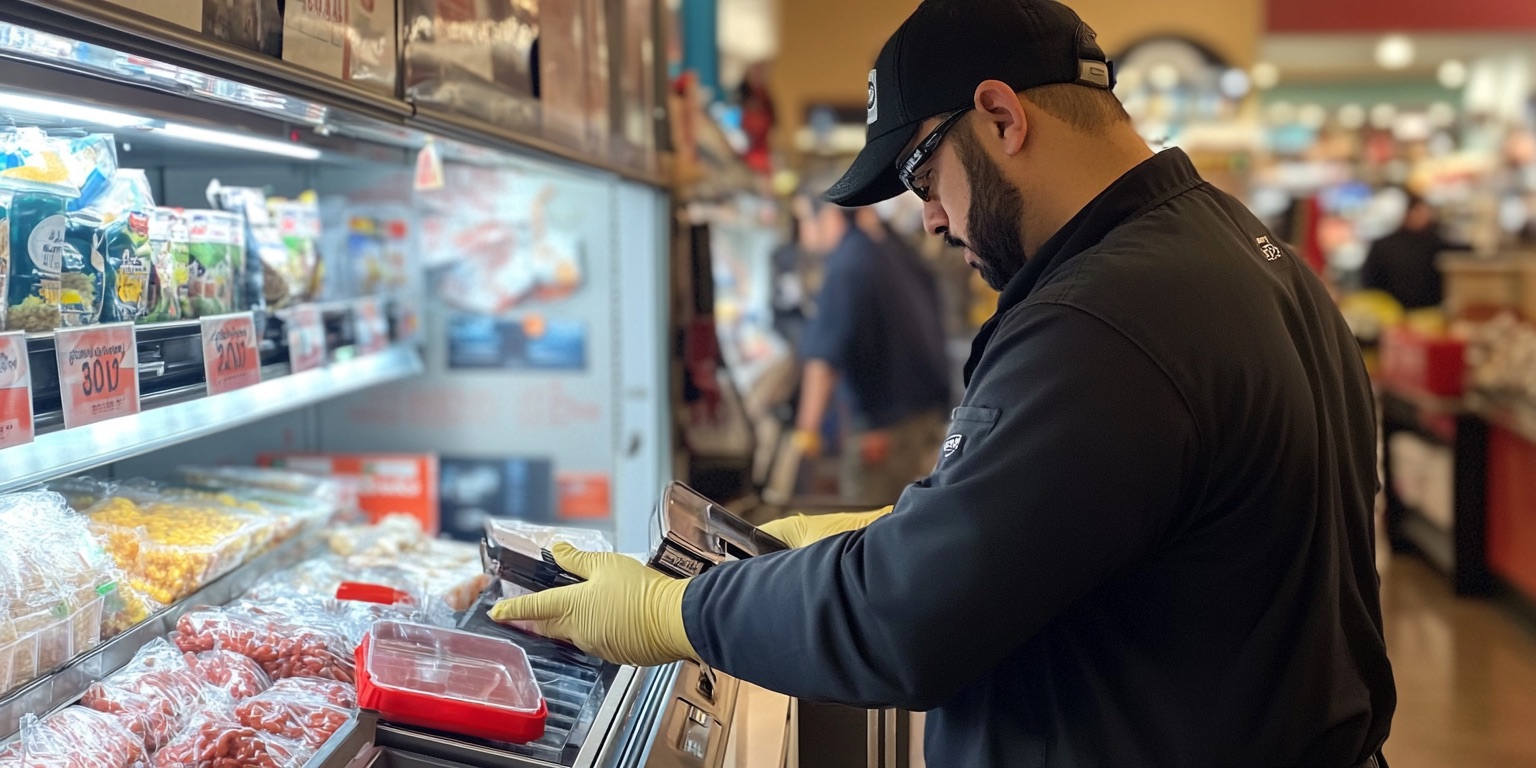
First, we diagnose. I want you to understand this: a quick visual inspection isn’t enough. We have to check refrigerant pressures at the high and low sides, look at the temperature differential across the condenser coils, and test the defrost timer sequence. If the unit is struggling—say, an older True reach-in cooler in downtown New Bedford—we’ll tell you exactly *why* it’s struggling: Is it dirty fins? Is the capillary tube clogged? Or is the compressor just shot?
After that assessment, we give you a straight price for the repair needed. We fix what’s broken and we show you how it works when it runs right again. No surprise invoices at the end of the day. That’s how we do business here.
Keeping It Running: Preventive Maintenance
The best time to deal with a failing evaporator fan motor is before the summer heat hits, not when your inventory starts turning into soup in the walk-in. Preventative maintenance isn’t an expense; it’s insurance against losing thousands on a Saturday night because a belt snapped.
When we do a full check—something smart owners schedule annually—we start with the condenser coils. We blow out the grime, dust, and salt residue that builds up around those fins. If you’re near Dartmouth or working with high-volume seafood prep, salt spray buildup is brutal; it chokes heat transfer fast.
We check every component: we test the door gaskets on your glass-door merchandiser to make sure they seal tight against the building envelope, we cycle the defrost board, and we confirm the refrigerant charge is right. It takes time, but it keeps your whole system running clean for years to come.
What a emergency refrigeration repair new bedford ma service call actually covers
When we arrive on a service call, we work through the system in a fixed order so nothing gets skipped. Refrigerant pressures on both the suction and discharge sides. Amp draw on the compressor at start and during steady-state run. Superheat at the evaporator and sub-cooling at the condenser. Evaporator and condenser coil condition, fan motor amp draw and bearing condition, defrost cycle timing and termination, drain line clearance, door gasket seal and door alignment, controls and contactors. The diagnostic is usually 30 to 60 minutes; the repair time depends on what we find.
For commercial walk-ins above 50 pounds of refrigerant charge in Massachusetts, we also document the visit for the operator’s MassDEP Refrigerant Management Program file. RI commercial food establishments need their temperature logs intact and corrective action documented for RIDOH inspections, and our service tickets fit that record set.
Service area and response times for Southeastern Ma And Ri
Southeastern Ma And Ri is inside our core dispatch zone. From our base we are usually 20 to 45 minutes out depending on time of day and traffic on Route 6, Route 24, I-195, and I-95. New Bedford, Fall River, Dartmouth, Fairhaven, and the South Coast generally get same-day response on weekday calls placed before noon. Up the Cape and out to Provincetown adds an hour or so. Into Rhode Island — Providence, Warwick, Cranston, Pawtucket, Newport — we are commonly there inside two hours.
Overnight and weekend emergencies are triaged by what is losing inventory fastest. If you have a walk-in full of seafood climbing past 45°F at midnight, you move to the front of the queue. We will tell you straight on the phone what realistic arrival looks like before you commit.
Ready to get emergency refrigeration repair in New Bedford, MA?
- Commercial Refrigerator Repair in New Bedford
- Emergency Refrigeration Repair in Fall River, MA
- Emergency Refrigeration Repair (all service areas)
- emergency refrigeration service what to do
- how do ice machines work guide new bedford
- Ice Machine Repair in New Bedford
- Reach-In Cooler Repair in New Bedford
- Restaurant Refrigeration Service in New Bedford
- Dartmouth, MA
- Fall River, MA
- Walk-In Cooler Repair in New Bedford
- Cooler Repair
- Walk-In Freezer Repair in New Bedford