Walk In Freezer Repair Fall River MA: Keeping Your Inventory Cold
Your walk-in freezer stopped cooling at 6 AM and the lunch rush is at 10. Every minute that unit sits above safe temps costs you more than just electricity—it’s your product.
When You Need Emergency Walk In Freezer Repair in Fall River
For more on refrigerant handling regulations, see EPA Section 608 certification.
Look, I’ve been running this operation for over fifteen years now servicing kitchens from Providence all the way down to the South Coast. When a walk-in freezer goes down, it’s not a minor inconvenience; it’s an immediate cash flow problem. We don’t do estimates on arrival; we fix what’s broken.
When your product is spoiling—be it seafood destined for a Plymouth market or specialty goods in a Fall River restaurant—time is literally money you’re losing, hour by hour. That’s why we emphasize our 24/7 emergency response. If the compressor kicks out at 3 AM because of a failed defrost cycle, you need a tech there fast. You don’t want to wait for a standard business day call-out.
We know what it’s like when you’re scrambling. We pull up to places on Route 6, or down near the waterfront, and we get straight into diagnosis. Our crew is licensed, insured, and EPA 608 certified because when dealing with refrigerant—whether it’s R-404A or something newer—you need people who know the regulations and what they’re doing.
Diagnosing the Freezer Problem: It Isn’t Always the Compressor
For more on AIM Act phase-down, see EPA SNAP-listed refrigerants.
Most folks assume that if the freezer isn’t blowing cold air, the compressor is dead. Don’t bet on that. A walk-in freezer—especially a commercial unit from a brand like True or Hoshizaki—is a system with several moving parts. We have to check everything.
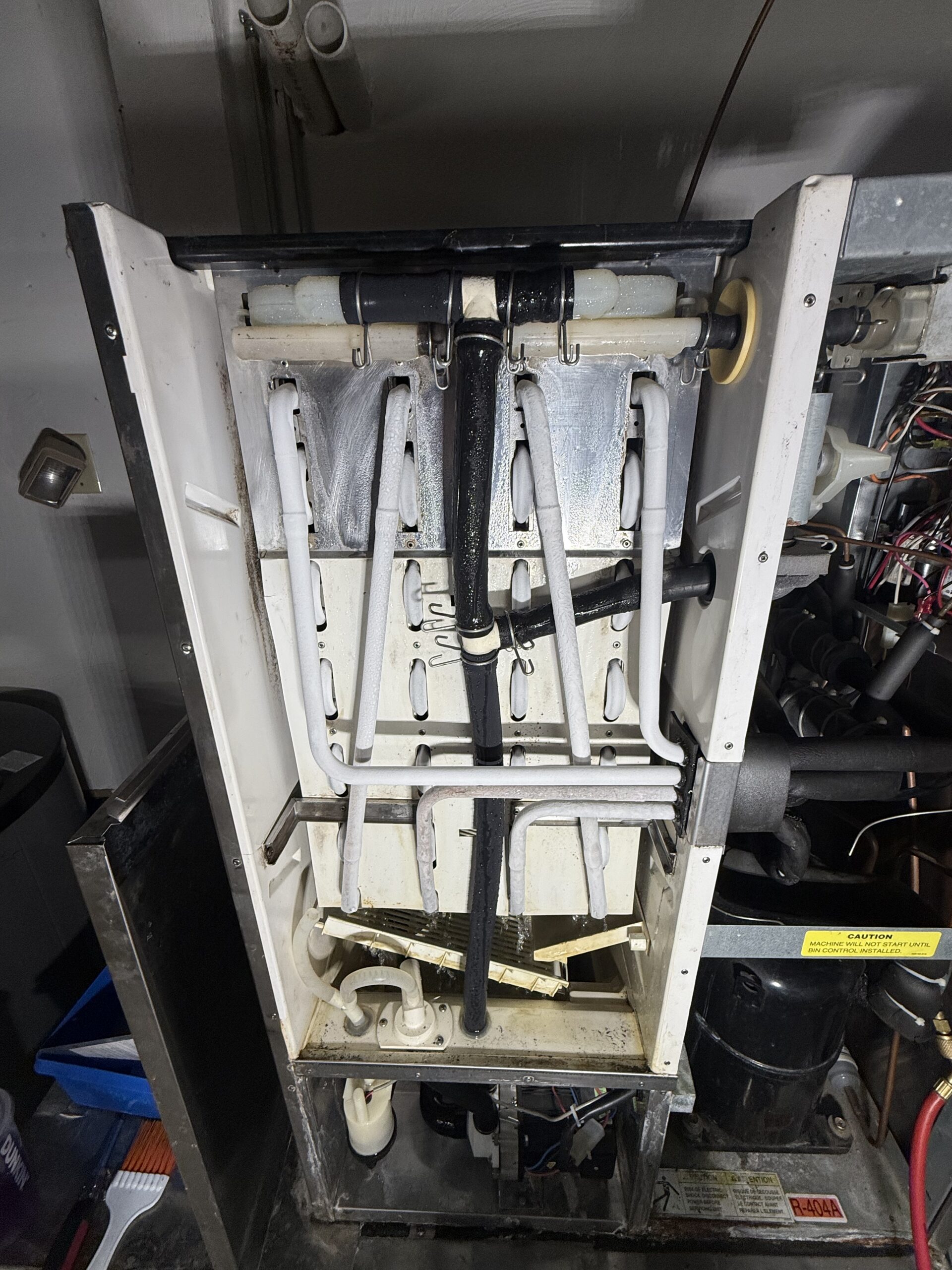
We start by checking basic things: Is the condenser coil coated in enough dirt? Are the evaporator coils iced over because the defrost timer failed? Sometimes it’s just a bad sight glass reading on the refrigerant pressure, telling us something about the expansion valve or capillary tube that needs adjustment. It takes experience to walk through that system and know where the failure point is before we even touch a wrench.
For example, last month at a restaurant in Fall River—a spot near downtown—the unit was cycling on and off every twenty minutes. The owner thought it was the compressor failing under load. We found out the issue was actually blocked condensate drainage leading to an improper temperature differential across the evaporator coil. It was simple plumbing/airflow, but if you’re not paying attention to those smaller details, you spend money replacing parts that weren’t even at fault.
The Walk-In Freezer Repair Process: What to Expect
For more on Massachusetts compliance, see EPA Section 608 refrigerant rules.
When we arrive for a walk-in freezer repair in Fall River, here’s the drill. First, safety check. Second, full operational diagnosis. We use our equipment to test refrigerant pressures—high side and low side readings are key indicators of what’s happening with the whole cycle.
We look at the electrical components too: contactors, overloads, thermostats. Sometimes it’s a simple tripped breaker hidden in the junction box, or maybe the defrost heater element has burned out because it was cycling too often on a unit that’s getting older. We document everything we find so you know exactly what you’re paying for and why.
If the diagnosis points to major component failure—say, the sealed system is compromised past repairable limits, or the main control board has taken a hit from power surges—we won’t just recommend bandaids. We’ll walk you through the options: rebuild vs. replace. If the unit is nearing 15 years old, sometimes swapping out an entire freezer enclosure makes more sense than chasing down intermittent electrical gremlins on aging components.
Knowing Your Equipment: From Prep Tables to Walk-In Units
We don’t just fix freezers. We handle everything that keeps your back-of-house running, from glass-door merchandisers in a local market to walk-in coolers and prep tables. If you’ve got an ice machine acting up—maybe the brine tank isn’t keeping up or it’s throwing error codes on a Manitowoc unit—we handle that too.
The principles are similar, though the parts differ. A reach-in cooler failure often relates to air curtain seal degradation or poor internal airflow management. We know how much your operation relies on consistent cold storage across every piece of equipment you have installed, whether it’s a True prep table or a walk-in freezer.
When we’re working near the docks down in Fall River, we see everything—the heavy-duty coolers needed for fishing operations, and the smaller, high-throughput units used by local restaurants that need reliable cooling through peak season. We’ve seen it all across southeastern MA.
Why Choose Local Techs Over Big Box Contractors
There are big names out there, sure. But when you’re running a business in Rhode Island or down here on the South Coast, you need someone who knows the rhythm of this area. We live and work here. We know the difference between what’s needed for a small diner off Route 1 versus a high-volume operation near the Cape.
When we say “local,” it means we show up, we assess the job based on local commercial realities—like dealing with municipal power fluctuations or navigating tight back alleys. It’s hands-on knowledge that you just can’t download from a manual. We show up ready to work, not ready to pitch a service package.
We are licensed and insured because your business depends on us being legitimate and fully covered when we’re working in your facility. When the power goes out or the unit fails at 1 AM, you need someone who answers, period. That’s how our emergency response works.
What to Do Before We Get There
If you suspect a problem—a strange noise coming from the condenser, or condensation dripping where it shouldn’t—you can do a couple of things just to help us diagnose quicker when we get there. First, check that all access panels are securely closed; sometimes vibrations knock them loose and cause pressure loss. Second, try to note *when* the failure happened relative to other events—was it after an electrical spike? Did you recently change staff or opening hours?
Don’t worry about knowing refrigerant pressures or capillary tube specs beforehand. Just call us at 508-521-9477 right away. Tell us the make, model, and what symptoms you’re seeing—and we’ll take it from there. We handle the technical deep dive so you can focus on serving your customers.
Spotting the Problem Before It Stops You Dead
You don’t need a degree to know when something’s wrong with your walk-in cooler. You just notice it. Maybe you open up early enough for prep work and the air feels… warm. Or maybe the temperature gauge is reading 38°F, but that used to be rock solid at 25°F last year. Those little signs—they’re what we look for first.
We’ve seen it all across the South Coast. It could be anything from a simple door gasket blowing out—letting in humid air from an open loading dock onto Water Street—to something major like failing refrigerant lines or a bad capacitor on the main compressor. Don’t wait for the alarm to scream; pay attention to what your equipment is doing, or not doing.
When you call us out near Fall River, we don’t just guess. We check the pressures—we look at the subcooling and superheat readings on the lines. A quick diagnosis on site tells us if it’s a simple electrical fix that takes an hour, or if we need to pull the system offline for a full recharge and component swap. Knowing what the machine is actually telling us saves you time, and money.
What Happens When You Call Us Out: The Service Call Breakdown
When your walk-in freezer in Fall River goes down—say, at a busy deli near the waterfront—you need action, not an estimate. Here’s what you can expect when one of our techs shows up with the truck. First, we assess the damage and get it running again, or give you a clear path to getting it running. That’s non-negotiable.
Then comes the straight talk. We won’t pad out the report with jargon just to sound fancy. We’ll show you the part that failed—the burnt-out blower motor on your Manitowoc unit, maybe, or the corrosion buildup on an older condenser coil. If we recommend a repair over a full replacement for a True walk-in cooler, we’ll explain *why* based on hours of service and what those components are actually rated for.
We work 24/7 because downtime doesn’t keep your inventory cold until morning. We’re licensed and insured, obviously, but more importantly, we know how to move fast while staying methodical. You get the fix you need, done right, the first time. Simple as that.
Keeping It Running: Preventive Maintenance for Your Equipment
A lot of guys think maintenance means just calling us when it breaks. Nope. The smarter way is preventing the breakdown in the first place. Especially with older equipment—we’ve seen some absolute classics running down near the historic district that deserve TLC.
Our preventive service checklist covers everything from cleaning out the condensate drain pan (sludge buildup up there gums things up fast) to checking the door seals on your reach-in units. We blow dust and debris off the condenser coils—if those get choked with grime, your compressor has to work way too hard, eats itself alive, and costs you a fortune.
If you’re running multiple pieces of gear—a walk-in freezer for storage, plus a couple of glass-door merchandisers out front—we can build a routine around that. A quarterly checkup keeps the whole system humming along without that sudden, panic call in the dead of night. Call us at 508-521-9477 and let’s get you scheduled before something goes south.