Commercial Freezer Repair in New Bedford, MA
Your walk-in freezer stopped cooling at 6 AM and the day’s inventory—frozen seafood, prepared meals—is starting to warm up. When that happens in New Bedford, every minute counts.
Why Commercial Freezers Fail (And What It Means for Your Business)
For more on refrigerant handling regulations, see EPA Section 608 certification.
Look, I’ve seen it all over Southeastern MA. From the bustling spots downtown where people are grabbing breakfast until the late-night diners near Point Concord, keeping things cold is non-negotiable. A freezer failure isn’t just an inconvenience; it’s a direct hit to your bottom line. We’re talking about spoiled product, lost sales, and potential health code issues if the temps climb too high.
When people think “freezer repair,” they usually picture calling someone who will just fix the thermostat. That’s not what we do. We look at the whole system—the compressor cycling, the refrigerant pressure across the capillary tube, how clean the condenser coils are. A freezer that seems fine on paper can have a failing start capacitor or a slow leak in the sealed system that only shows up when it’s under load.
We’ve been doing this hands-on stuff for over 15 years here in the area. I know what sounds like a minor issue but is actually pointing to a deeper problem with the evaporator coil or the defrost cycle timing. Don’t wait until the product starts thawing before you call. If your freezer is acting weird—running constantly, cycling too often, or just reading temps 5 degrees higher than it should—you need a tech out there.
Emergency Response: 24/7 Service When You Need It Most
For more on Massachusetts compliance, see EPA Section 608 refrigerant rules.
If the walk-in cooler down in Fall River goes dark at 10 PM, you don’t want to wait until morning. That’s when we step in. We run a 24/7 emergency response for commercial freezer repair because restaurants and markets—the places that need this equipment most—don’t keep standard business hours.
When I get the call, whether it’s from someone near Dartmouth or over on the South Coast, my first thought is: what can we do *right now* to stabilize the temperature? We dispatch licensed and insured techs who know how to diagnose these systems quickly. Being local isn’t just a nice thing; it means when I say we can be there fast, we mean it. If you’re in New Bedford proper, or anywhere near Route 6, we treat it like it’s our own kitchen.
We carry the parts and know the diagnosis flow for the major brands—True, Manitowoc, Hoshizaki, etc.—so we aren’t wasting time pulling on diagnostic equipment when a simple valve adjustment or a refrigerant recharge is all that’s needed. We get you back to serving customers.
What Kinds of Freezers Do We Handle?
We handle the big stuff, but we know every piece of commercial cooling equipment in a restaurant has a role. Our focus here on freezer repair means we deal with everything from massive walk-in freezers that store deep-frozen goods to smaller, specialized units like glass-door merchandisers or prep table chillers.
If it’s keeping things cold and is used commercially in a restaurant, market, or food service setting around New Bedford, we can look at it. We understand the difference between a basic reach-in cooler setup and a heavy-duty walk-in freezer designed for high turnover. The mechanics are different, the failures are different.
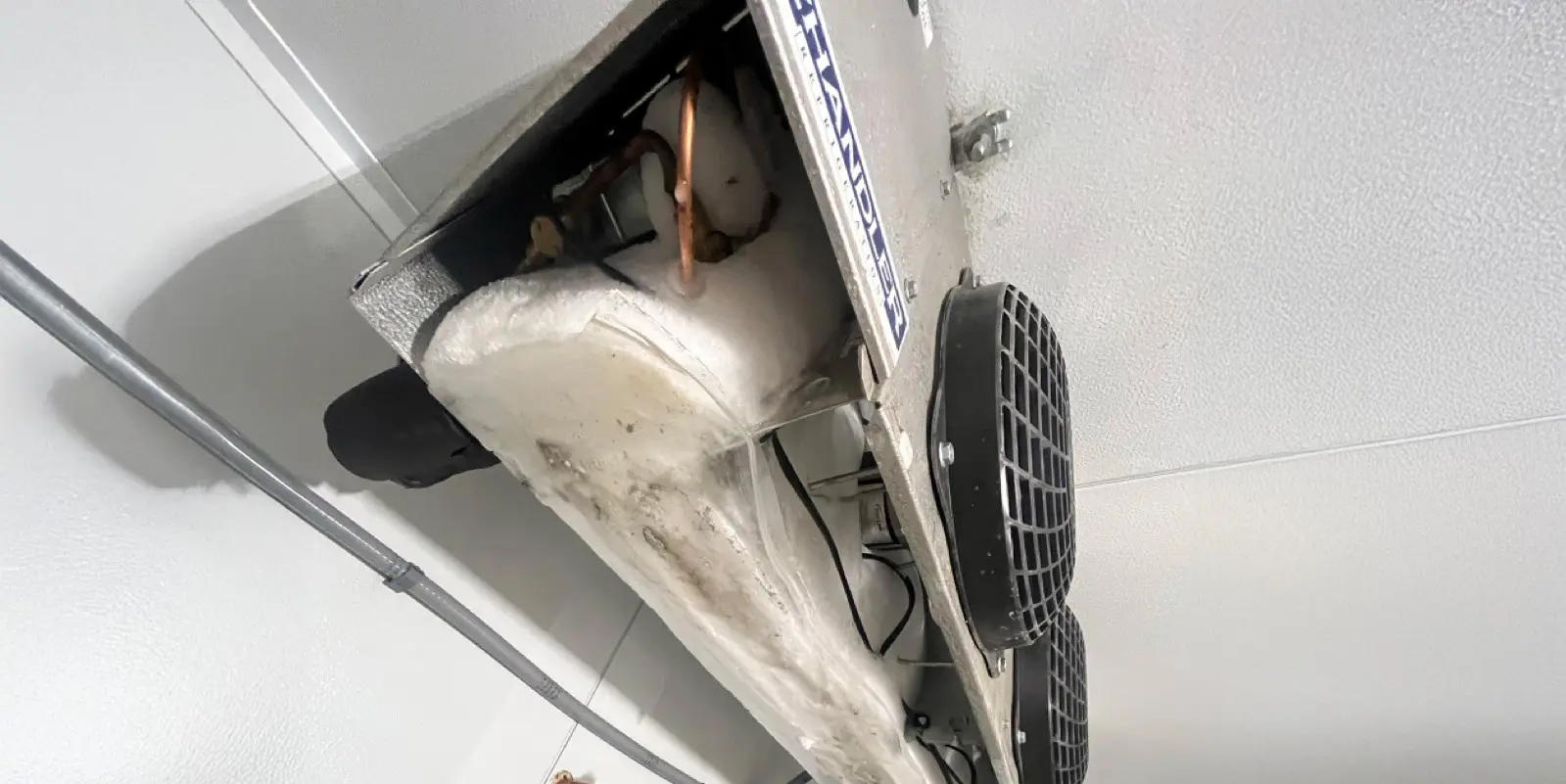
For instance, sometimes the fault isn’t the main compressor itself; it could be an issue with the defrost heater element not firing correctly, leading to ice buildup on the evaporator coil that chokes off airflow. That’s a technical detail you only learn by getting your hands dirty with these units daily.
The Diagnosis: Repair vs. Replacement
This is where we need to be straight with you—no fluff talk. When I walk into a job, I give you an honest assessment based on the unit’s age and the nature of the failure. If you’ve got a freezer that’s pushing 18 or 20 years old, even if we swap out the compressor and replace a few components, sometimes the underlying issue is wear on the electrical controls or the structural seals. At that point, I’ll tell you: “Sir, for the money we’re spending to fix this unit, buying a new model from [Brand X] will last you longer and give you better efficiency.”
We don’t push repairs just because we can. We want your operation running reliably for years. Our goal is keeping your food safe and your kitchen open.
Local Know-How: Serving the South Coast from New Bedford
When people think about refrigeration service, they think of big corporate names, but the reality is it’s always down to knowing the local pulse. I know the difference between the lunch rush at a spot on Main Street versus needing an emergency fix for a market out near Westport. We’re not just “in the area”—we *are* in the area.
Last month, we were called out to a seafood restaurant down toward Fairhaven. It was mid-afternoon, and their primary freezer bank—a couple of large units—was struggling with high ambient temps creeping up because the condenser unit seemed sluggish. We found it wasn’t a refrigerant leak they could see right away; it was mostly sludge buildup in the condenser fins that needed a serious power wash and cleaning cycle to get airflow back where it belongs. These things get overlooked until the system starts straining.
If you’re anywhere from Fall River up through Plymouth, or even heading toward Providence if you’re passing through, we treat those calls like they are right here in New Bedford. Local means rapid deployment and understanding what a commercial operation actually looks like day-to-day.
What to Do When the Freezer Goes Down (A Quick Checklist)
For more on AIM Act phase-down, see EPA SNAP-listed refrigerants.
Before you call us—and I mean *before* you call, because time is money—here are three things you can check just to buy yourself some breathing room. This isn’t a substitute for calling a pro, but it helps us diagnose faster when we get there.
- Check the Power: Is the main breaker tripped? Check that first. Simple, but people skip this step in panic.
- Look at the Coils: Can you see any obvious debris—grease buildup, large amounts of dust, or anything blocking airflow around the condenser unit?
- Check for Obvious Damage: Are there any visible hoses ripped out, or doors that aren’t sealing properly? A door seal failure is one of the most common culprits and easiest to fix.
If those checks look fine, then you call us. Seriously. Don’t waste time trying to force it. Call 508-521-9477. We’ll tell you what we need to know so we can hit the ground running.
Spotting Trouble Before It Stops You Cold
Look, we’ve been pulling up to kitchens in New Bedford since before some of these new high-end places opened up on the South Coast. We know what failure sounds like. It ain’t always a loud bang; sometimes it’s worse—it’s silence, or just a slow climb into trouble.
If your freezer is running, but the temperature gauge keeps nudging up by two degrees over a few hours? That’s your first warning sign. Or maybe you notice the condensation pipe on the evaporator coil looks crusty and dirty—that means airflow is getting restricted, and that throws off everything downstream, like the compressor’s job.
When we get out there doing a service call in New Bedford—whether it’s a small market on Main Street or a backroom unit near Dartmouth—we aren’t just looking at the thermostat. We check refrigerant pressure at the liquid line connection and listen to the condenser fan motor bearings. That tells us if the issue is simple maintenance, or if we’re staring down a bad compressor that needs replacing.
Keeping Your Walk-In Freezer Running Year-Round
Prevention isn’t marketing jargon; it keeps your inventory safe. The difference between an emergency call at 3 AM and a quick service visit is huge—and costs you money, every minute. For any commercial freezer in the New Bedford area, sticking to a solid maintenance schedule is non-negotiable.
What we check during a preventative service? First, the door seals. If those rubber gaskets are cracked or warped from years of use near the salt air—I’ve seen them on units down by the waterfront that look like they survived a wreck—they let in warm drafts faster than you can say “Miami.” We test those seals for tight closure.
Second, we clean out the condenser coils. Over time, dust, grease, and debris build up around the fins, especially if the unit is close to a prep table or greasy exhaust vent. If that coil gets choked off, the whole system overheats because the heat can’t get out. A good cleaning keeps your compressor running efficient and happy for another few years.
The Brands We Work On Daily
I’ve seen everything in this business—from brand-new setups to units that predate me. When you call us for commercial freezer repair in New Bedford, we are familiar with the big players out there. You might be running a True unit, or maybe it’s a Manitowoc setup.
We handle everything from beverage coolers—like those glass-door merchandisers stocked at local corner stores—to massive walk-in freezers used by restaurants near downtown. If it uses standard refrigeration components—a compressor, an evaporator, some kind of refrigerant cycle—we know how to diagnose it. We don’t care what the sticker says; we care if the R-404A or whatever gas is in there needs attention.
If your equipment was made by Beverage-Air or Hoshizaki, and something goes sideways, you call us. We know their common failure points inside and out because we’ve been elbow-deep in these units across Fall River and New Bedford for fifteen years. Don’t waste the day calling around; call the guys who already know your gear.
Ready to get commercial freezer repair in New Bedford, MA?
Call 508-521-9477 Schedule NowFrequently Asked Questions
Our cold storage runs hard year-round. Does that change the maintenance schedule?
Substantially. Fishing-industry refrigeration in New Bedford runs at high duty cycle every month of the year, unlike a restaurant freezer that gets seasonal relief. Components wear on run hours, not calendar months, so condenser cleaning, oil and refrigerant checks, defrost verification, and door seal inspection all come due sooner. Setting the interval from actual run time is the single most useful change most cold-storage operators here can make.
The box is set to -10°F but is sitting at +5°F. How serious is that?
Serious, and worth a call now rather than tomorrow. A freezer holding fifteen degrees above setpoint has lost a meaningful share of its capacity, and frozen product held at +5°F is degrading in quality even where it remains safe. Practically, it means the system is running flat out and has nothing left for a delivery door-open or a warm afternoon. The causes range from a fouled condenser to a refrigerant leak to failed defrost, and they are separated by measurement, not guesswork.
What is hot gas defrost and why does it matter for a fish house freezer?
It is a defrost method that routes hot refrigerant gas through the evaporator to melt accumulated ice, and it matters because high-humidity, high-throughput freezers ice up faster than anything else we service. When hot gas defrost fails, ice builds on the coil, airflow collapses, and the box warms while the system runs continuously — which reads as a cooling failure but is really a defrost failure. Diagnosing which one you have prevents replacing a compressor that was never the problem.
Salt air on an exposed harbor site is brutal on our condensing units. What is realistic?
Realistic is managing it, not eliminating it. An exposed New Bedford waterfront location is one of the most corrosive environments refrigeration equipment operates in, and outdoor condensing units there will not match inland service life. What extends them meaningfully is frequent condenser cleaning to remove salt deposits, coated coils specified at replacement, and catching corrosion-driven capacity loss early — before the compressor spends a season working against a condenser that can no longer reject heat.
Can you document a failure for an insurance or product-loss claim?
We can document what we found and what we did — the temperature the box was at on arrival, the failure we diagnosed, the repair performed, and the timeline. That service record is usually what a claim actually needs from the refrigeration side. What we cannot do is assess your inventory or make the disposition call on product; that belongs to you, your food safety plan, and the New Bedford Health Department. Getting our part documented on site is far easier than reconstructing it weeks later.