When an industrial refrigeration system goes down, the loss is not a shelf of product — it is a production line, a distribution schedule, or a cold storage room full of inventory that other businesses are waiting on. Armus Refrigeration handles industrial refrigeration repair across Southeastern Massachusetts and Rhode Island from our shop at 88 Mill St in New Bedford, with EPA-certified technicians and 24/7 emergency dispatch. Call 508-521-9477.
Industrial Refrigeration Is Not Just Bigger Commercial Refrigeration
What separates industrial refrigeration repair from commercial work is not tonnage, it is consequence and topology. A restaurant walk-in is one box on one condensing unit, and if it fails, one kitchen has a bad night. An industrial system is usually several loads on shared refrigeration, feeding rooms and processes that depend on each other, and a fault in one place surfaces as a symptom somewhere else entirely. Diagnosing it by chasing the complaint is how people end up replacing working parts.
The second difference is that industrial equipment almost never fails without warning. It degrades. Suction pressure drifts, a compressor starts running unloaded more of the day, head pressure creeps up through a fouling condenser, oil return gets marginal. Every one of those is visible months before the shutdown, which is why the industrial accounts that stay running are the ones on a real maintenance interval rather than an emergency number.
The Systems We Work On — And the Ones We Do Not
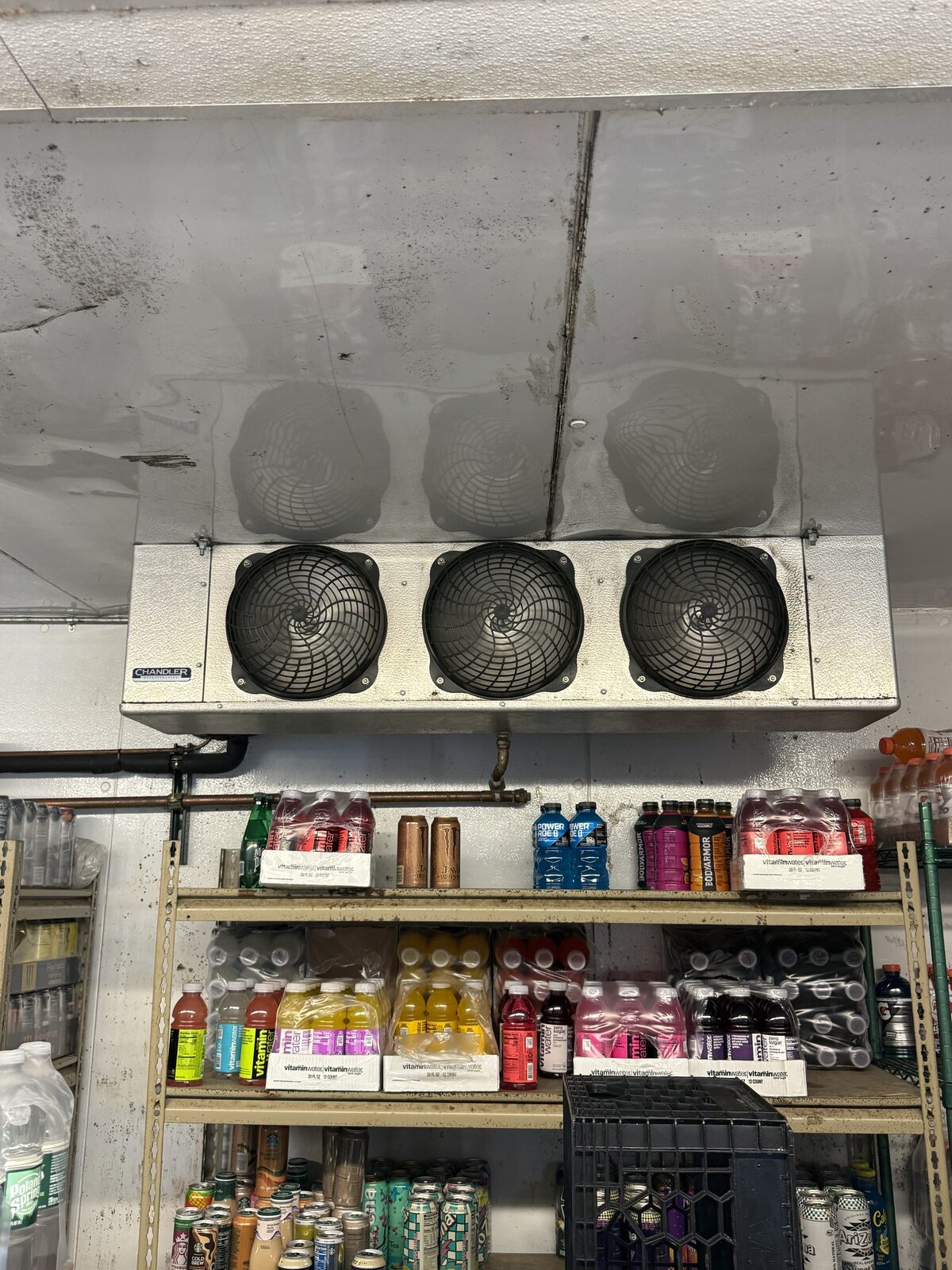
We service HFC and HFO industrial systems: parallel and multi-compressor racks, remote condensing units, glycol and secondary-loop systems, blast freezers and blast chillers, cold storage rooms, and the process cooling behind food production. That covers the large majority of industrial refrigeration in this region, because most South Coast and Rhode Island food operations are on packaged or rack systems rather than large-scale ammonia plants.
What we do not do is anhydrous ammonia refrigeration. Large NH3 plants are a distinct discipline with their own certification, process safety management requirements, and emergency response obligations, and a contractor who tells you otherwise is a contractor to be careful with. If your plant runs on ammonia we will say so on the first call rather than after a truck is on site. Being straight about scope is cheaper for both of us.
Multi-Compressor Racks and Parallel Systems
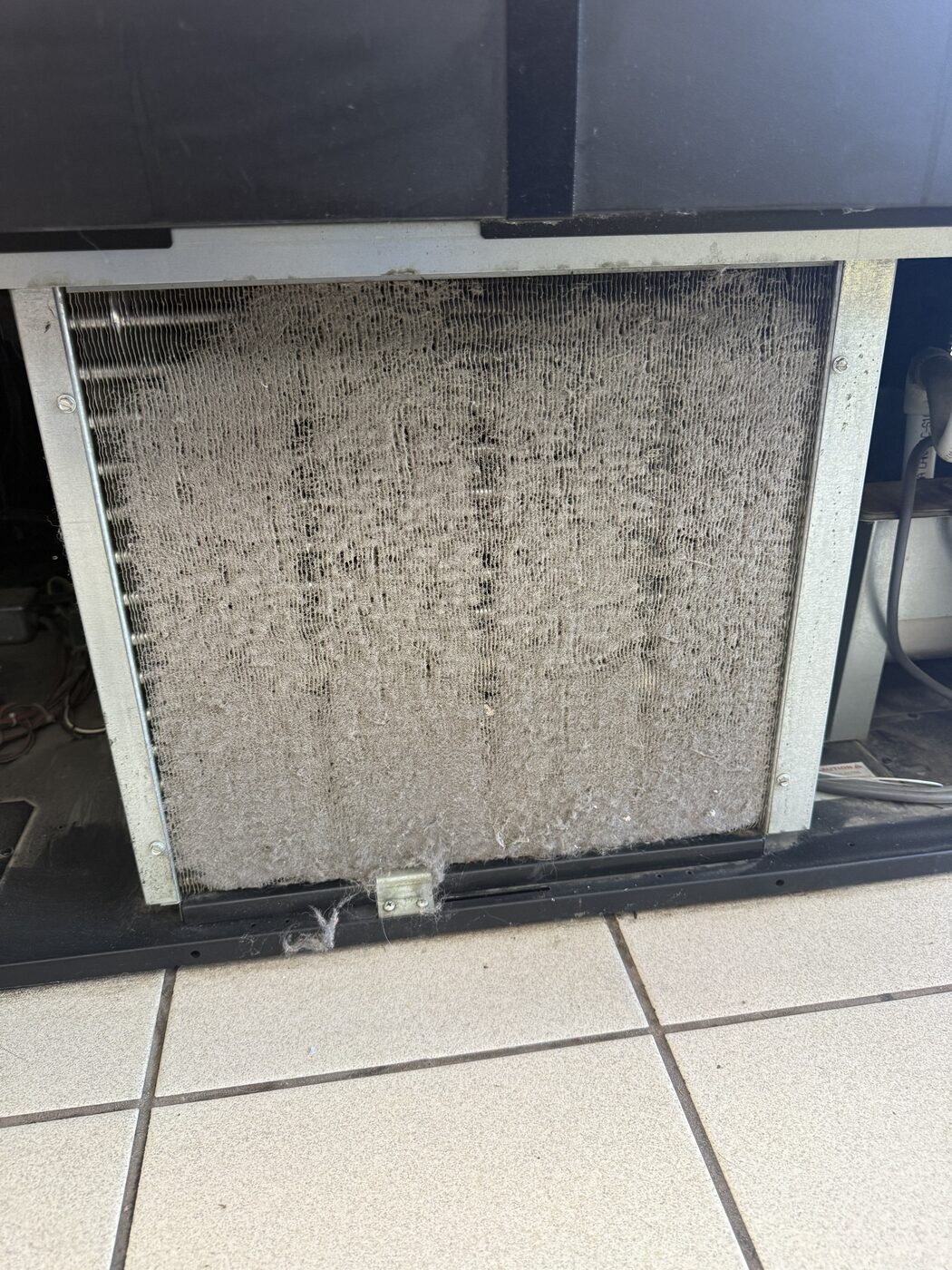
Rack systems are where most of our industrial work lives. Several compressors share a suction manifold and a common condenser, staging up and down to match load, which is efficient when it is healthy and confusing when it is not. The failures we see most are a single compressor down while the rack covers for it — so nobody notices until a warm day exposes the missing capacity — along with oil management problems, failed unloaders, stuck electronic expansion valves on individual circuits, and controllers whose setpoints have drifted through years of well-meant adjustment.
The right diagnostic order on a rack is to read the system before touching it: what each compressor is actually doing, what the controller thinks is happening, and whether those two stories agree. They frequently do not, and the gap between them is usually the fault.
Blast Freezers and Process Cooling
Blast equipment lives a harder life than anything else in the building. It is asked to pull large thermal loads down fast, on a duty cycle that never lets the system settle, in an environment that is usually wet and often being washed down. That shows up as premature evaporator fan failure, corroded pans and drain lines, defrost that cannot keep ahead of the moisture load, and compressors that have simply done more work in five years than a walk-in compressor does in fifteen.
If a blast cell is missing its pull-down time, the useful question is not “what broke” but “when did it start taking longer.” Operators who log cycle times catch this while it is still a coil cleaning and a defrost adjustment. Operators who do not, find out when a batch fails to hit temperature on a production deadline.
Cold Storage and Distribution Facilities
Cold storage failures are slow-motion until they are not, because the thermal mass of a full room hides a capacity problem for a long time. A room that used to recover from a dock door cycle in an hour and now takes four is already running on borrowed margin, and the first genuinely hot week will find the limit. We measure recovery under load rather than reading a wall thermometer on a quiet morning, which is the only way to know what the room can actually do.
Door infiltration matters more here than anywhere else in refrigeration. High-traffic dock doors, failed air curtains, and strip curtains nobody has replaced in a decade put a continuous latent load on the system that no amount of compressor capacity fixes economically. Some of the best returns we deliver on cold storage are not refrigeration repairs at all.
Refrigerant Transition on Older Industrial Systems
A large amount of installed industrial equipment in this region is still on R-404A, which is being phased down under the AIM Act — the EPA publishes the HFC production and consumption phasedown schedule if you want the underlying timeline. The practical effect is not that your system becomes illegal overnight — it is that the refrigerant gets progressively more expensive and harder to source, so every leak costs more than the last one. R-22 systems are further along the same road, running on reclaimed supply since production ended in 2020.
We will tell you plainly where your system sits and what the options are: repair and continue, retrofit to R-448A or R-449A, or plan a replacement on your schedule instead of on the day it fails. All refrigerant handling is done by EPA Section 608 certified technicians, with what went in and what came out documented on your paperwork.
Emergency Industrial Refrigeration Repair When Production Stops
Industrial emergencies are triaged ahead of routine work because the cost curve is steeper. When you call 508-521-9477, tell us what the system is, what it is reading against what it should be, and whether anything changed recently — a power event, a new load, a control adjustment, a wash-down. Those answers frequently determine which parts leave New Bedford on the truck, which is the difference between a same-visit repair and a return trip.
We also work with facilities on planned maintenance intervals sized to the equipment rather than the calendar. For most industrial accounts that is the single change that moves them from three emergencies a year to none.
Frequently Asked Questions
What counts as industrial refrigeration rather than commercial?
The practical line is whether the refrigeration serves a process or a facility rather than a single point of sale. Rack systems feeding multiple rooms, blast freezing on a production schedule, cold storage warehousing, and glycol loops behind manufacturing are all industrial in the way that matters: shared topology, higher consequence, and diagnosis that has to account for the whole system rather than one box.
Do you work on ammonia systems?
No. Anhydrous ammonia refrigeration requires certification and process safety management practices specific to that discipline, and we will not take work we are not the right contractor for. We service HFC and HFO systems — racks, remote condensing units, glycol loops, blast equipment and cold storage — which covers most industrial refrigeration in Southeastern Massachusetts and Rhode Island.
Our rack is short on capacity but nothing is alarming. Is that worth a call?
Yes, and it is the best call you can make. A rack that covers for a failed compressor is doing exactly what it was designed to do, which is why the alarm never sounds. You find out on the first hot week, at the worst possible moment, with less capacity than you thought you had. Diagnosing it in October is a service visit. Diagnosing it in July is an emergency plus lost product.
How fast can you get to an industrial site in Rhode Island or on the South Coast?
The South Coast is minutes from our New Bedford shop, and Providence is roughly 35 minutes on I-195. Industrial and production-critical calls are triaged ahead of routine work. When you call we will give you a real arrival window for your specific address rather than a four-hour block.
Do you provide documentation for audits and inspections?
Yes. Every visit produces a written record of findings, corrective work, refrigerant added or recovered, and verified temperatures before we leave. Facilities carrying third-party audit requirements generally need that history more than they need any single repair, so we keep it in a form you can hand to an auditor without editing it first.
Where We Cover Industrial Accounts
Our industrial work is concentrated where the food economy of this region actually sits. The South Coast — New Bedford, Fall River, Dartmouth, Fairhaven and the surrounding towns — is our home territory and gets the tightest response, including the seafood processing and cold storage operations along the working waterfront. Rhode Island is roughly 35 minutes out on I-195, covering Providence, Warwick and the industrial corridor around them.
We also carry industrial accounts on the South Shore along the Route 3 and I-495 corridors, in Greater Boston, out through Central and Western Massachusetts, and on Cape Cod. Distance changes how we schedule planned work, not whether we take the account — larger sites further out are generally best served by a maintenance interval that batches the work rather than by emergency response alone.
Related Refrigeration Services
Smaller systems are covered on our main commercial refrigeration page. For specific equipment, see what we do on walk-in freezers, cooler boxes and their doors, and commercial ice machines. If the failure is happening right now, our 24/7 emergency page explains how dispatch works. Ongoing coverage is set up through our scheduled maintenance program.
Get an Industrial Technician on the Phone
Armus Refrigeration, 88 Mill St, New Bedford, MA. Industrial refrigeration repair, retrofit and maintenance across Southeastern Massachusetts and Rhode Island, 24 hours a day. Call 508-521-9477.