Ice Machine Repair in Boston, MA: Get Your Cool Running Again
The restaurant is busy. The lunch rush hits hard. When your ice machine goes down during the peak hours in Boston, you’re not just losing a few bags of ice; you’re slowing down operations and costing money every minute it sits silent.
Why Ice Machines Break Down (It Ain’t Always Obvious)
For more on refrigerant handling regulations, see EPA Section 608 certification.
When someone calls us because their ice machine stopped spitting cubes, I don’t immediately assume the worst. But after 15 years doing this in Southeastern Massachusetts—from South Boston all the way down near Plymouth—I know these things fail for reasons you might not guess. It could be simple scaling on the heat exchanger, maybe a bad solenoid valve sending dirty refrigerant pressure to the evaporator coil, or it could be something deeper with the compressor cycling off prematurely.
People often think it’s just plugged in wrong. Nope. These units—whether they’re for a busy diner on Boylston Street or a smaller market in Dorchester—are complex pieces of equipment. They run constantly, dealing with fluctuating ambient temperatures and constant use. We look at the electrical draw first, checking the voltage stability before we even touch the plumbing.
We’ve seen it all: mineral deposits clogging up lines because someone switched out the wrong type of water filter setup, or a simple blockage in the capillary tube due to years of scale buildup. Knowing these common failure points is what lets us get you back online fast without guessing games.
Our Emergency Response for Boston Commercial Kitchens
For more on AIM Act phase-down, see EPA SNAP-listed refrigerants.
When your refrigeration goes down, it’s an emergency, plain and simple. We don’t treat it like a suggestion to call in the morning. If you’re running a place that needs reliable ice—for drinks, for chilling seafood displays in a glass-door merchandiser, or just keeping the walk-in cooler fully stocked—you need us now.
We are local. I know this area. When I hear “Boston,” I know exactly which neighborhoods we might be pulling up to—whether it’s a packed spot near Faneuil Hall or a more industrial setup in parts of the South End. We keep our techs ready for 24/7 calls because that’s when the losses happen.
When you call us, you talk to someone who knows what it means when inventory starts warming up on the shelf. That’s why we make sure we are licensed, insured, and always have EPA 608 certified tech ready to go. We get out there fast because your bottom line depends on that ice.
Beyond Just Ice: Troubleshooting Your Whole System
For more on Massachusetts compliance, see MassDEP refrigerant management.
Honestly, even if you only called about the ice machine, I’m going to check everything connected to it. Why? Because these systems—the ice maker, the cooler unit, maybe a beverage cooler running off the same electrical panel—they are all talking to each other. If one component is struggling with refrigerant pressure or drawing too much amperage, it puts stress on the compressor in another piece of gear.
For example, we were out last month at a seafood market down near the waterfront in Boston proper. Their ice machine was acting up, spitting slow and inconsistent cubes. When I pulled the unit apart to check the water line, I noticed the condenser coil on an adjacent True cooler looked dusty—real bad. It wasn’t directly related to the ice maker’s cycle, but poor airflow across that condenser was making the entire system work harder than it should be. We cleaned both units out while we were there. That’s how we prevent the next breakdown.
We aren’t just a band-aid crew; we troubleshoot the whole setup. We look at the cycle, the electrical components, the proper refrigerant charge across all parts. It saves you headaches—and money—down the road.
The Difference Between Repairing and Replacing
This is where I get straight with you because I don’t want to waste your time or your cash. When we pull up to a unit, especially if it’s been seeing service for 12 or 13 years, the first thing we assess isn’t just the symptom; it’s the lifecycle of the core components.
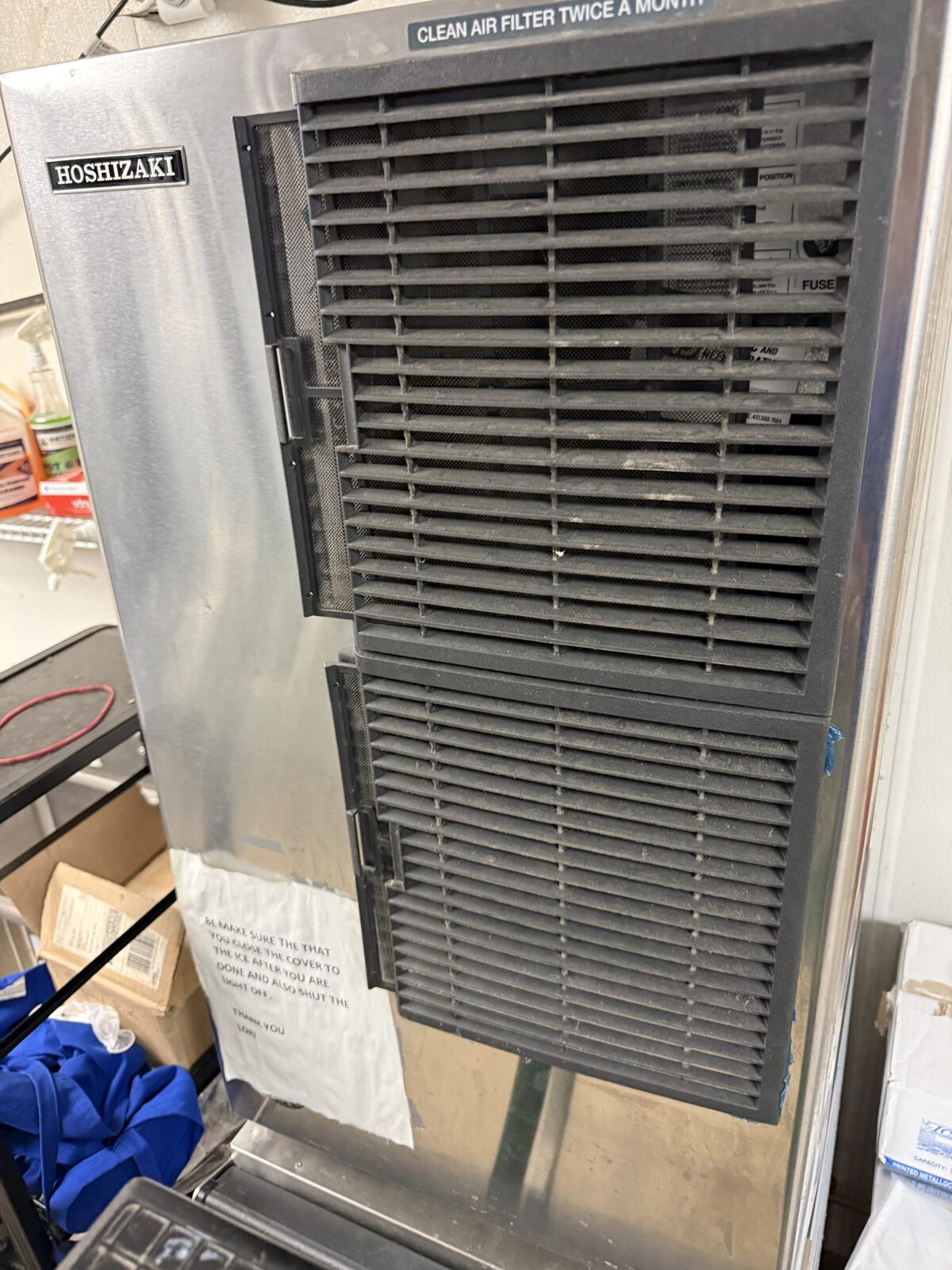
If we find a simple issue—say, a clogged filter screen on an Manitowoc unit—we clean it and charge the correct refrigerant, and you’re good. That’s repair. But if the compressor is showing excessive vibration, or if the primary control board has cycled through too many faults over time… well, sometimes the cost to replace the main components of a very old machine approaches the price of a brand-new unit from Hoshizaki or Beverage-Air. If that’s the case, I’ll sit down with you and walk you through the numbers. We decide together what makes the most sense for keeping your operation running reliably for the next decade.
We won’t try to squeeze another year out of something that’s already shot at the joints just because we *can* fix it. You need reliability, not a temporary patch job.
What to Expect When We Get There (The No-Fluff Approach)
You don’t want some tech who shows up looking confused. You call us needing fast, knowledgeable help right here in the Boston area. What you get is a technician who knows this job backwards and forwards. I’ll be there—or one of my crew guys—and we’ll assess it quickly.
First, safety check: Are the power sources safe? Second, diagnosis: We test the pressure—the liquid line pressure, the suction side vacuum—to pinpoint exactly where the system is struggling. Third, fix: We get to work on the component that’s failing. It could be replacing a faulty defrost timer, clearing debris from the condenser fins, or swapping out an expansion valve if the superheat readings are all wrong.
We treat your kitchen like it’s ours. No corners cut. We document what we found and what we fixed so you know exactly why that call cost what it did. That transparency is key when you’re running a tight operation in Boston.
Why Call the Local Guys?
Look, I could get calls from people who live three hours away who *think* they know refrigeration because they watched YouTube videos. But knowing how to handle the specific demands of a high-volume restaurant setup—the way humidity plays against freezer coils, or dealing with backflow prevention on lines near the Charles River—that takes years of being hands-on here in Massachusetts.
We’re local owners who live and work in this region. We know the rhythm of Boston’s food service calendar. We answer phones 24/7 during peak season because if your walk-in freezer stops cooling at 3 AM, you can’t wait for morning. You need someone who knows the urgency.
Diagnosing What’s Wrong When It Stops Working
It ain’t always the compressor that quits. Sometimes it’s a simple blockage in the capillary tube, or maybe the defrost cycle timed out incorrectly and now the evaporator coil is choked with ice. If you call us out because the freezer isn’t dropping below 25 degrees, don’t just tell me “it’s warm.” We need to know what you *hear*.
Are you hearing a loud, rhythmic thumping coming from the condenser unit? That usually points back to a bad motor or maybe something starving it of refrigerant flow. If all you hear is silence—and your merchandiser lights are still blinking—we start checking the electrical side first. Sometimes it’s just a tripped breaker or a faulty contactor, and that’s an easy fix we can handle in minutes.
We’ve pulled up to a diner near Boylston Street last month; their beverage cooler was making this weird high-pitched whine. It wasn’t the motor itself; it was just debris rattling inside the fan assembly, something that got caught over years of use. Knowing these subtle differences—is it electrical? Is it airflow? Is it refrigerant pressure?—saves you time and money. That’s how we keep things running for places in Boston.
Keeping Things Running: Preventive Service Checks
Look, I’m not trying to sell you a contract you don’t need. But if you treat your equipment like it can run forever on fumes, you’re betting against yourself. A good preventive service is just checking the high-wear items before they fail at 2 AM during the lunch rush.
When we do an annual check—especially for restaurants in Cambridge or downtown Boston where foot traffic means constant heavy use—we’re looking hard at condenser coils and drain lines. Those coils get coated in grease, dust, and food particles fast. If you don’t clean them out regularly, the unit has to work way harder, which eats up your compressor motor faster than anything else.
We also check refrigerant levels and look at the expansion valve settings. These things drift over time, especially with the fluctuations in humidity we see moving from the waterfront down toward South Boston. A quick tune-up now means when you’re slammed serving Italian food on Hanover Street, your ice machine won’t be the first thing to go.
The Brands We See Every Day Around Boston
You might have a True cooler, or maybe some older Beverage-Air units. It doesn’t matter what brand it is; if it’s commercial refrigeration and it needs fixing in Boston, we can work on it. But knowing the common players helps us get our tech prepped.
We see Manitowoc chillers everywhere—from small cafes near Beacon Hill to big markets out by the waterfront. The Traulsen prep tables are reliable, but every brand has its weak points. We know the electrical schematics for Hoshizaki display cases, and we’ve worked on everything from small glass-door merchandisers in Back Bay storefronts to full walk-in coolers powering a big operation near the Common.
The main thing is experience across brands. A tech who only knows one line of equipment is useless when your gear mix changes—and it always changes in a busy city like Boston. We’ve seen enough different setups here over fifteen years to know what sounds right and what’s about to blow.