Walk-in cooler floor repair is the call nobody makes until a cart wheel drops through the plate. By then the diamond plate has been buckling for a year, the foam under it has been soaking up mop water through an open seam, and the box has been losing cold through the one surface that gets the hardest use. Armus Refrigeration repairs walk-in cooler and freezer floors from our shop at 88 Mill St in New Bedford: overlays on worn plate, replacement of crushed or rotted floor panels, re-sealed seams and cove base, heaved freezer floors, and thresholds and ramps that no longer meet the door. Our technicians are licensed, insured and EPA-certified, and the line is answered 24/7. Call 508-521-9477.
Why a Walk-In Floor Fails Before the Walls Do
Walk-in panels are foam cores skinned in metal, and the floor panel is built the same way as the wall panel next to it. The difference is what happens to it. Walls carry shelving and the occasional cart bump; the floor carries every case of product, every loaded cart, and on bigger boxes a pallet jack, with the load concentrated on wheels the size of a coffee cup. Point loads crush the foam a little at a time until the metal skin loses its support and starts to dish, ripple, or crack at the seams.
Water finishes the job. A walk-in floor gets mopped, hosed on fish-house and produce floors, and dripped on by the evaporator drain and by product. Once a seam opens, that water goes under the skin and into the foam, and wet foam does not insulate. On older boxes with wood-framed floor panels, it rots the frame as well, and a soft spot near the door is usually a rotted frame member, not just crushed foam. Everything we see on a floor call traces back to one of those two causes, load or water, and the repair starts with figuring out which one you have.
Walk-In Cooler Floor Repair: What We Find, Box by Box
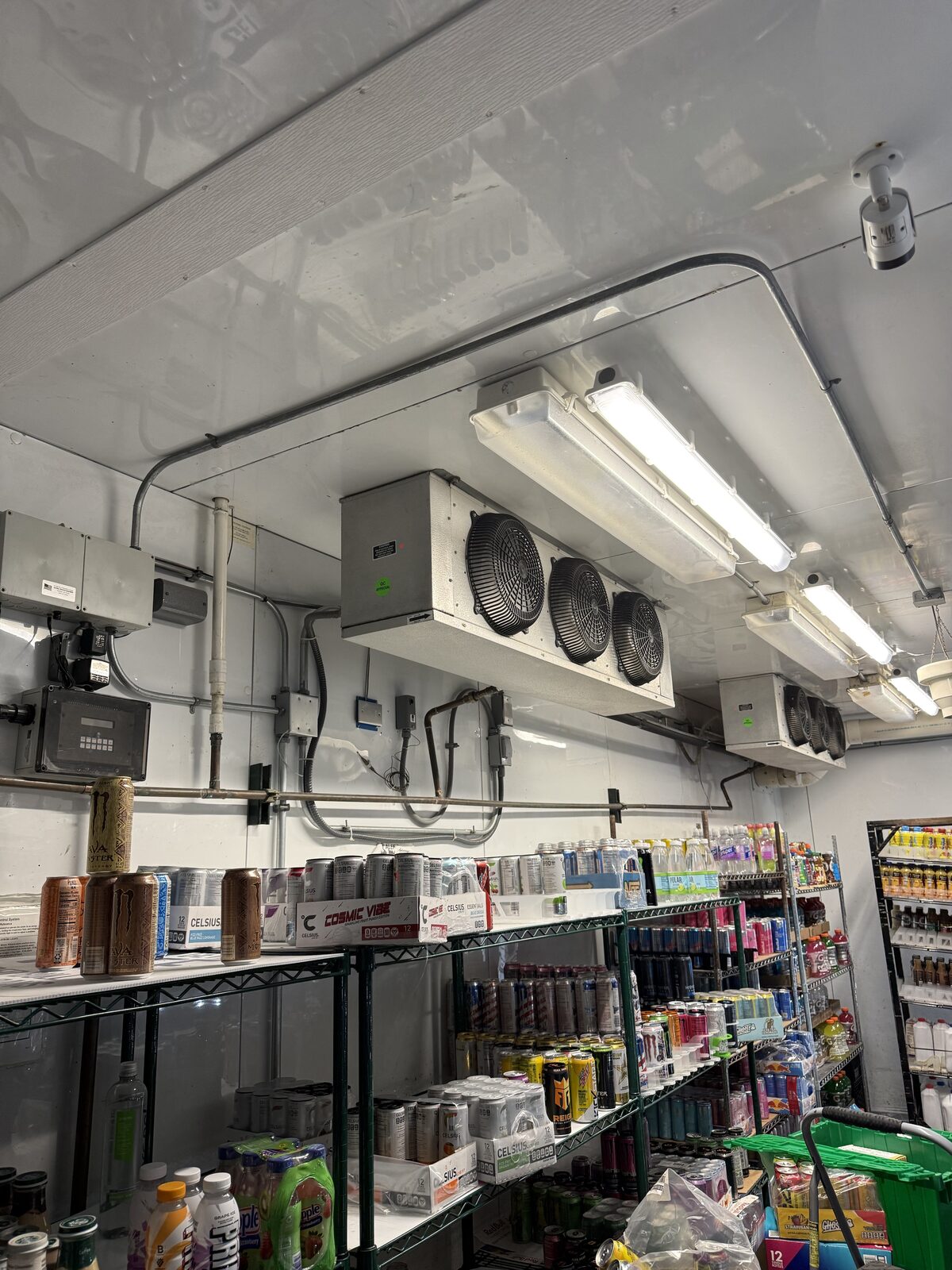
Buckled or delaminated diamond plate. The aluminum tread plate has separated from the foam beneath it and ripples underfoot, usually along the cart path from the door to the back wall. If the foam under it is still dry and firm, this is an overlay job. If it is not, it is a panel.
Soft spots and sagging panels. A floor that gives when you step on it has lost its core, either crushed by load or saturated by water. We probe the panel to map how far the damage runs; a soft spot the size of a dinner plate is often the surface of a wet area the size of the whole panel.
Open seams and failed cove base. The joint between floor and wall and the seams between floor panels are sealed with a flexible food-safe sealant, and that sealant cracks with age and cleaning chemicals. An open seam is both the entry point for water and a health-code finding, because the floor-wall junction has to be sealed and coved so it can be cleaned. Re-sealing and re-coving is the most common floor repair we do, and the cheapest to do early.
Heaved freezer floors. A walk-in freezer sitting on a slab without working underfloor heat or ventilation freezes the ground beneath it over time, and frozen ground expands. The slab heaves, the floor panels lift at the center, the door stops closing square and the box starts losing temperature at the threshold. This one is a refrigeration and a construction problem together, and it is covered on the freezer side of our walk-in work as well as here.
Thresholds, ramps and the door sill. The sill under the door takes more wheel traffic than any other square foot of the box, and a worn threshold lets air under the door sweep and lets water in at the corner where the gasket ends. We rebuild sills and ramps when we do walk-in door repair, because a new sweep on a worn sill seals nothing.
Overlay, Panel Replacement, or a New Floor: How We Decide
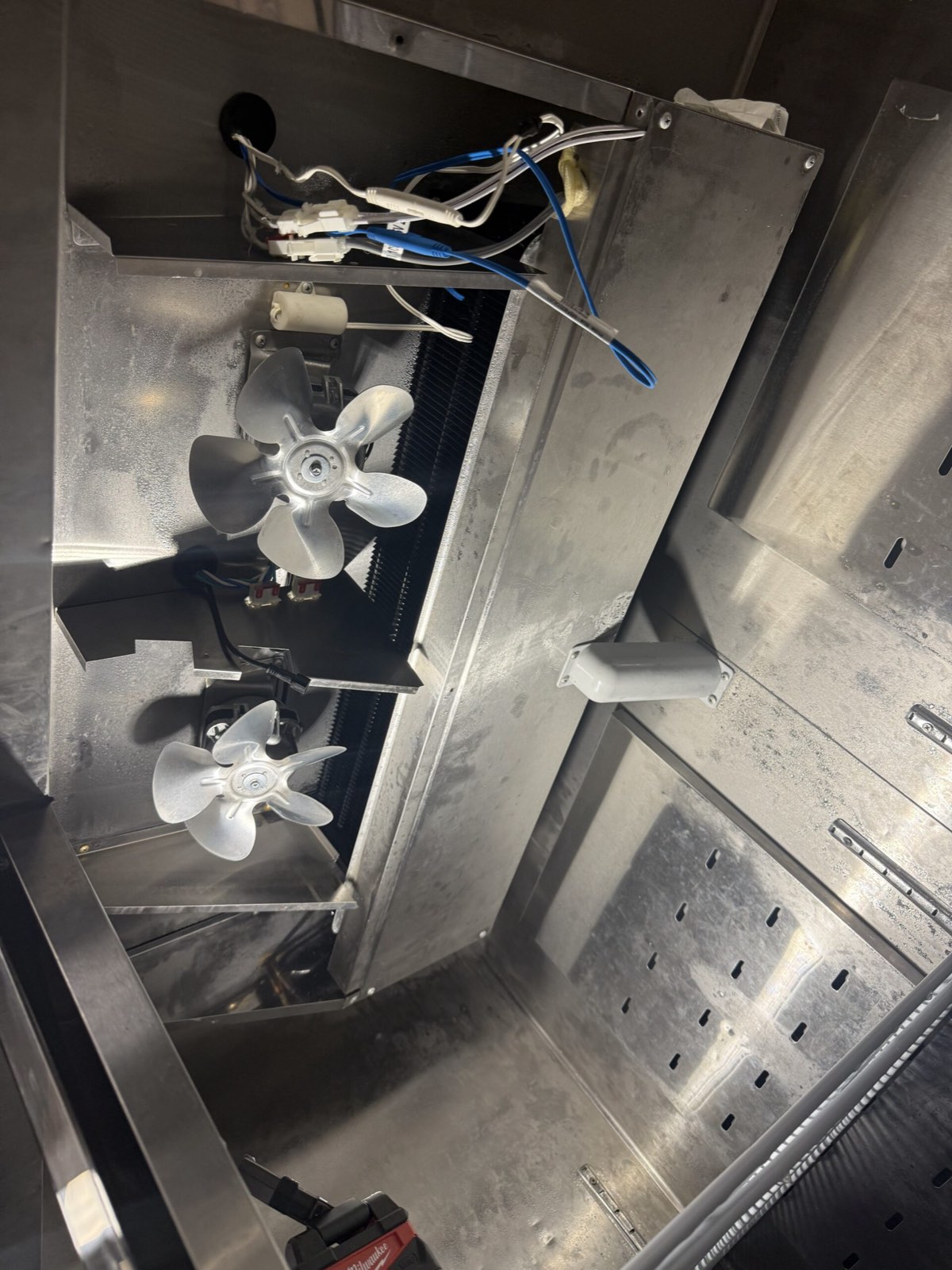
Overlay: a new wear surface over a sound floor
An overlay is a new wear surface laid over the existing floor: new diamond plate, a fiberglass-reinforced panel, or a troweled epoxy or urethane system with the cove built in. It is the right repair when the problem is the surface and the insulation under it is still dry and solid. It keeps the box in service, usually with the work done between dinner service and the next morning’s deliveries, and it brings the floor back to a smooth, sealed, cleanable surface in one visit.
Panel replacement: when the core has failed
Panel replacement is the right repair when the core has failed: wet foam, crushed foam, or a rotted frame. The damaged floor panel is cut out, the adjoining panels and wall base are checked for the same damage, and a new insulated floor panel is set, sealed, and skinned to match. The box may be out of service for part of a day while the floor is open, so we schedule it around your deliveries and move product to a second box or a rented trailer if the job runs long.
A new floor: when the comparison is floor versus box
A new floor for the whole box comes up when more than a third of the panels have failed or when a floorless cooler on a bare slab is being converted to a freezer and needs an insulated floor it never had. At that point the comparison is between a floor and a box, and we quote both honestly, because a walk-in with a rotted floor often has rotted wall bases too. Our walk-in cooler and freezer installation and replacement page lays out how a replacement is staged so the kitchen keeps running.
Floors and the Health Inspector
The FDA Food Code, which Massachusetts and Rhode Island both adopt, requires floors in food storage areas to be smooth, durable, easily cleanable and non-absorbent, with the floor-wall junction coved and sealed. A walk-in floor with torn plate, open seams or exposed foam fails all four tests at once, and inspectors in New Bedford, Fall River, Providence and Boston look at walk-in floors because that is where standing water and product debris collect. A floor repair done ahead of an inspection is routine; the same repair ordered on a correction notice is done on a deadline.
Floor Damage Is a Temperature Problem Too
A failed floor panel is a hole in the insulation envelope. The box loses cold through it continuously, the evaporator runs longer to make up for it, and in a freezer the cold reaching the slab is what causes the frost heave described above. Condensation under the floor skin and at the open seams adds moisture to the air inside, which frosts the coil faster and shortens the defrost interval. When we find a floor problem on a call that started as a cooling complaint, we fix the floor and then re-check the system, because the refrigeration side has usually been compensating for months.
Where We Repair Walk-In Floors
We run floor work out of New Bedford with the same crews that handle the city’s commercial refrigeration, where the seafood plants on the waterfront put the hardest service on a walk-in floor of any customer we have: wet product, hose-down cleaning, pallet jacks all day. The same crews cover restaurant and market walk-ins in Fall River, Dartmouth, Taunton and Plymouth, the South Shore and Cape Cod, Boston and Worcester, and Providence, Warwick, Cranston and Newport in Rhode Island. If the floor is part of a bigger problem, our walk-in cooler page covers the refrigeration side, and for a box that is warm right now, the emergency refrigeration repair page explains what to do before the truck arrives.
Walk-In Floor Repair Questions We Get
Can a walk-in cooler floor be repaired without replacing the box?
Almost always. The floor panels are individual insulated panels like the walls, so a damaged panel can be cut out and replaced while the rest of the box stays in place. If the problem is only the wear surface, an overlay of new tread plate or a seamless epoxy system goes over the existing floor without opening it at all. The box only comes into the conversation when most of the floor and the wall bases have failed together.
How do I know if the floor is just worn or if the insulation underneath is wet?
Step on it and listen. Rippled plate that feels solid underfoot is usually a surface problem. A floor that gives, crackles, or sounds hollow has lost its core. Water staining or ice at the floor-wall seam, rust at the base of the wall panels, and a sweet or musty smell at the seams all point to wet foam. We probe the panel on the first visit and map the wet area before quoting, because wet foam always runs farther than the soft spot you can feel.
Why is my walk-in freezer floor lifting in the middle?
The ground under the slab has frozen and heaved. A freezer transfers cold into the slab continuously, and unless there is a working heater mat, a ventilated air space, or an insulated floor between the box and the ground, the soil freezes and expands. The fix depends on how far it has gone: an insulated floor panel system over the slab stops the heat transfer on a box that was built without one, while a slab that has already cracked and lifted needs the floor opened and the slab addressed before the panels go back.
What kind of floor does a walk-in cooler need to pass a health inspection?
A smooth, durable, non-absorbent surface that can be cleaned, with the junction between floor and wall sealed and coved so there is no crack for water and debris. Diamond-plate aluminum, stainless, fiberglass-reinforced panels and seamless epoxy or urethane systems all qualify when they are intact and sealed. Torn plate, exposed foam, open seams and missing cove base are what inspectors write up.
Can you repair the floor while the walk-in stays in use?
For overlays and seam work, yes; the product stays in the box and the work is scheduled around service, usually overnight or between deliveries. A panel replacement opens the floor, so the product in that part of the box moves to another unit for the hours the floor is open, and we plan that with you before the visit. On a freezer, we also plan the defrost so the floor is dry when the sealant goes down.
Soft spot, buckled plate, or a freezer floor on the rise? Call Armus Refrigeration at 508-521-9477 and we will look at the floor and the refrigeration on the same visit.