Walk In Freezer Repair Sandwich MA: Keeping Your Product Cold on the South Coast
Your walk-in freezer stopped holding temperature at 6 AM, and you’ve got a full day of prep ahead. Every minute it sits above safe temps, your inventory takes a hit.
Emergency Walk In Freezer Repair When You Need It Most
For more on refrigerant handling regulations, see EPA Section 608 certification.
Look, I run Armus Refrigeration because when the walk-in goes down, the business stops. It doesn’t matter if you’re running a busy spot in Sandwich or out near Plymouth—if that freezer isn’t pulling its weight, you’re losing money fast. My phone rings 24/7 during peak season for a reason.
We don’t send marketing reps. We send techs who know how to get the job done. When you call us at 508-521-9477, we treat it like it’s an emergency because, frankly, it is. We focus on getting your commercial freezer back online so you can open up for business.
We handle everything from basic temperature checks to full compressor replacements on walk-in freezers. If the unit isn’t pulling its stated temperature, we show up, diagnose what’s wrong—whether it’s the condenser coils, a failing defrost cycle, or something deeper with the refrigerant charge—and we fix it.
What Goes Wrong With Walk In Freezers (And What It Means)
For more on AIM Act phase-down, see EPA SNAP-listed refrigerants.
People tend to call when the light is blinking red, but the problem could be anything. You might think it’s the thermostat, but sometimes it’s a simple blockage in the condensate drain line that’s preventing the unit from cycling right.
When we get out to spots around Sandwich, or anywhere down near the Cape Cod side, I check three main things immediately: power supply integrity, refrigerant pressure across the system (checking gauges on the capillary tube and expansion valve), and the operational status of the compressor. A lot of issues boil down to one of those core components failing.
For example, if the condenser isn’t shedding heat properly—maybe it’s coated in grease from years of kitchen use or something else is blocking airflow—the whole system builds up pressure and can stall out. We know how to clean those coils and get that gas flowing right again.
Compressor Issues: Knowing When to Repair vs. Replace
For more on Massachusetts compliance, see EPA Section 608 refrigerant rules.
The compressor is the heart of any walk-in freezer. It’s expensive, and when it kicks out, you feel it in your wallet. We’ve fixed these exact issues dozens of times across Southeastern MA. A brand new compressor isn’t always the answer.
Sometimes, a unit that’s been running hard for 12 years just needs the bad parts swapped—maybe it was an electrical relay or a capacitor failure, not the motor itself. Other times, if the compressor is nearing the end of its life cycle, putting in a new one only to have other aging components fail six months later? That’s waste.
We look at age, run hours, and performance metrics before we recommend anything major. We’ll tell you straight up: “This unit is over 15 years old; while we *can* fix it, replacing the whole enclosure might save you more headaches down the road.” That’s honest work.
The Local Difference: Service Across Sandwich and Beyond
I live and work in this area. I know the difference between a busy market off Main Street in Sandwich and a smaller operation closer to Plymouth. When we get dispatched, we don’t roll in with generic assumptions. We assess the specific setup—whether it’s a walk-in freezer attached directly to the prep table or a standalone unit.
Last month at a restaurant near Falmouth (not far from Sandwich), they had an issue with their glass-door merchandiser section, and simultaneously, their main walk-in cooler was struggling. They thought it was one thing, but we found a low refrigerant charge bleed on the secondary line that was affecting both zones unevenly. It takes experience to track that down.
If you’re in Sandwich, or anywhere along the Route 6 corridor—Fall River, etc.—we’ll get out there fast. We keep our service radius tight so we can guarantee that same-day, emergency response capability.
Beyond Walk-In Freezers: Other Commercial Units We Handle
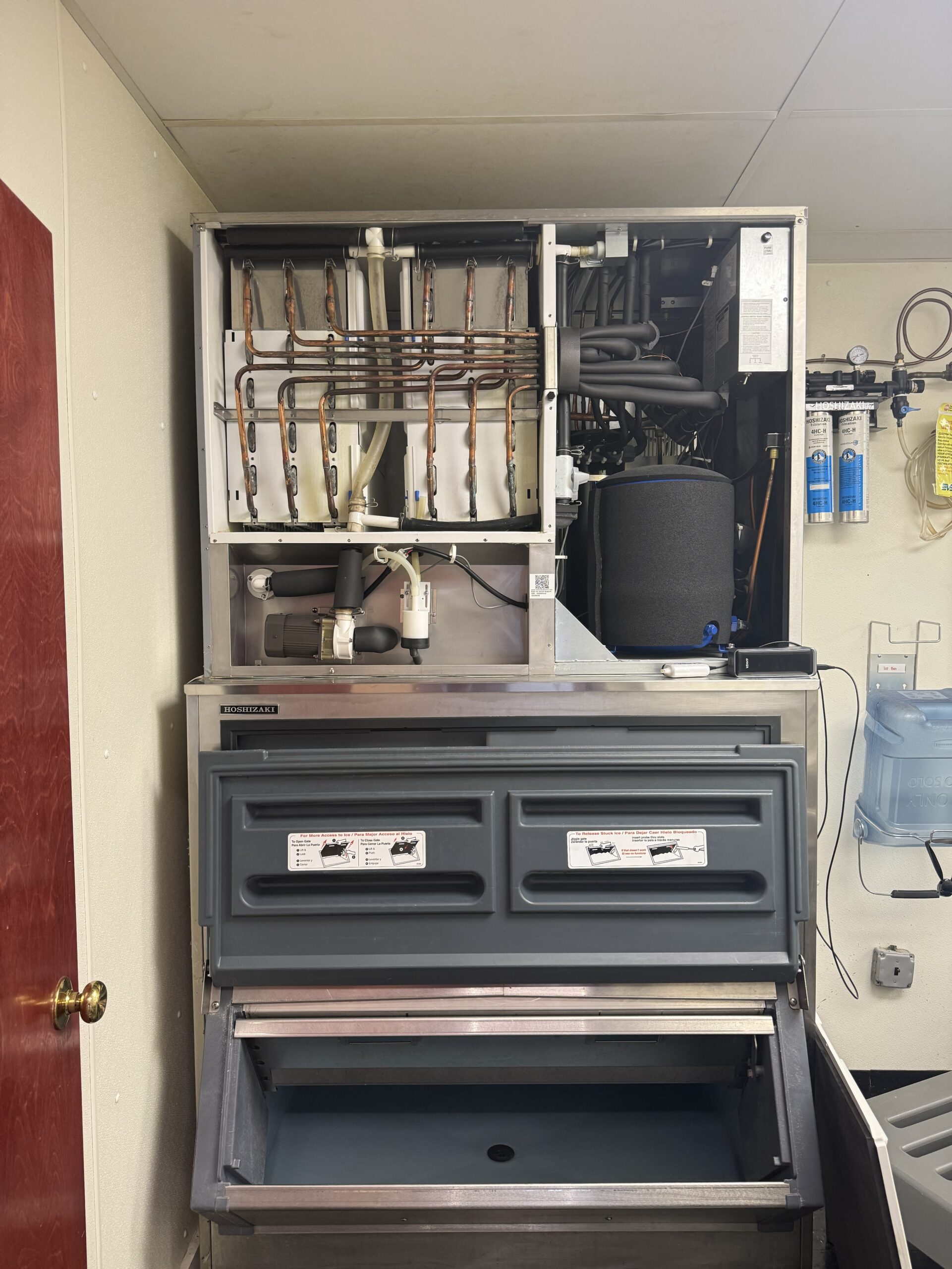
It’s not just freezers. If your beverage cooler isn’t pulling its proper temperature, or if the ice machine at your restaurant is spitting out slush instead of solid cubes, you need us. We work with all the big names—True, Manitowoc, Hoshizaki—so we know what every piece of equipment in these kitchens is supposed to do.
A prep table needs consistent cooling on its evaporator unit, and a reach-in cooler needs its door seals checked regularly. These things seem simple until they fail under pressure during service hours. We check the airflow across the condenser unit first, because that’s where most small shops overlook maintenance.
Whether it’s diagnosing why your freezer is cycling too often (indicating an improper defrost cycle) or if we need to adjust the superheat/subcooling readings on a refrigerant line, our techs are trained for the specifics of commercial food service equipment. We’re EPA 608 certified and fully licensed because this gear runs hot when it fails.
Why Call Us Instead of Waiting
Waiting until the morning to call someone who “might be available” is costing you money right now. If your walk-in freezer is down, you can’t prep the seafood for lunch at the local spot; you can’t stock the ice machine for weekend events. The loss compounds every hour.
We are ready to roll out of town—be it Sandwich or anywhere in Rhode Island if we need to stretch our reach—with a fully equipped tech and the right parts on hand. We keep the call simple, direct, and focused only on getting your refrigeration back up to spec so you can get back to feeding people.
Diagnosing the Problem: What to Listen For
You call us because it’s hot or it’s not cooling enough. But before we even get a tech rolling over from Providence down toward Sandwich, there are signs you can listen for—or see. A unit isn’t just “broken”; it usually has a specific symptom pointing to the failure point.
If your walk-in freezer is running but nothing is happening—no frost building up on the evaporator coils, no condensation dripping—we’ll be checking the refrigerant pressure and looking at the expansion valve first. Sometimes, all it needs is a clean filter drier installed because debris has partially blocked the capillary tube. Other times? The compressor just quit. A dead compressor usually means you hear nothing from that unit when we cycle it, but it’s not always silent; sometimes it’ll hum weakly and then just die.
If your glass-door merchandiser is fogging up instantly, or if the temperature gauge on a reach-in cooler says 40 degrees when you can barely feel the cold air, that points us toward airflow issues—maybe a blocked condenser coil or a failing blower motor. We’ve been through everything from old True units in Sandwich’s commercial heart to newer Hoshizaki setups near the waterworks. Knowing what it sounds like tells us how fast we need to get out there.
Keeping It Running: Preventive Maintenance for Sandwich Businesses
I know you’re busy running a sandwich shop or market downtown, and maintenance is money you don’t want to spend right now. But letting things slide only means an emergency call when the dinner rush hits. Prevention isn’t fancy; it’s routine work that keeps your inventory safe.
Here’s what we check every time we do a service visit: First, the condenser coil. If you’re in Sandwich, where humidity can be high near the Cape Cod side, those coils get coated with grime fast. We clean them out—a good power wash and deep clean gets your system running way more efficiently, which saves you money on electricity bills.
Second, we check the defrost cycle timers and the evaporator drain pan. Clogged drains are a killer; they lead to standing water, mold issues, and sometimes even tripping safety switches that shut down the whole unit unnecessarily. If you’re looking at preventative work for your walk-in freezer in Sandwich, let’s schedule it before the summer heat really kicks in. It’s way cheaper than paying us an emergency rate when everything goes down.
Brands and Equipment We See Most Often Around Here
You might have a mix of gear—a big old unit from 20 years back next to some brand-new Beverage-Air display case. That’s normal around here, but it means we need experience on several types of equipment. We work with everything: Manitowoc walk-in freezers for the bigger markets, True and Continental reach-ins in the smaller eateries closer to Route 1.
We spend a lot of time working on ice machines too. Whether it’s a dedicated unit or integrated into a prep table setup, those things need their own attention—checking lines, inspecting the chiller cycle, and making sure the proper refrigerant is running through everything. We see older models mixed in with newer gear all the time across Sandwich.
Bottom line: if it’s commercial refrigeration and it’s keeping product cold for any business owner from North Sandwich down to the Cape side, we’ve got the tech experience on that make or model already. Don’t call three different guys until you call us first. Call 508-521-9477.
Ready to get walk in freezer repair sandwich ma?
Summer backups at the canal are a fact of Cape logistics, so our dispatchers time Sandwich runs against the traffic windows instead of pretending they don’t exist — you get an arrival estimate built on the real Sagamore, not the theoretical one. This page is the local arm of the walk-in freezer repair program Armus Refrigeration runs across Southeastern Massachusetts and Rhode Island with EPA 608 certified technicians. When the freezer alarm goes off in Sandwich, call 508-521-9477 — the line is answered around the clock, twelve months a year.
- emergency freezer repair new bedford ri
- how to defrost a walk in freezer
- reach in freezer repair
- the restaurant owners walk in freezer cooler survival guide 2025
- walk in cooler freezer downtime cost calculator
- walk in cooler repair cambridge ma
- walk in cooler repair coventry ri
- walk in cooler repair east providence ri
- walk in cooler repair hyannis ma
- walk in cooler repair marion ma
- walk in cooler repair newport ri
- walk in cooler repair north providence ri
- walk in cooler repair providence ri
- walk in cooler repair quincy ma
- walk in cooler repair raynham ma
- walk in cooler repair sandwich ma
- walk in cooler repair lincoln ri
- walk in freezer icing up