Refrigeration Maintenance
Commercial Refrigeration Maintenance in Southeastern MA & Rhode Island
Your walk-in cooler stops cooling at 6 AM and the lunch rush is at 11:30. When that happens, every hour costs you money—and we know how fast those losses stack up.
Keeping Your Commercial Refrigeration Running Smoothly
For more on refrigerant handling regulations, see EPA Section 608 certification.
Look, I’ve been doing this in Southeastern MA and Rhode Island for over fifteen years. I’ve seen it all: the fancy new setup failing on day three, the old reliable unit finally coughing its last breath. Bottom line is this: when you run a place—a diner, a market, a restaurant kitchen—your refrigeration isn’t just equipment; it’s part of your inventory and your operation. If it goes down, business stops.
We handle the whole spectrum here for commercial units. We aren’t talking about fixing a backyard fridge. We’re talking walk-in coolers, walk-in freezers, reach-in prep tables, glass-door merchandisers—the whole lineup that keeps food safe and your doors open. When you call us, you get techs who know these machines inside and out. We’re licensed, insured, and EPA 608 certified for a reason.
Our approach to refrigeration maintenance is straightforward: we keep things running before they break down in front of your customers. It’s about preventative care so that when you need that reliable chill on a Saturday night near the South Coast, it’s there. If you’re in New Bedford, Fall River, Dartmouth, or anywhere between Providence and Cape Cod, giving us a call at 508-521-9477 is the first step to getting things back to normal.
What Refrigeration Maintenance Actually Means for Your Business
For more on AIM Act phase-down, see EPA SNAP-listed refrigerants.
A lot of people think “maintenance” means just changing a filter. It’s way deeper than that. Proper maintenance keeps your system running at peak efficiency, which saves you real cash on your electric bill every month. More importantly, it prevents those catastrophic failures.
We look at the whole picture—the compressor, the condenser coil, the evaporator performance. If the condenser coils are clogged with dirt from a busy kitchen, your system has to work way harder than it should. That extra strain burns out components faster. We clean those dirty parts so your machine doesn’t choke when you need it most.
We check refrigerant levels and pressures—the capillary tube flow, the expansion valve function. These are technical things. You don’t want a guess thrown at them. Our techs know what normal pressure readings look like on a True or Beverage-Air unit, versus what signals trouble. We tell you exactly where the issue is and how big the problem really is.
Diagnosing the Problem: Beyond the Simple Fix
For more on Massachusetts compliance, see EPA Section 608 refrigerant rules.
Sometimes it sounds simple—the freezer isn’t cold enough in one corner. But that can mean a dozen things. It could be a faulty damper, an issue with the defrost cycle controls, or maybe even a partial refrigerant leak we need to track down.
I remember pulling up to a seafood market down near Plymouth last month. Their walk-in cooler was showing fluctuating temps across different zones. They thought it was just bad insulation. Nope. After checking the airflow patterns and testing the temperature differential between the evaporator coil and the cabinet interior, we found that one of the blower motors had degraded bearings, causing uneven cooling distribution across the entire unit. It wasn’t a single part failure; it was a systemic issue compounded by wear.
That’s what we do: deep diagnosis. We don’t just swap parts because they look old. We test them to see if they are failing under load, or if they are simply due for replacement based on manufacturer guidelines and operational hours. Honesty is key here—if a unit is pushing 18 years and the compressor warranty is long gone, I’ll tell you straight up: sometimes replacing the whole box makes more financial sense than spending three grand to patch something that’s near the end of its useful life.
Emergency Response When Things Go Wrong
Let’s talk emergencies. It’s 2 AM on a Sunday, and your primary prep table freezer—the one holding the daily fish order—is warming up fast. You can’t wait for business hours. That’s why our emergency response is what we built this service around.
When you call us at 508-521-9477, you talk to someone who understands that “emergency” means losing thousands in spoiled product per hour. We are geared for immediate action. Our techs are ready to roll out of the shop and get a crew headed your way whether you’re deep in Fall River or near the Cape.
When we arrive, we assess the damage immediately. Is it electrical? Is it compressor failure? Did a line get kinked during a late-night stocking run? We prioritize getting cooling restored safely and correctly. Our goal isn’t just to make the unit *work* again; it’s to restore your workflow with minimal disruption.
Preventative Maintenance Plans: Taking the Guesswork Out of Downtime
The best maintenance is the kind you don’t have to call us for—the scheduled stuff. We put together preventative maintenance plans because relying on luck when it comes to food safety and revenue streams isn’t an option.
We establish a baseline. On your first service, we document everything: refrigerant type, coil cleanliness rating, motor amperage draw, etc. Then, on subsequent visits—whether monthly or quarterly, depending on how hard you run the place—we check those numbers against that baseline. If the capacitor is starting to pull more amps than it should just doing a basic start cycle, we flag it months before it blows entirely.
This proactive approach covers everything from deep cleaning the condenser unit (which traps grease and heat) to checking the integrity of the door gaskets on those reach-in coolers. Keeping these things dialed in means reliable performance when you’re slammed serving dinner through a big local crowd.
Why Local Matters for Commercial Refrigeration
When you have refrigeration issues, distance matters more than anything else. It’s not about having the lowest bid; it’s about having the tech on site *fast*. A company based up in Boston might sound good on paper, but if they can’t get a licensed, insured tech to your restaurant in Dartmouth by mid-morning, that means lost revenue.
We live here. We work here. If you’re anywhere from the South Coast all the way up toward Rhode Island, we know the roads, and more importantly, we know the local rhythm of business—when things slow down, when they pick up unexpectedly. That localized knowledge saves us time, and saving us time means getting your cooler running faster for you.
Spotting Trouble Before It Costs You Hundreds
Most restaurant owners only notice something when the walk-in cooler is warm enough to spoil a day’s worth of product. That’s too late. We spend our days listening for trouble signs, and it’s usually pretty obvious if you know what you’re hearing. If your unit is running constantly—the compressor cycling on and off every few minutes without breaking steam—that’s bad. It means the system is fighting a battle it can’t win efficiently.
Another thing to watch for is condensation right near the condenser coil, or if the drain pan is weeping more than usual. Sometimes, a simple block in the condensate line near your prep table unit—maybe some sludge from old grease or scale buildup—is causing backup pressure that throws off the whole cycle. We’ve pulled up to a small market down near Salem Street in Providence last fall; their ice machine was cycling too fast because the drain line feeding it back into the main chiller was partially clogged with mineral deposits.
Don’t wait for food waste to tell you something’s wrong. A quick check of refrigerant pressure, or just listening to how the compressor hums when it kicks on, tells us more than a simple temperature reading ever will. Call us at 508-521-9477 before that minor issue becomes a full-blown headache during a Saturday night rush.
What Actually Happens When You Call Us Out
When you call 24/7, the first thing you need to know is what it costs and what you get for your money. We don’t do mystery pricing when we pull up to your spot in New Bedford. Our service call covers diagnostics—we figure out *why* it failed. That means checking refrigerant charge pressures, inspecting the evaporator coils for blockage, testing electrical components, and seeing if the condenser fan motor is drawing proper amperage.
If it’s a simple fix—like resetting a tripped breaker on a beverage cooler or clearing a physical clog in the expansion valve area—we get that done. If we find something bigger, like a failing compressor or a cracked line, we’ll stop, show you exactly what the issue is, and give you an honest quote for repair versus replacement. We won’t try to upsell you on gear you don’t need just because it sounds expensive.
We’re licensed and insured, obviously, but more importantly, we’ve got the know-how from years of working through everything from True walk-in failures in South Coast restaurants to Hoshizaki glass-door merchandiser issues downtown. You call us with a problem; you get a tech who knows how to solve it right there.
Preventive Maintenance: Keeping Your Kitchen Running Through the Off-Season
A lot of people think maintenance means waiting until something breaks in the dead of winter when business slows down. Wrong idea. Routine, preventive care is what keeps your equipment running reliably through the busy summer months when you can’t afford downtime. We recommend a full seasonal inspection—this isn’t just blowing dust off the coils; we’re checking the seals on your reach-in units and testing the defrost cycles on your walk-in freezer.
For spots like the seafood restaurants we work with down near Plymouth, where salt air can creep into everything, keeping the condenser coil clean is huge. Mineral buildup or even just grime from nearby prep sinks degrades efficiency fast. We’ll strip out and clean those coils properly to make sure your compressor isn’t straining against unnecessary resistance.
If you get this done proactively—say, before the first big lunch rush hits in Fall River—you save money on emergency calls later. It keeps that refrigerant pressure steady, means better energy use across the board, and frankly, it just gives you peace of mind when you’re running a tight operation.
What a refrigeration maintenance service call actually covers
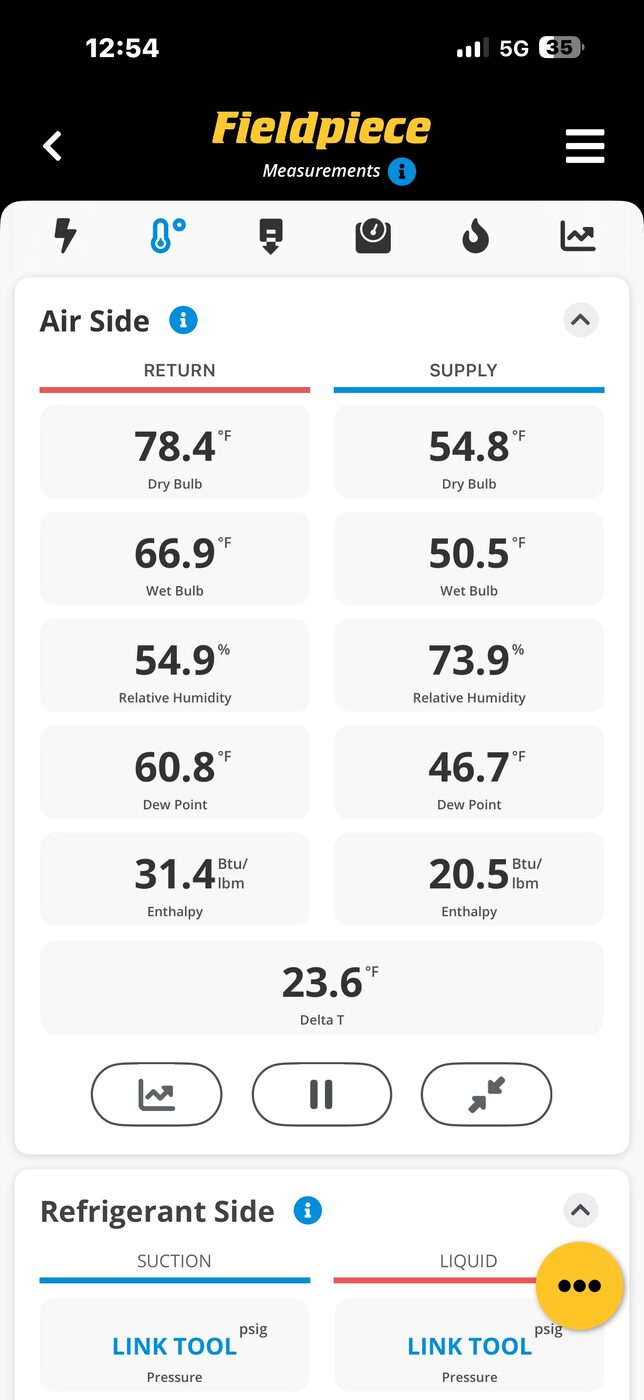
When we arrive on a service call, we work through the system in a fixed order so nothing gets skipped. Refrigerant pressures on both the suction and discharge sides. Amp draw on the compressor at start and during steady-state run. Superheat at the evaporator and sub-cooling at the condenser. Evaporator and condenser coil condition, fan motor amp draw and bearing condition, defrost cycle timing and termination, drain line clearance, door gasket seal and door alignment, controls and contactors. The diagnostic is usually 30 to 60 minutes; the repair time depends on what we find.
For commercial walk-ins above 50 pounds of refrigerant charge in Massachusetts, we also document the visit for the operator’s MassDEP Refrigerant Management Program file. RI commercial food establishments need their temperature logs intact and corrective action documented for RIDOH inspections, and our service tickets fit that record set.
Service area and response times for Southeastern Ma And Ri
Southeastern Ma And Ri is inside our core dispatch zone. From our base we are usually 20 to 45 minutes out depending on time of day and traffic on Route 6, Route 24, I-195, and I-95. New Bedford, Fall River, Dartmouth, Fairhaven, and the South Coast generally get same-day response on weekday calls placed before noon. Up the Cape and out to Provincetown adds an hour or so. Into Rhode Island — Providence, Warwick, Cranston, Pawtucket, Newport — we are commonly there inside two hours. See our full commercial refrigeration repair across Rhode Island for town-by-town coverage.
Overnight and weekend emergencies are triaged by what is losing inventory fastest. If you have a walk-in full of seafood climbing past 45°F at midnight, you move to the front of the queue. We will tell you straight on the phone what realistic arrival looks like before you commit.
Brand-specific failure patterns we see in the field
The True T-49 family — the two-door reach-in refrigerator that’s in roughly every restaurant kitchen in New England — has a few classic failure modes that show up at predictable ages.
Compressor short-cycling at 7-9 years. The original Embraco compressor on the 2014-2018 build runs hard in commercial duty. By year seven or eight you start hearing it cycle on and off every few minutes. That’s not the compressor giving up yet — usually it’s the start relay or the overload protector wearing out. We swap the relay first ($35-60 in parts), and if the cycling stops, you bought another two or three years out of the unit. If it doesn’t fix it, the next stop is the compressor itself, which is a 4-6 hour job and the part runs $400-800 depending on which Embraco variant.
Door gaskets at year 4. True’s factory gaskets on the T-49 series start cracking around the bottom corners of the door at the four-year mark — usually because the door drags slightly on the cabinet when it closes, putting unequal pressure on the seal. Swap the gasket, take a minute to readjust the door hinges so it sits square, and the next gasket will last twice as long. We see kitchens that have replaced the gasket three times in two years because nobody fixed the door alignment.
Ready to get refrigeration maintenance in Southeastern MA & Rhode Island?
Call 508-521-9477 Schedule NowFrequently Asked Questions
How often should commercial refrigeration be serviced?
Match the interval to how hard the equipment works, not to a calendar. Hot kitchen lines with fryers next to the condensers, and harborside sites in New Bedford, Fairhaven, Newport, and Bristol where salt air corrodes fins, do best on a quarterly visit. A typical restaurant, market, or school kitchen runs well on twice a year, timed before the summer rush and before the holidays. Low-duty institutional equipment can go annual. Ice machines are the exception: they need a full clean and sanitize at least every six months by the manufacturer schedule the food code requires, and more often on hard water.
What is included in a commercial refrigeration maintenance visit?
A full maintenance visit covers condenser coil cleaning, evaporator coil and drain pan inspection, drain line clearing, door gasket and door alignment checks, defrost timing and termination on freezers, refrigerant pressures with superheat and subcooling, compressor and fan motor amp draws, contactor and control inspection, thermostat and sensor calibration, and a box temperature check against the setpoint. You get the readings in writing so the next visit has a baseline to compare against. Anything trending the wrong way gets flagged with a recommendation and a price before it becomes an emergency call.
How much does a refrigeration maintenance plan cost?
Plans are priced per piece of equipment and per visit frequency, so a diner with a walk-in, two reach-ins, and an ice machine pays much less than a supermarket with a rack system and forty feet of cases. We do a walkthrough, count the equipment, note the duty cycle and the site conditions, and quote a fixed price for the year. The comparison that matters is one plan visit against one after-hours emergency call plus the product you lose while you wait for it. For most kitchens the plan costs less than a single spoiled walk-in.
Does preventive maintenance actually lower my electric bill?
Yes, and it shows up on the meter the same day. A condenser coil packed with grease and dust raises head pressure, which raises compressor amp draw and run time. We read amp draw before and after a coil cleaning, and the drop is usually visible on the clamp meter. Leaking door gaskets, doors that do not close square, and iced evaporator coils have the same effect: the compressor runs longer to hold the same temperature. Maintenance removes those loads, and it also removes the overheating that shortens compressor life, which is the expensive part.
Do you keep the records health inspectors and MassDEP ask for?
Yes. Every visit produces a service ticket with the readings, the work done, and any refrigerant added or recovered. For Massachusetts walk-ins and rack systems above 50 pounds of charge, that ticket goes in your MassDEP Refrigerant Management Program file and covers the leak inspection and repair documentation the program requires. For Rhode Island food establishments, the same records back up your temperature logs and show RIDOH the corrective action taken when a unit drifted. If you have lost track of past paperwork, we can rebuild the file from our visit history.
Scheduled Refrigeration Maintenance Services Across MA & RI
Most of our commercial refrigeration maintenance services run on a quarterly or semi-annual schedule, set by how hard the equipment works: hot kitchen lines and harborside sites with salt-laden air get the short interval, low-traffic institutional equipment the longer one. A scheduled visit is the same technician who handles repair calls, which means findings get judged against real failure patterns — a condenser coil at 60% airflow gets flagged as next quarter’s compressor casualty, not a line item.
Seasonality matters more here than the manuals admit. South Coast summers load condensers exactly when walk-ins carry peak product, so spring visits weight cleaning and charge verification; fall visits check door heaters, defrost cycles, and head-pressure controls before the cold snaps that expose them. Skipping the compressor-killing conditions is the whole economic case for maintenance — the mechanics of that are on our compressor repair page.
Plans cover the equipment mix we service daily: walk-in coolers and freezers, reach-ins, ice machines, display cases and prep units, across restaurants, markets, schools and care facilities from New Bedford and Fall River through Providence, Worcester and Boston. Call 508-521-9477 to have a technician walk your equipment list and quote a schedule.